Today's scheduled course
A certain day in early September 2023.
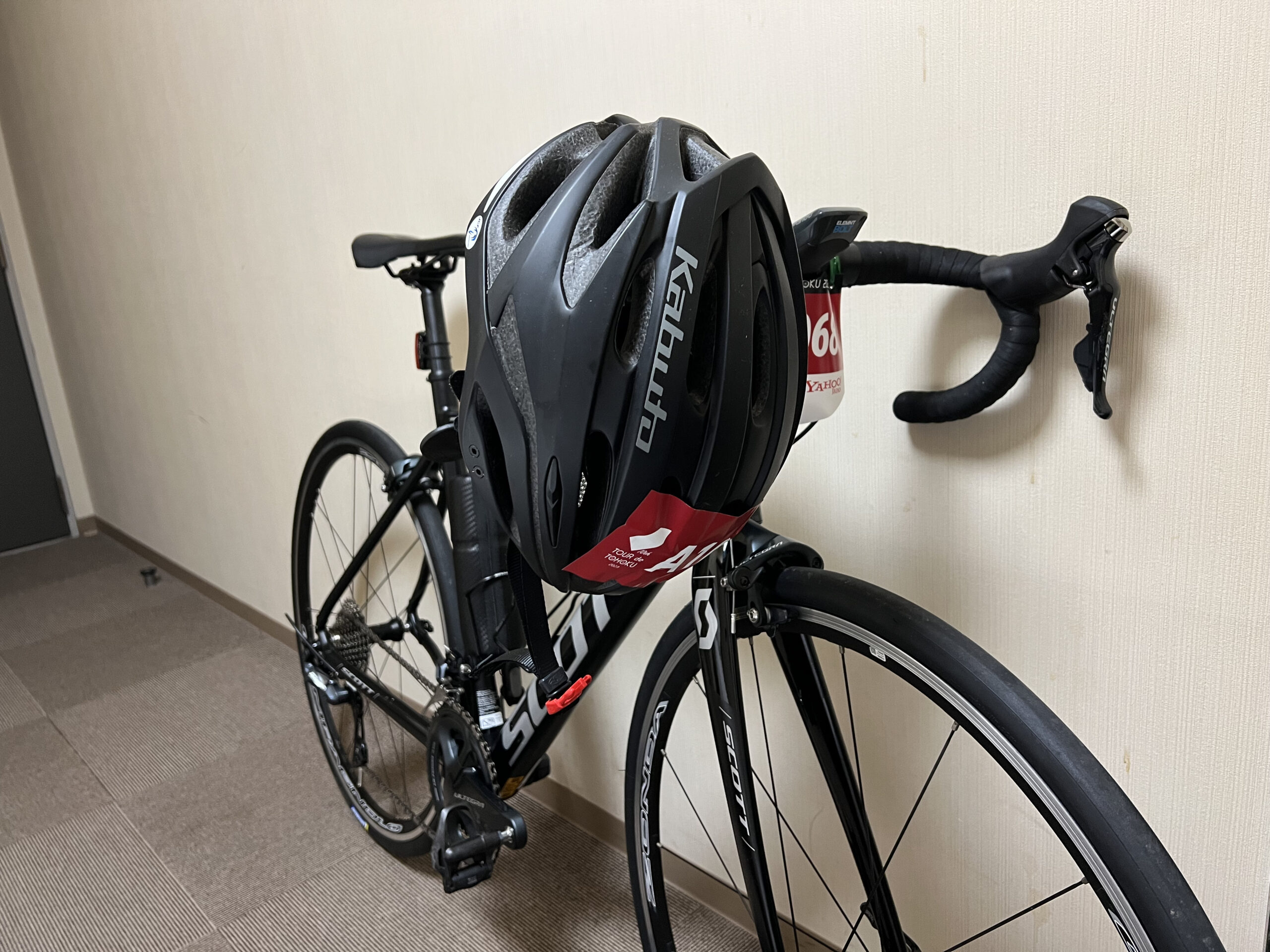
Coming September 17, 2023, I will run the Kesennuma Fondo 210km in Tour de Tohoku 2023.
Today we are preparing for the Tour de Tohoku.Run more than half of the actual race, 105km』、『Measures against slopes” will be practiced.
Today's course is ``Tsukuba Station - Mt. Tsukuba Fudo Pass - Tsukuba Rinrin Road - Kasumigaura 1 lap” is planned.
My goal for now is Fudo Pass, but if possible I would like to aim for Kazegaeshi Pass and Tsutsujigaoka Parking Lot.
After that, we plan to take the Tsukuba Kasumigaura Rinrin Road towards Tsuchiura and go around Kasumigaura.
The distance will depend on how far you ride, but I think it will be at least 100km or more.
Home - Tsukuba Station

I drove to Akihabara Station on the Tsukuba Express early in the morning.
I will go to Tsukuba station by bicycle.
It takes about an hour to arrive at Tsukuba Station from Akihabara Station.
Since it was early in the morning, the train bound for Tsukuba was quite empty.
Tsukuba Station - Fudo Pass
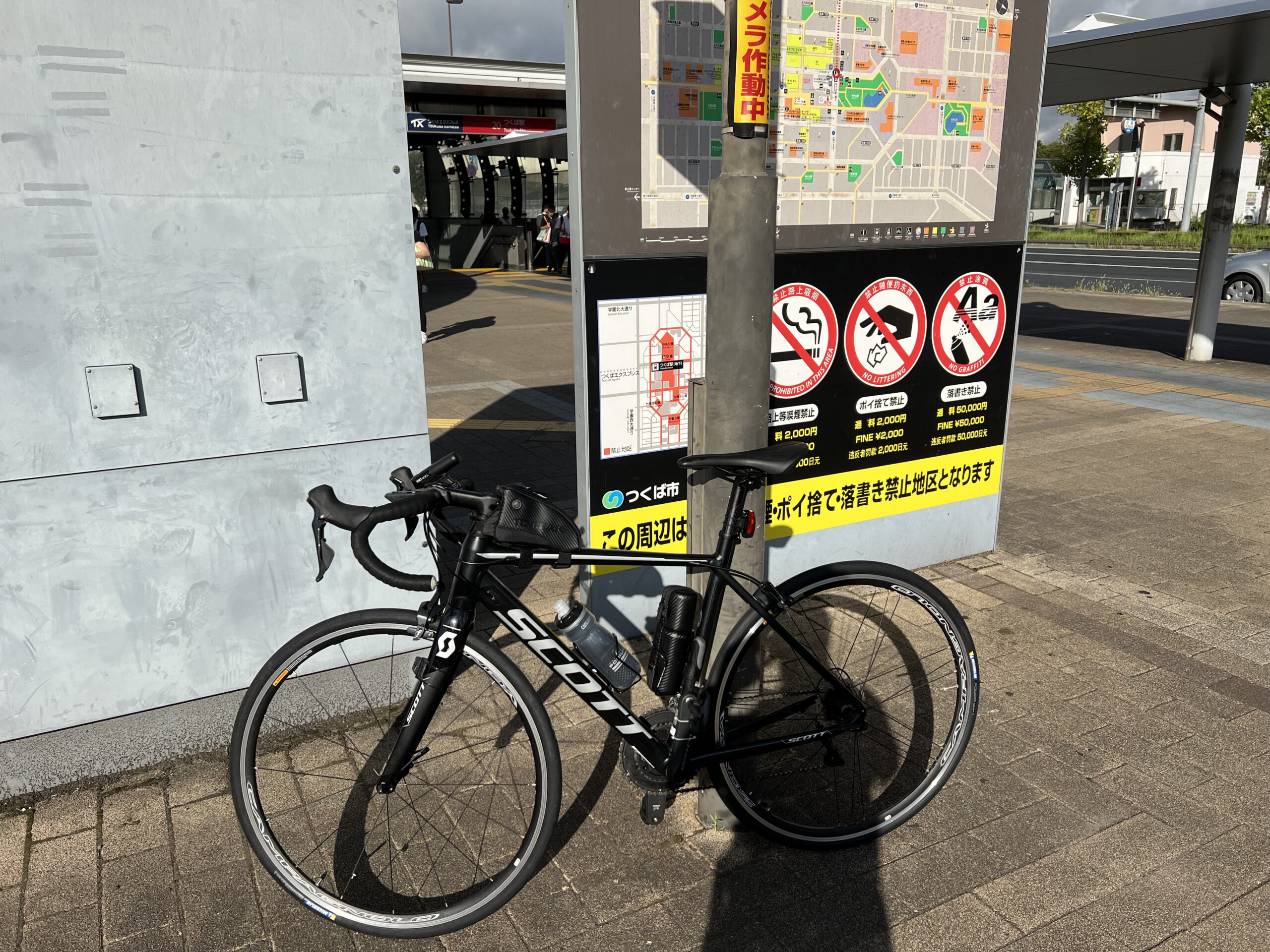
After stopping at Tsukuba Station, I immediately headed to Mt. Tsukuba.
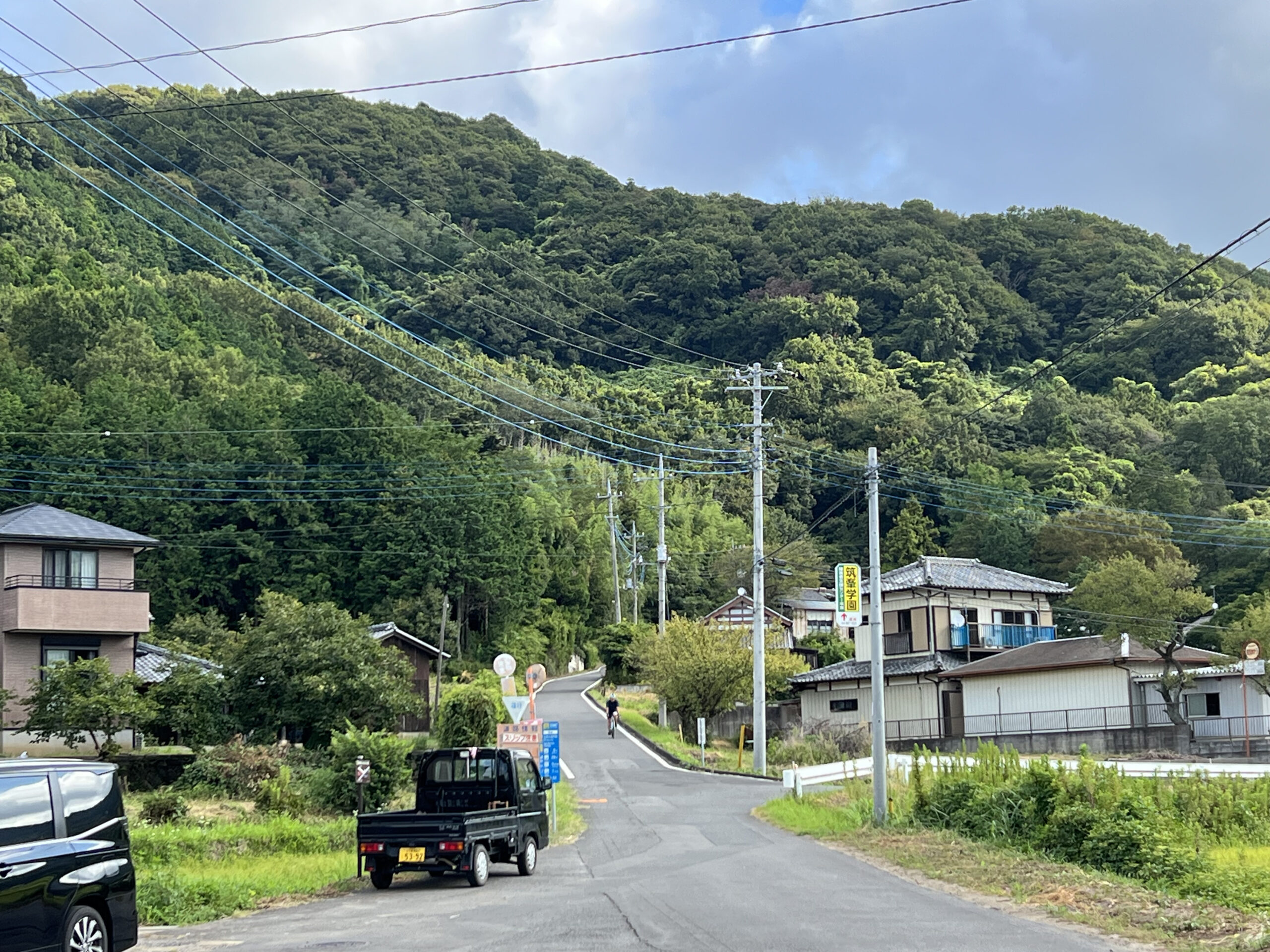
It takes about 30 minutes from Tsukuba Station to reach the starting point of Fudo Pass.
Fudo Pass is 3.8km long, has an elevation gain of 280m, and has an average gradient of 7%, making it a perfect pass for beginners.
By the way, this is my first time climbing a mountain pass. .
Let's start.
As rumored to say, the slopes at the beginning and end are harsh, you'll suddenly be immersed in the baptism of Fudo Pass and want to return home as soon as possible.
The number of curves and distances are written on the signs, so it's easy to follow as a guide, but in the early stages it can be quite mental, thinking there's still a lot to go.
Although it is early September, there are quite a lot of fallen leaves and branches on the road, so it may be difficult to drive in November, when there are many autumn leaves and fallen leaves.
And what about horseflies? There were quite a few mosquitoes. .
I continued to climb slowly, but it was getting harder and harder.
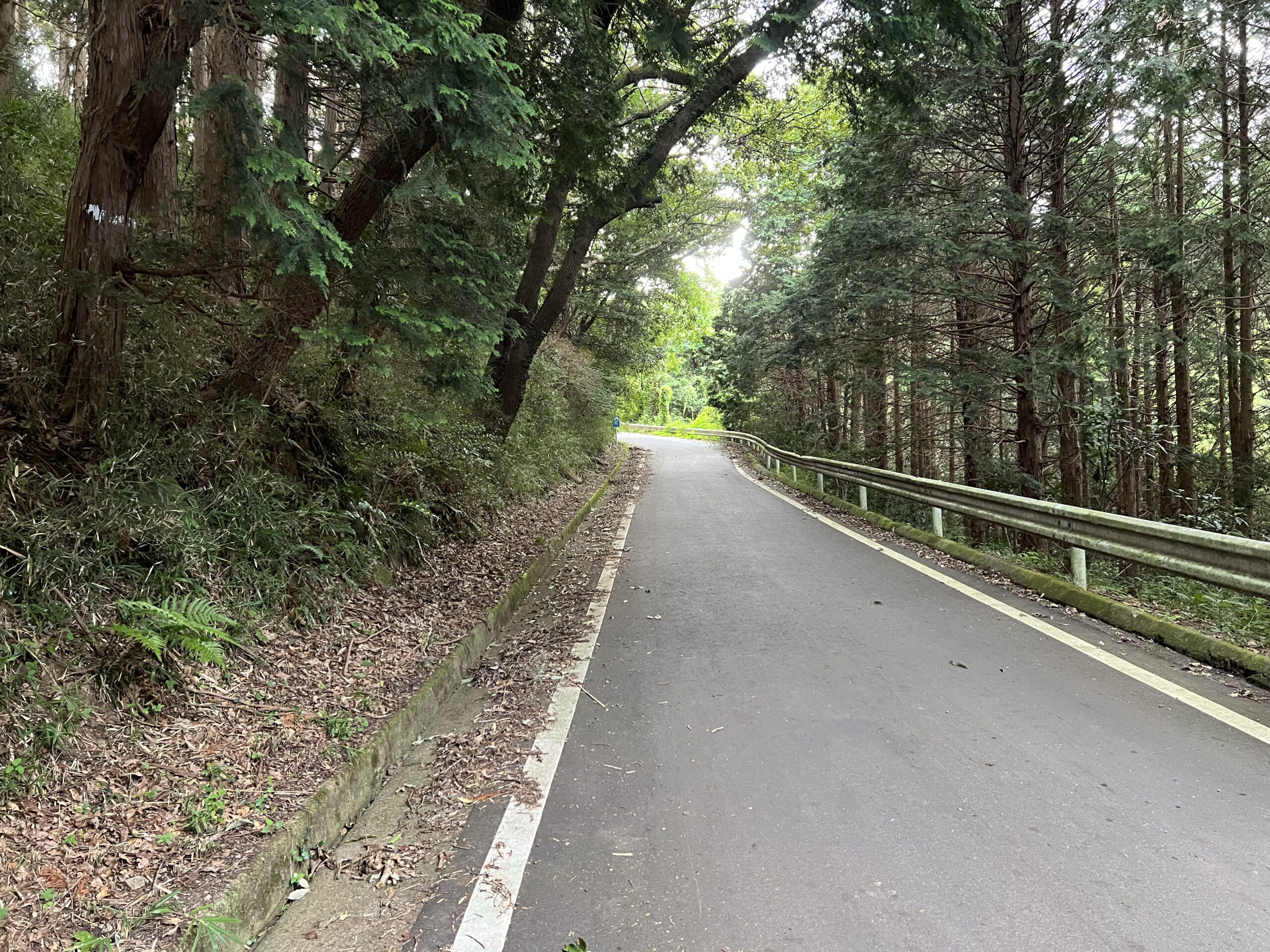
In the end, I lost my footing with one or two curves left. .
I thought about climbing it on foot, but I'll leave it for when I can climb it properly without touching my feet. .
Also, going down is really easy.
Cause of sinking of Fudo Pass
It was my first mountain pass, a hill climb, but I was able to sink it safely.
I think it was because I wasn't used to it because I usually only ride on flat roads.
Rather than being physically challenged, it felt like my heart rate was over 180 and it was difficult to maintain that state and continue rowing.
I think this can be countered by high heart rate training such as HIIT.
It seems like I'll only be able to practice on the slopes once before the Tour de Tohoku, but since Tsukuba is surprisingly accessible, I plan to come regularly to practice on the slopes.
I also think that the fact that I climbed the mountain while carrying a backpack may have been a factor.
I think it's about 3kg with the bike bag, change of clothes, shoes, etc., so it's difficult to leave your luggage on the course, but next time I'd like to try it without any luggage and no excuses.
Tsukuba Kasumigaura Rinrin Road
After sinking into Fudo Pass, head to Tsukuba Kasumigaura Rinrin Road.
Tsukuba Kasumigaura Rinrin Road is a 40km road exclusively for bicycles and pedestrians that runs from Tsuchiura Station to Iwase Station, using the ruins of the Tsukuba Railway.

Directions are written on signboards and on the road, so you can easily get from Fudo Pass to Tsukuba Kasumigaura Rinrin Road.

The road surface is clean and easy to ride on, and there are cycle racks at rest spots along the way.
Although not all rest spots have restrooms and vending machines, there are some that have restrooms and vending machines, so you don't have to deviate from the cycling path to find a convenience store.
Along the way, you will have to cross a road with cars, and you will need to stop there.
As I got closer to Tsuchiura Station, there were more and more places where I had to stop, so I felt like I was getting a little frustrated. .
Tsuchiura Station
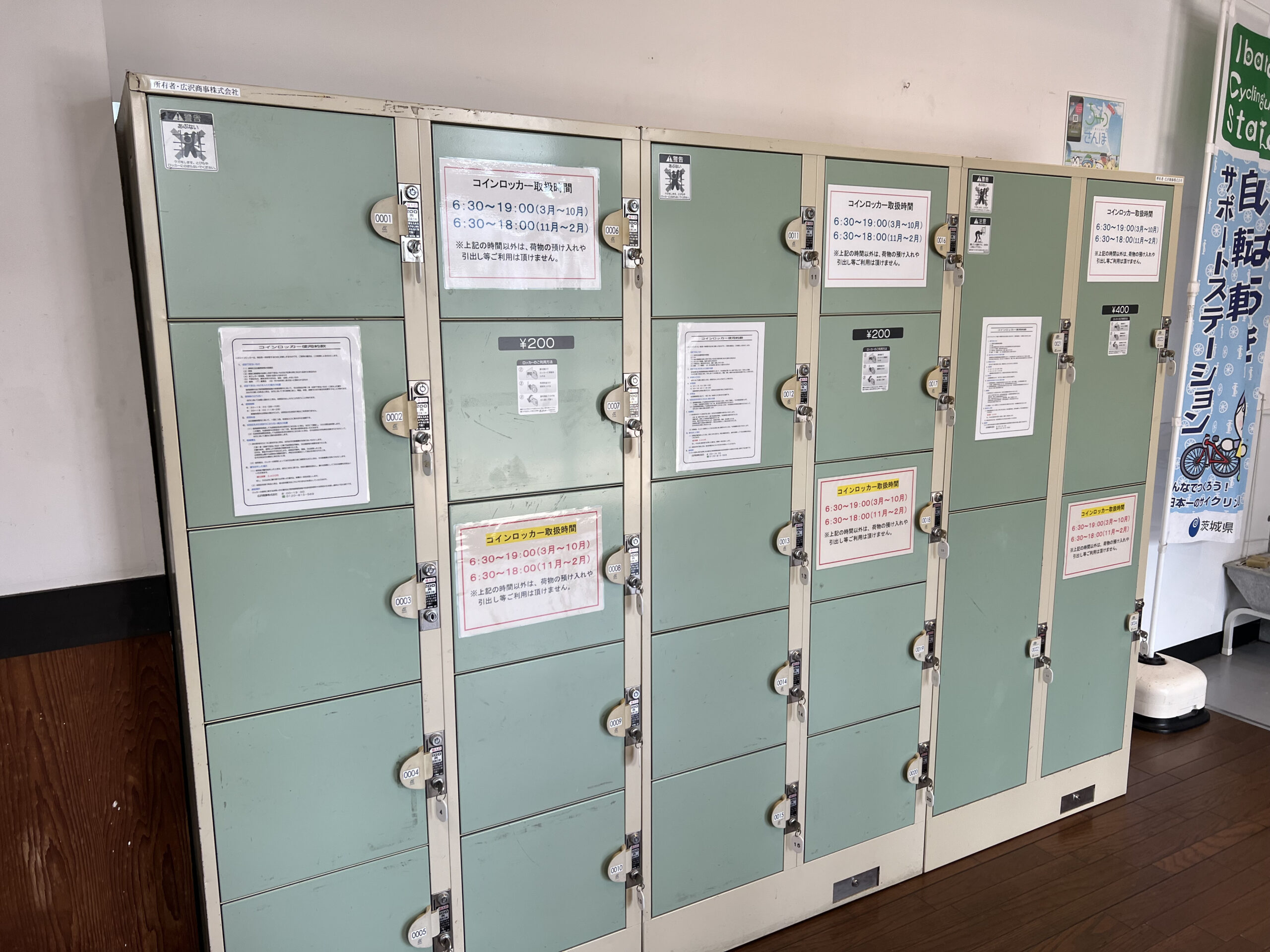
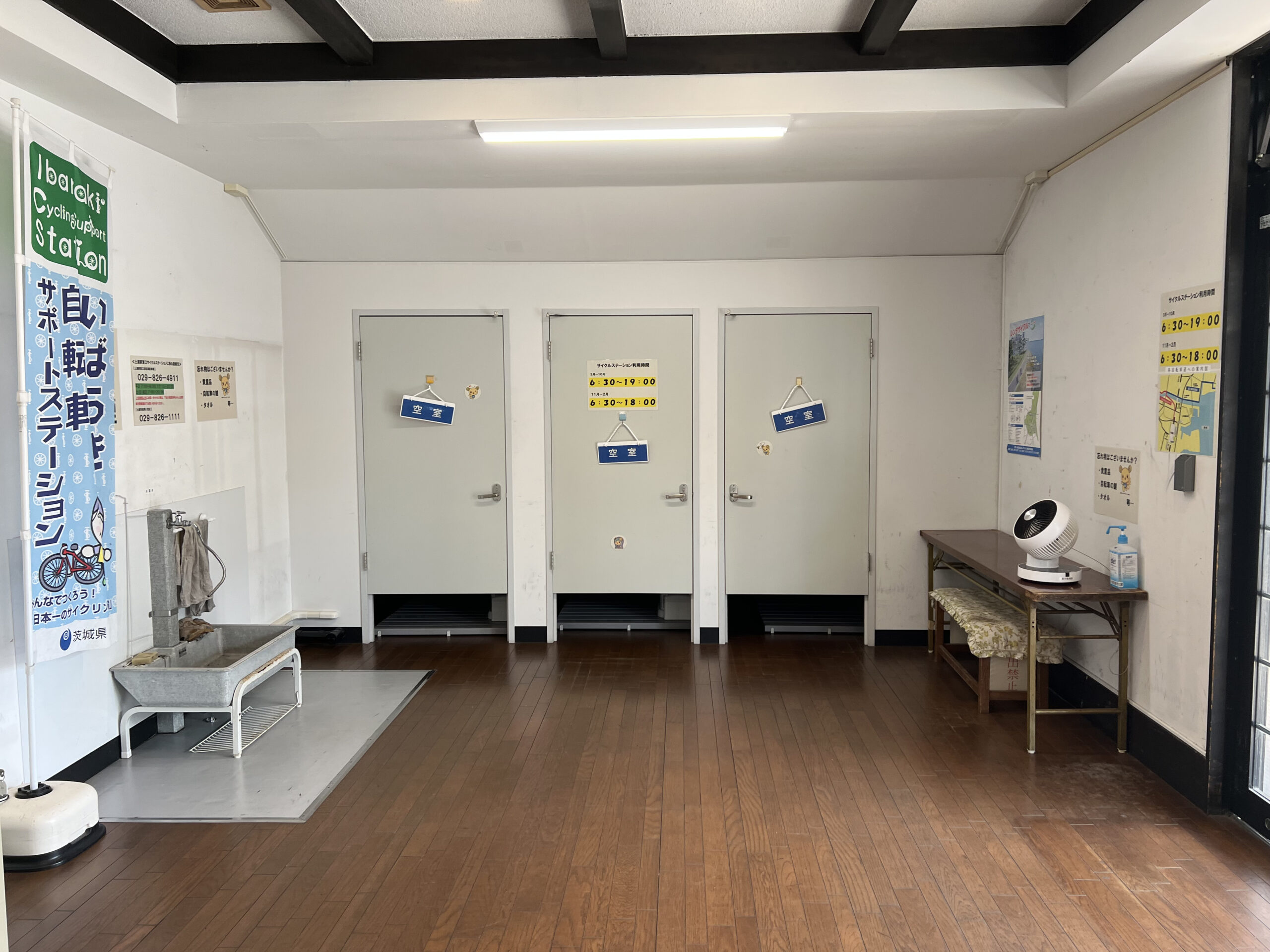

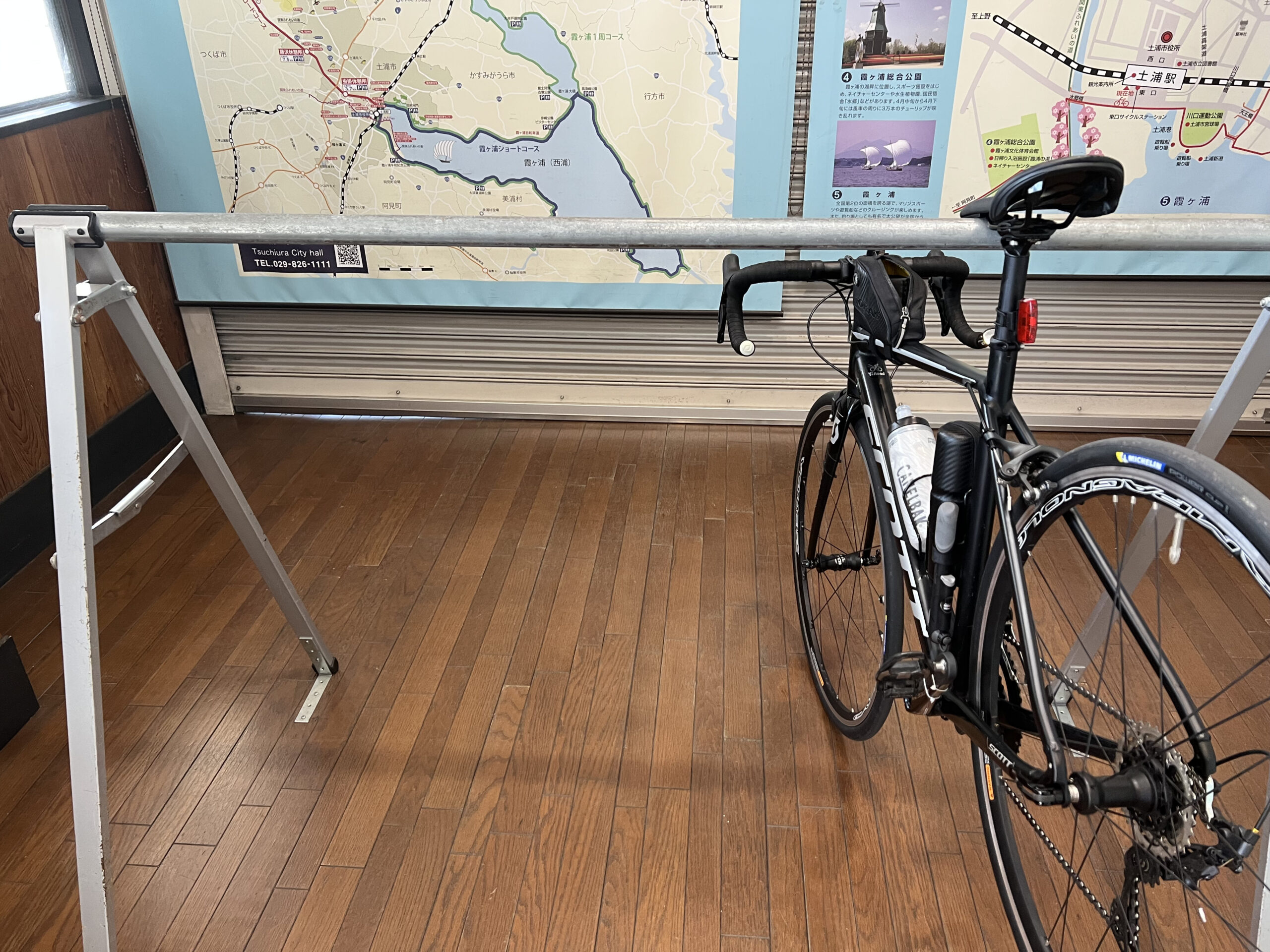
There is an ``Ibaraki Bicycle Support Station'' at Tsuchiura Station, which has lockers, changing rooms, air pumps, cycle racks, etc.
If you are traveling by train, you will probably use this as your base to change your clothes and leave your luggage.
Tsuchiura is truly a bicycle town.
The problem was that the air conditioner was not very effective (or not working...) and it was quite hot inside.
There was one circulator, but it's better than nothing, but I think the effect is pretty weak.
I'm just grateful that a spot like this exists. .
I left my backpack in the locker and set off.
Lake Kasumigaura 1 lap (Kasumichi short course)
Now, let's start going around Kasumigaura, commonly known as Kasuichi.
This time we will go around counterclockwise from Tsuchiura Station.

In the beginning (on the west side), in order to cross the irrigation canal, you need to run to the bridge and then to the lakeside again, so you cannot run along the lakeside forever.
This is a little lame.

The wind seemed to be blowing north, and although it was a headwind at the beginning, the direction I was running changed after a short distance, so I don't think the wind affected me that much.

And in an instant,7-Eleven Inashiki Furuto storeArrived at ``.
There was also a cycle rack, where other cyclists were also taking a break.
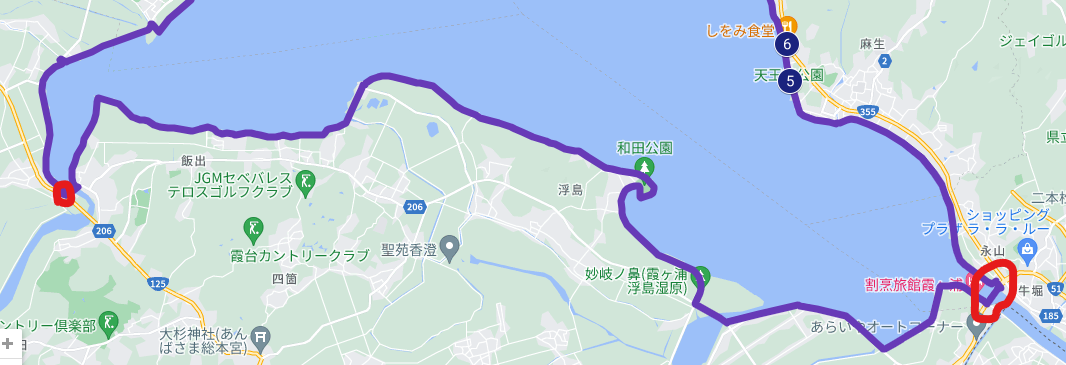
There is a crosswind section from 7-Eleven Inashiki Furuwatari store to Kitatonebashi, but I don't think the wind effect was that great.
From Kitatone Bridge, the line runs along the east side of Lake Kasumigaura.
The direction you run is fixed, and you always return with a tailwind, so you can move forward quickly.
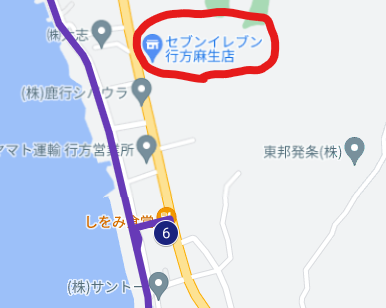
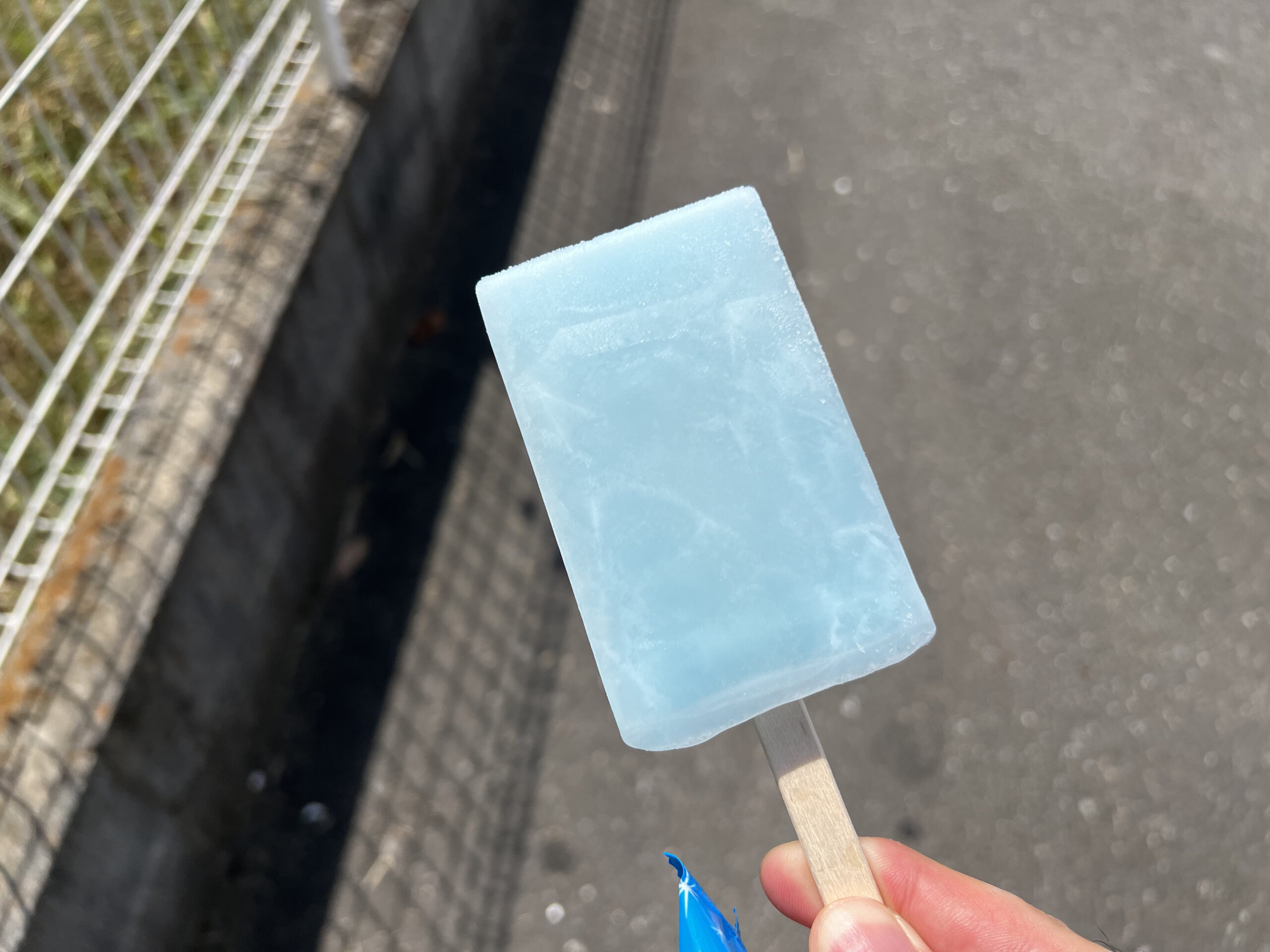
On the way, it was too hot and I veered off course.7-Eleven Namegata Aso store'I eat Garigari-kun and take a break.
Even if you say you can deviate from the course, you are only deviating by one path.
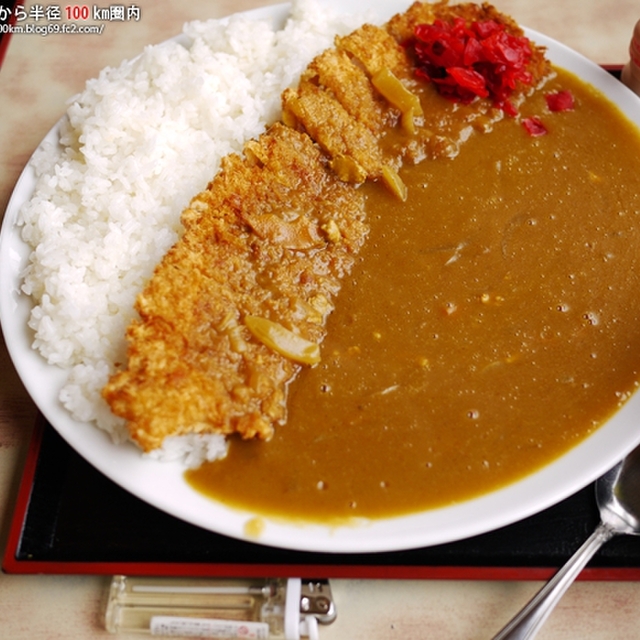
Nearby is the famous ``Shimomi Shokudo”, but since it was already past business hours, I couldn't stop by this time.
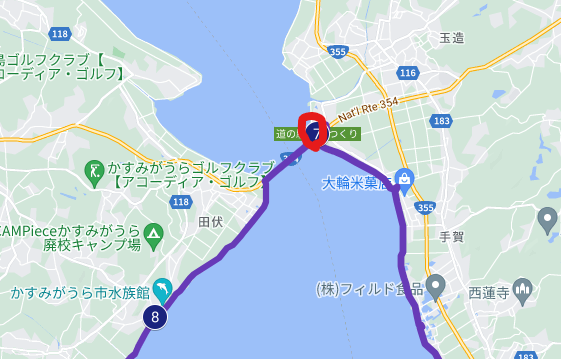
Then we arrive at a fork in the road.
If you cross the Kasumigaura Ohashi Bridge, it will become a short course, and if you continue north without crossing it, you will complete one lap of Kasumigaura.
This time, I had something to do in the evening, and it was doubtful whether I would be able to make it in time if I completed one lap, so I chose the short course.
There are tall buildings around Tsuchiura Station, so you can feel yourself gradually getting closer to the city, and you can also feel your goal getting closer.
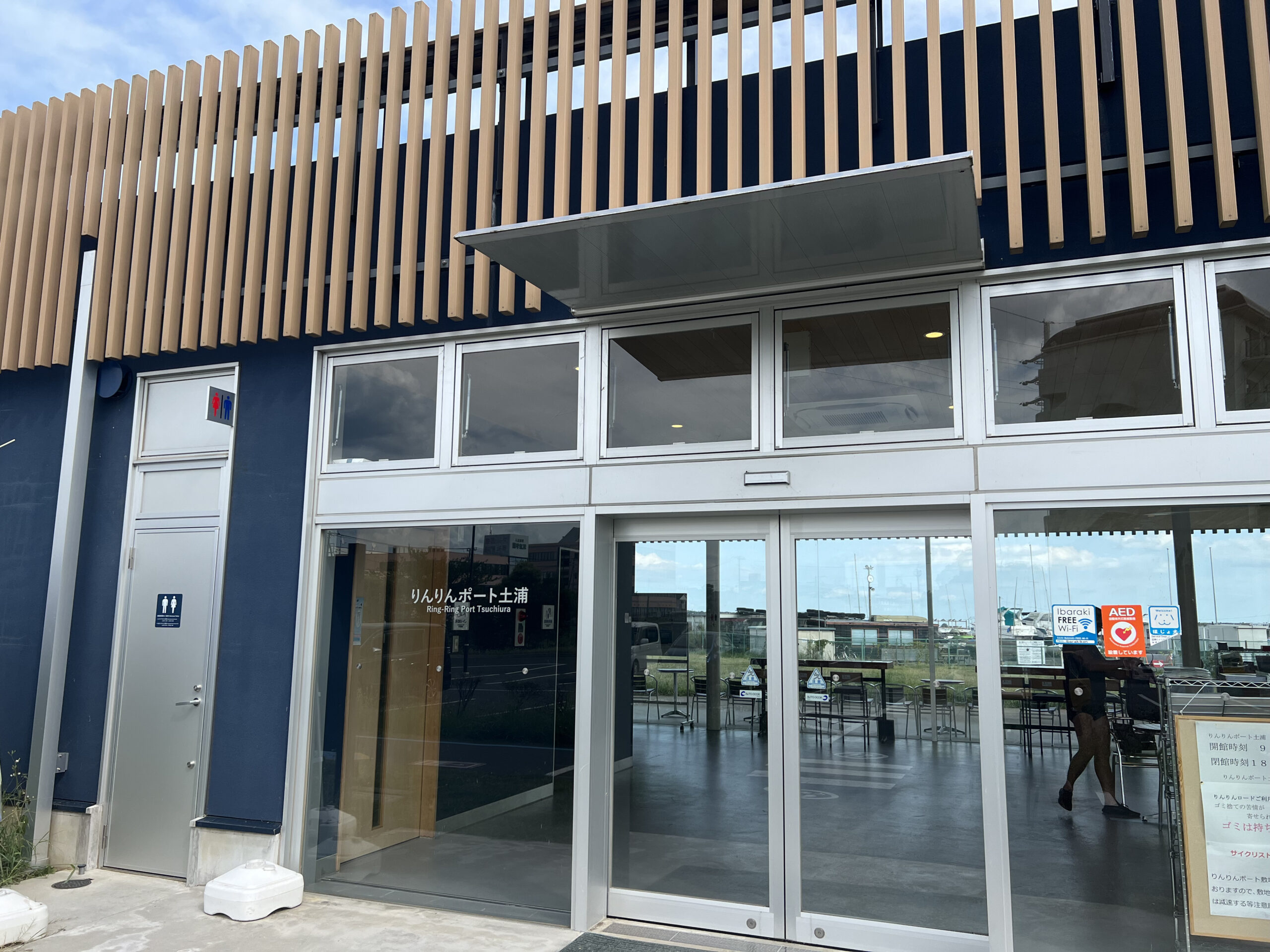
『Rinrin Port Tsuchiura' Arrived at.
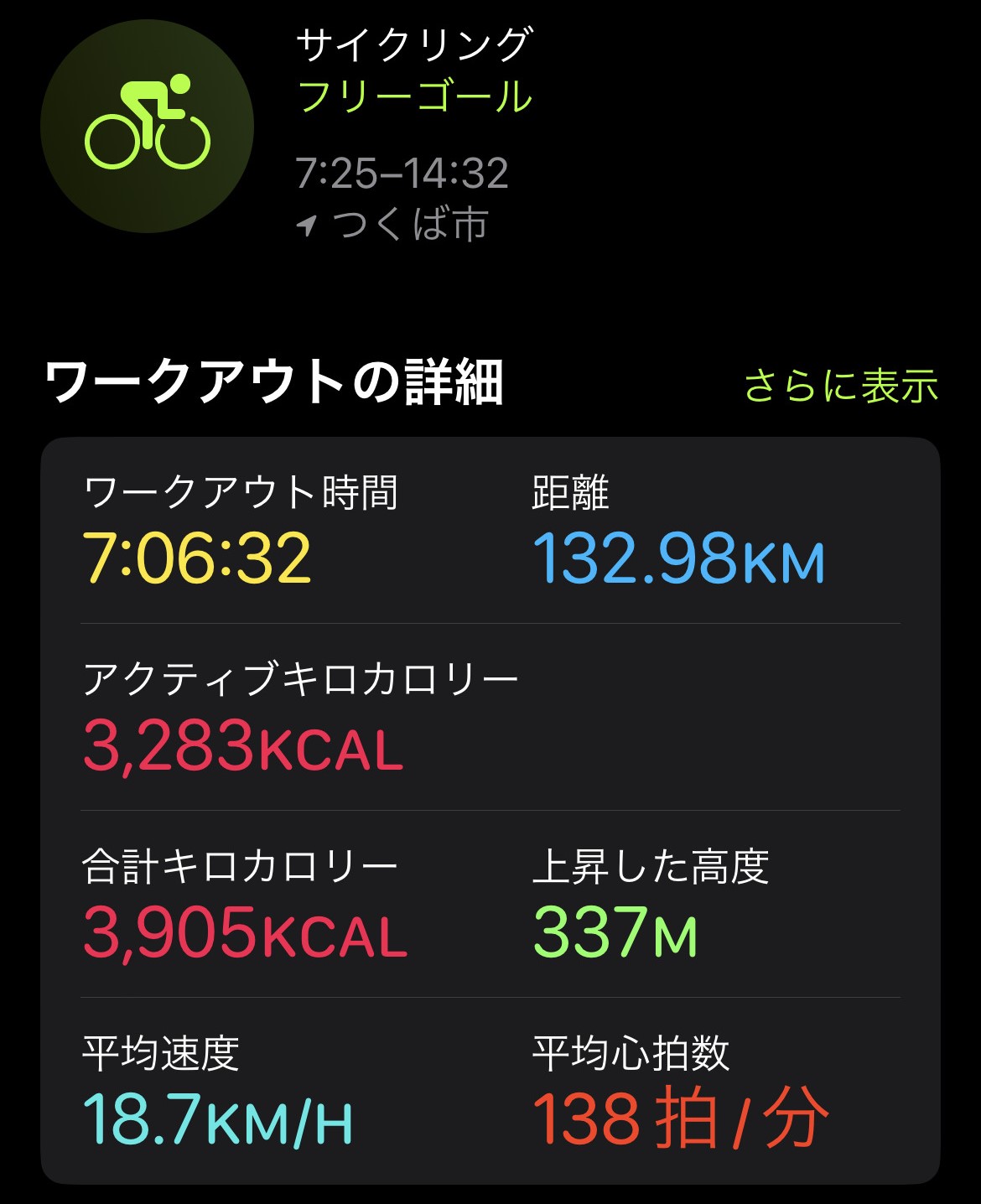
So,The ride was about 133km in total, from Tsukuba Station to Fudo Pass to Tsukuba Rinrin Road to Kasuichi Short.
Try running Kasuichi (short course)
Kasumigaura one lap, Kasumichi, is a course of about 130km, but this time we crossed the Kasumigaura Ohashi Bridge, so we drove on a short course of about 90km.
The route traveled in Kasuichi is not a pedestrian/bicycle path, but is also used by cars.
Most of the roads are stopped for fishing or marine sports purposes, so you can drive around without worrying about cars.
I almost didn't pass any cyclists.
『7-Eleven Inashiki Furuto store” and “Roadside station building” There were quite a few people, but I only saw about 20 people in total.
There is some climbing to cross the bridge, but other than that it's pretty flat.
Depending on the direction of the wind, the difficulty level can vary greatly, with headwinds, tailwinds, etc., so I think you need to check the weather forecast carefully and decide whether to run clockwise or counterclockwise.
The road surface is a little rough in some sections, but it's generally in good condition, and there are signs along the road showing how many kilometers to go, so I don't think you'll get lost.
On the way, I had to detour around an irrigation canal on the west side and walk on a sidewalk on the east side, but I think it can't be helped as it is part of a course that is over 100km long.
This time I ran counterclockwise, and I thought the scenery was beautiful at first, and towards the end I could see Ushiku Daibutsu in the distance, and the buildings of Tsuchiura were getting closer and closer, so I enjoyed that. .
Basically, the lakeside scenery is irreplaceable and flat, so I feel like it's a mental exercise to fight off boredom.
There was advance information that there were few points that could be replenished,There were quite a few spots with vending machines and benches, so I don't think you'll have any trouble staying hydrated.
The vending machines that are installed vary, some are cash-only types and others accept electronic money, so you may need to carry some cash with you.
The facilities where you can eat on the course are ``7-Eleven Inashiki Furuto store』、『Roadside station building』、『Kasumi Kitchen”, so in order to stop at a famous restaurant or other convenience store, it is necessary to deviate from the course somewhat.
Therefore, it is a good idea to carry at least a minimum amount of supplementary food.
Try running about 133km
Excluding events, the 133km ride is the longest distance ever for regular practice.
After running this distance, I will write down what I didn't feel during my regular practice.
Measures against heat

It was a sunny day and the temperature rose to nearly 35 degrees Celsius.
The second half was pretty hot, so I bought a frozen Aquarius at a convenience store and ran with it on my back.
I don't think the temperature will rise above 35℃ during the Tour de Tohoku,I think you need to get used to the heat and be careful about hydration.
There's nothing you can do about it when you're driving, but it's better to conserve your stamina by getting into the shade during breaks.
I also realized once again the importance of sunscreen.
supplementary food

It was a hot day, so I got my calories from carbonated juices like cola rather than eating solid food.
『Roadside station building' I thought about eating something, but the taste in my mouth was so sweet that I felt sick and could only accept water.
This time I had about 20km to 30km left until Tsuchiura Station, so I managed to get by by drinking only water, but I realized that if I drank too much sweet juice, it would be difficult to replenish my supply in the second half, so I felt that I needed to eat solid food.
Food is provided at each AS (aid station) on Tour de Tohoku, soI want to make sure that I eat solid food even when it's hot.
I have plenty of leg room

I sank it at Fudo Pass, but my impression was that it was hard on my heart rate rather than my muscles.
Since HIIT and running tend to put a heart rate stress on your heart rate,I'm planning to train by experiencing a higher heart rate before the Tour de Tohoku.
stiff neck
Since you are leaning forward with your head facing forward,In the second half, I felt a pain in my neck, or rather stiffness.
I think it can be alleviated somewhat by wearing a magnetic necklace or having a massage during breaks, so I think I'll give it a try, although it might just be a relaxing thing.
In the Tour de Tohoku, you will be running an additional 80km, so you can expect to experience pain in your lower back, knees, and other areas.
I'll also bring some painkillers like Bufferin.
My hands hurt

It doesn't hurt from vibrations or from putting weight on your hands, but from rubbing against the gloves.
It seems like you can take measures like applying Vaseline here.
Fortunately, it seems like we can take measures for all of them, so I would like to take proper measures and hope for the Tour de Tohoku.