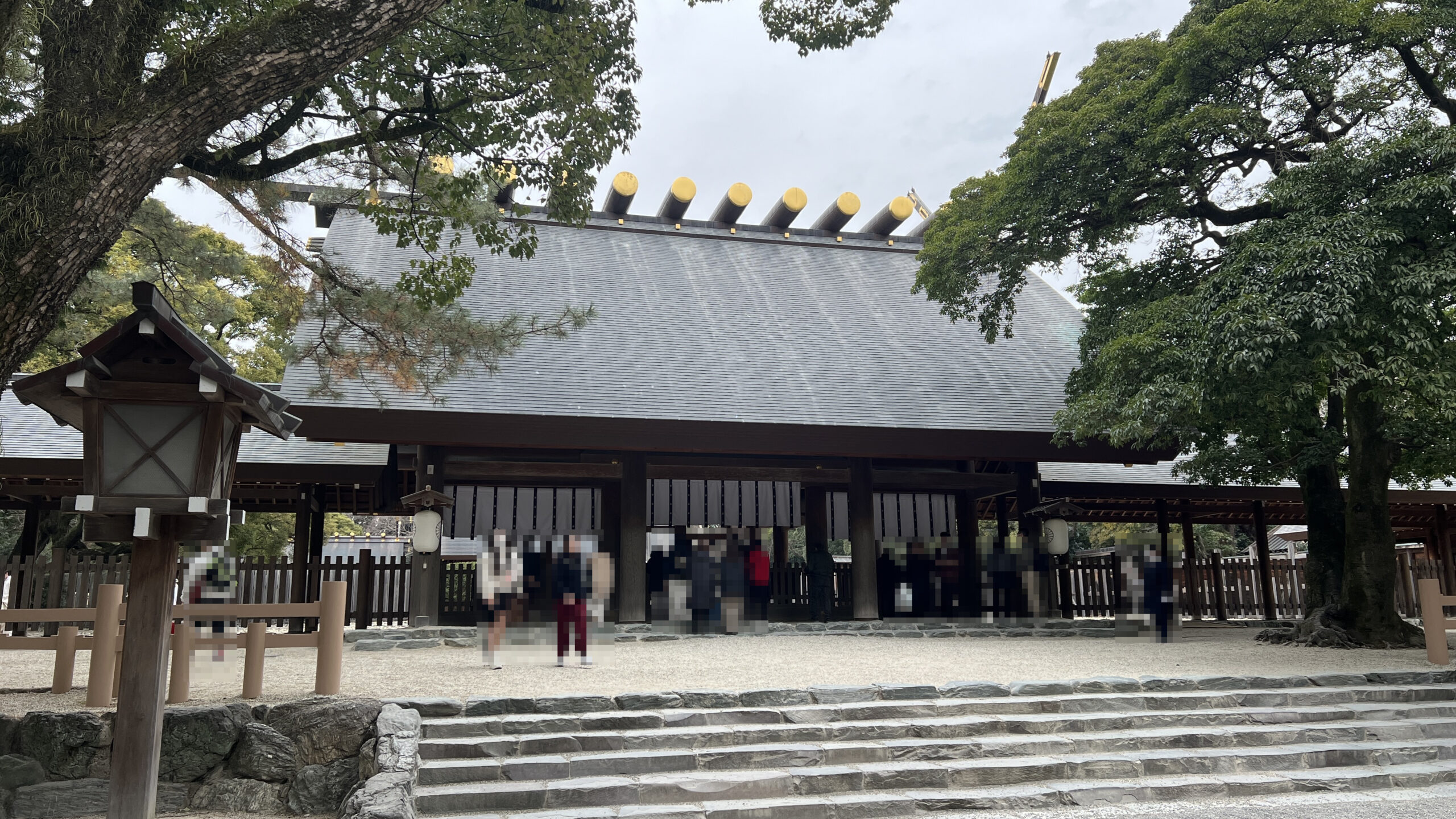
Sumiyoshi JR Nagoya Station Shinkansen Inbound Platform Store
『rare skewers” Drink at ``Soudantanmen Escha storeAfter finishing the tour, I headed to the Shinkansen platform.

The current time is around 21:05.
I have a reservation for the Nozomi train which departs at 21:22, so I have about 15 minutes.
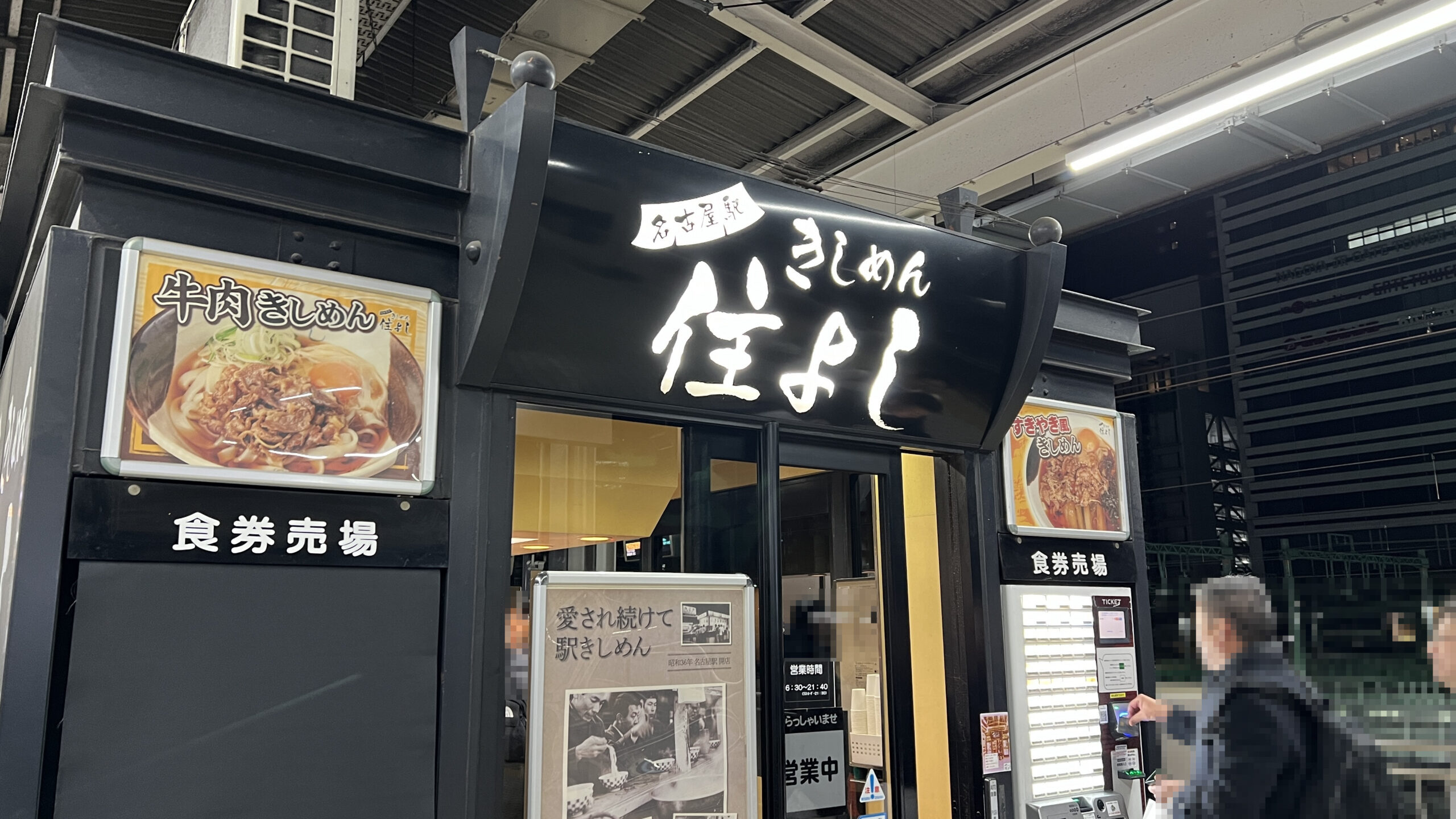
Then, ``Sumiyoshi JR Nagoya Station Shinkansen Inbound Store” You have no choice but to visit.
I will enjoy Nagoya until the very end.
Shimen (soba/udon) served on Shinkansen platforms is now a rarity, as you can't eat it at either Tokyo Station or Shin-Osaka Station.
By the way, there is another store on the same up platform.Sumiyoshi JR Nagoya Station Shinkansen 2nd store” is there.
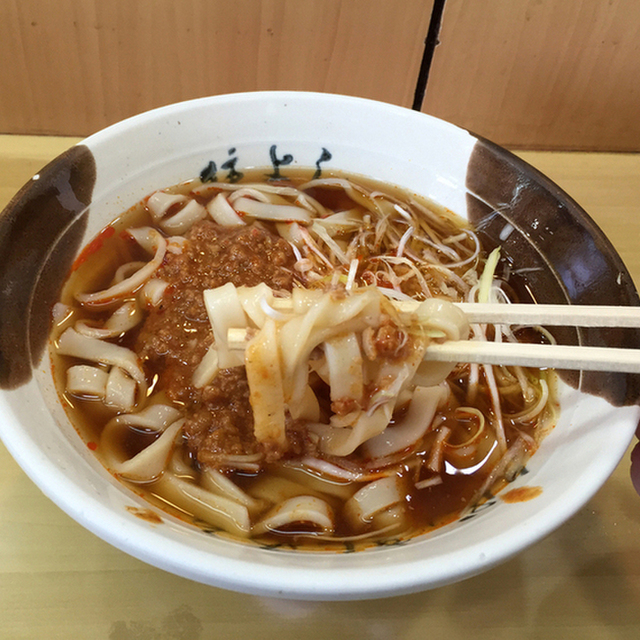
The store I visited is in the Shin-Osaka area, and the second store is in the Tokyo area.
Although the restaurant was not full, it seemed more than half full, even though it was late at night.
Kishimen
Before entering the store, purchase a meal ticket from the ticket machine outside the store.
Since it is located inside a JR station, you can use transportation IC cards in addition to cash at the ticket machine.
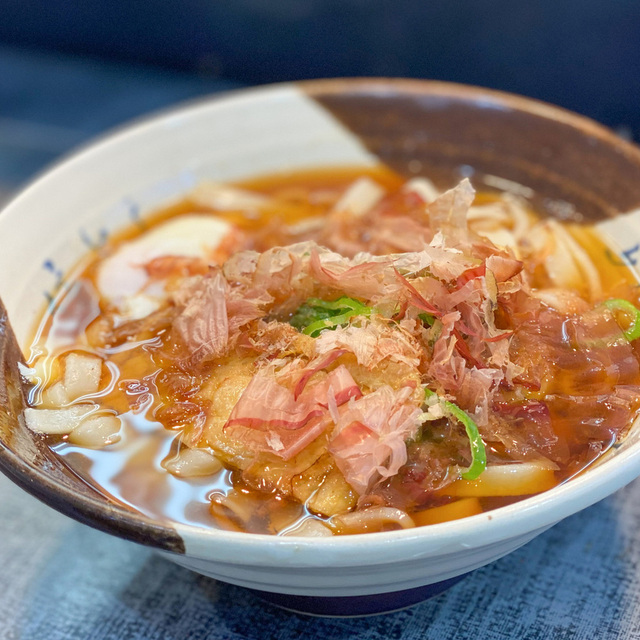
This time, we will introduce the most standard ``Kishimen (420 yen)” was selected.
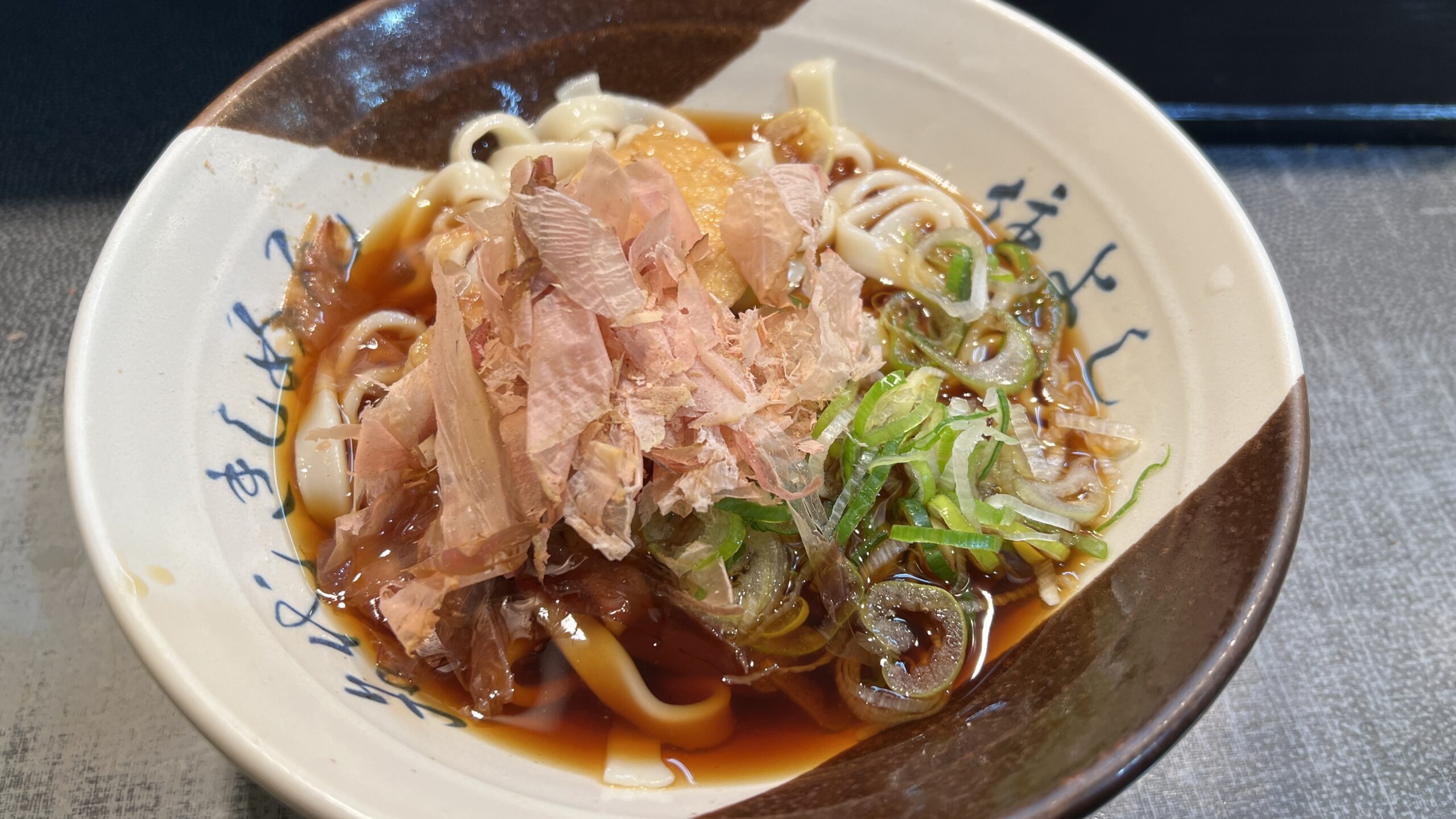
After handing over the meal ticket and getting the self-service water, the rice bowl was served immediately.
Let's get it then.
Tsuyu (Dipping Broth)
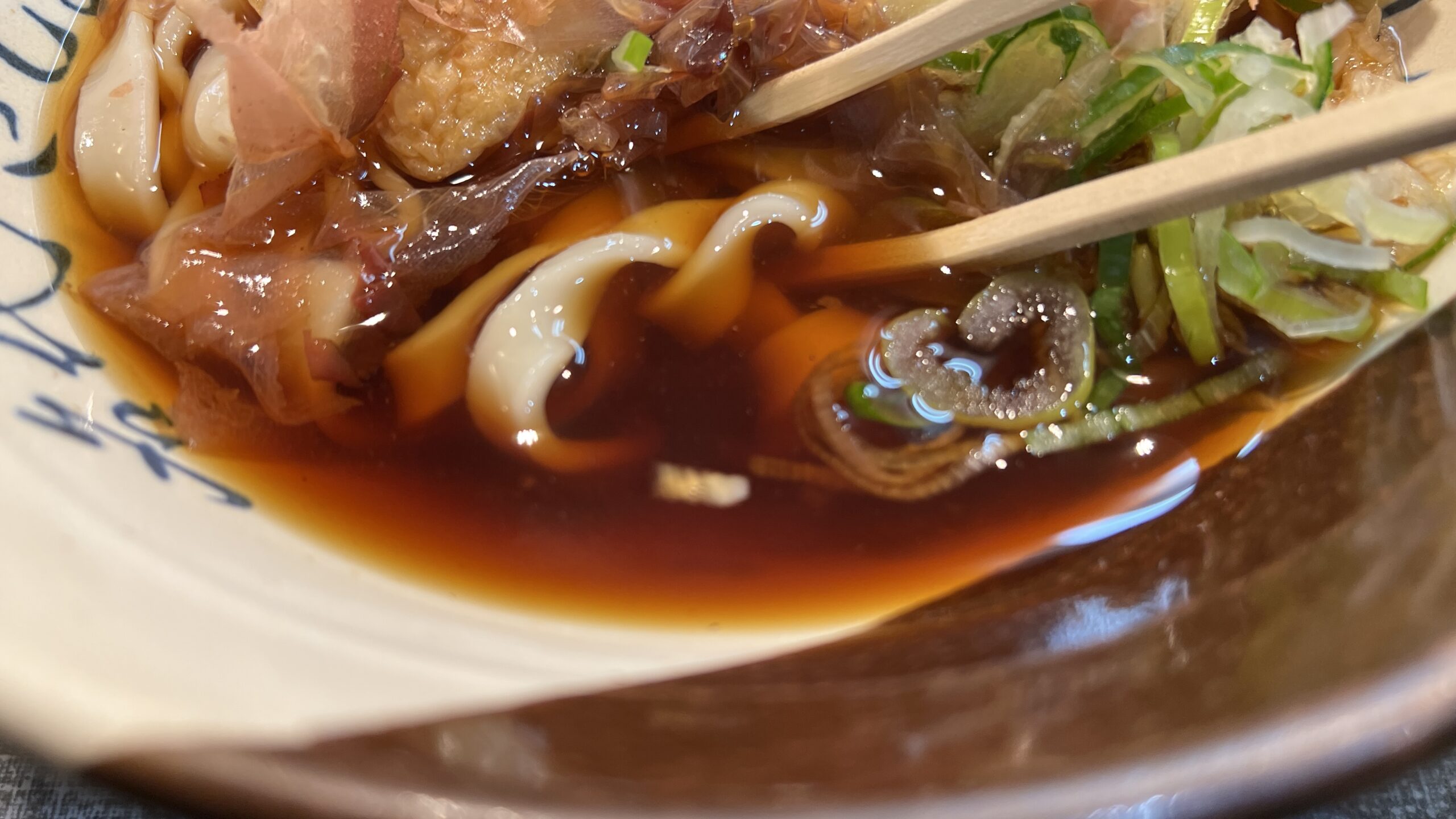
The color of the soup is dark in appearance, but when you drink it, the flavor is weak and the flavor is strong.
Since it contains bonito flakes, it has a strong bonito soup, so I think it's more from the Kanto region, but it also has a stronger soup stock from the Kansai region, so I got the impression that it's somewhere between the Kanto and Kansai regions.
Kishimen
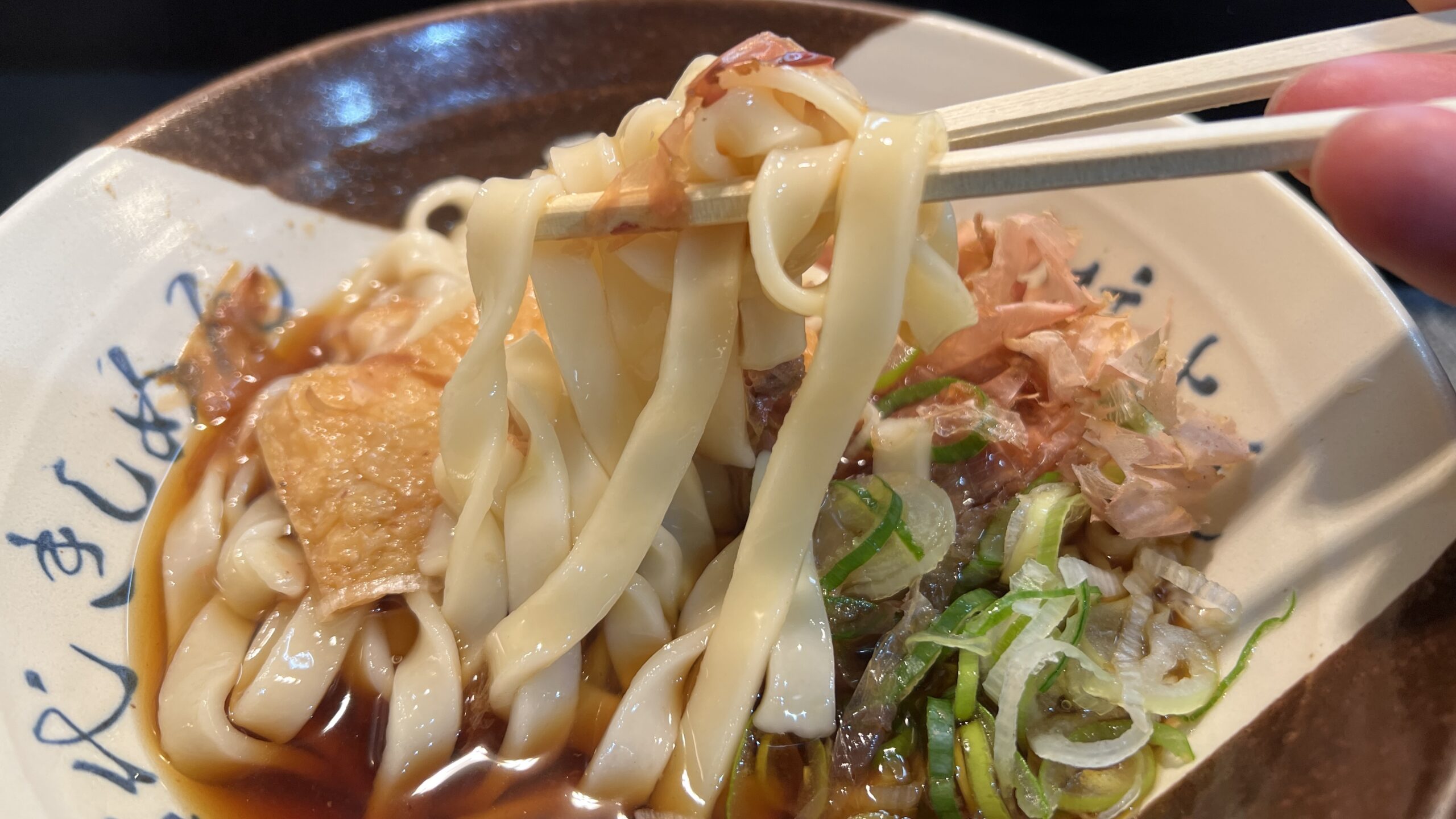
Shinkansen platforms have a large number of users, so in order to serve noodles quickly, they boil frozen noodles, thaw them, and then reheat them just before serving.
Perhaps because of this, it felt a little overcooked, and the pillowy texture and firmness when slurped were lost.
The one on the conventional line that I ate on the same day was ``Sumiyoshi JR Nagoya Station platform store 1 and 2', the noodles were boiled from frozen rather than boiled, so I was able to enjoy the firmness and texture.

I think this is a result of focusing on the turnover rate and speed of serving, but I'm learning whether boiling the food has such an effect.
Fried rice
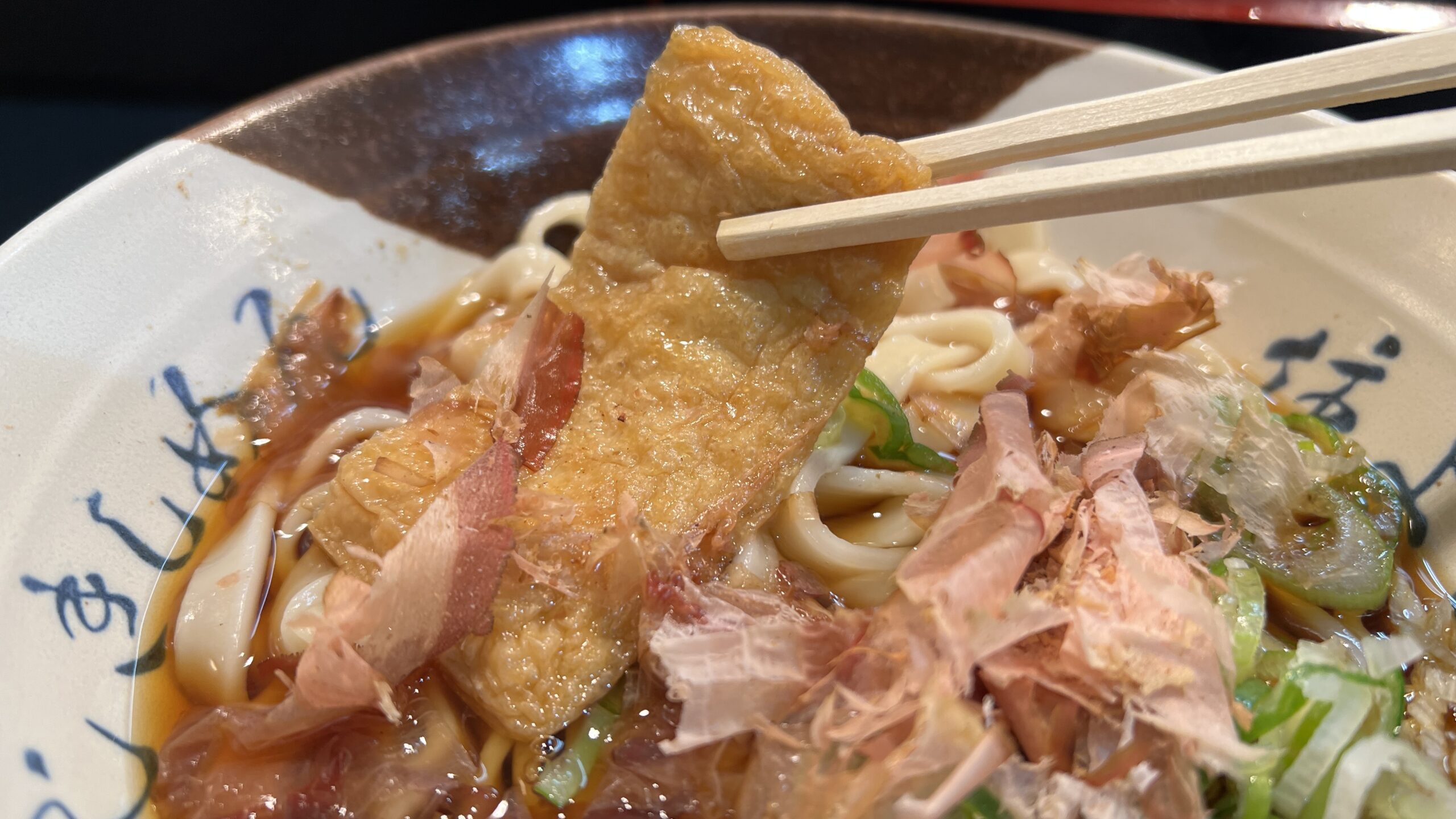
It's the cheapest kishimen, so to speak, it's like kake soba or kake udon, but it's nice to have fried rice on top of green onions and bonito flakes.
It has a sweet flavor and the soup is added to it by absorbing the soup, making it delicious.
Impressions
I ate a quick meal and left after staying for about 5 minutes.
It was served promptly, and I was able to fully enjoy Nagoya until the very end, and board the Shinkansen with peace of mind and satisfaction.
I think it's delicious if you look at it alone, but the same ``Living is good'But when I compared them, I found out that there was a difference in taste.
As for the soup, I think the aroma and taste are different, but I didn't get the impression that there was that much of a difference.
There are so many differences between the kishimen that I noticed the moment I ate them.Although the kishimen themselves are the same frozen type, I felt that there were differences depending on the cooking method, such as whether or not they were boiled.
Certainly the sameLiving is goodHowever, there are differences depending on the store, so you can see why there is information such as the store located on which platform has the best food.
There are 9 stores at Nagoya Station alone, including two stores on the Shinkansen platform, two on the upstream side and two on the way down, so it may be difficult to try and compare them all. .
I think it's okay to at least go up and down the Shinkansen platform, whichever you prefer.
I will also be visiting Nagoya next year, so I will make this my homework for that occasion.