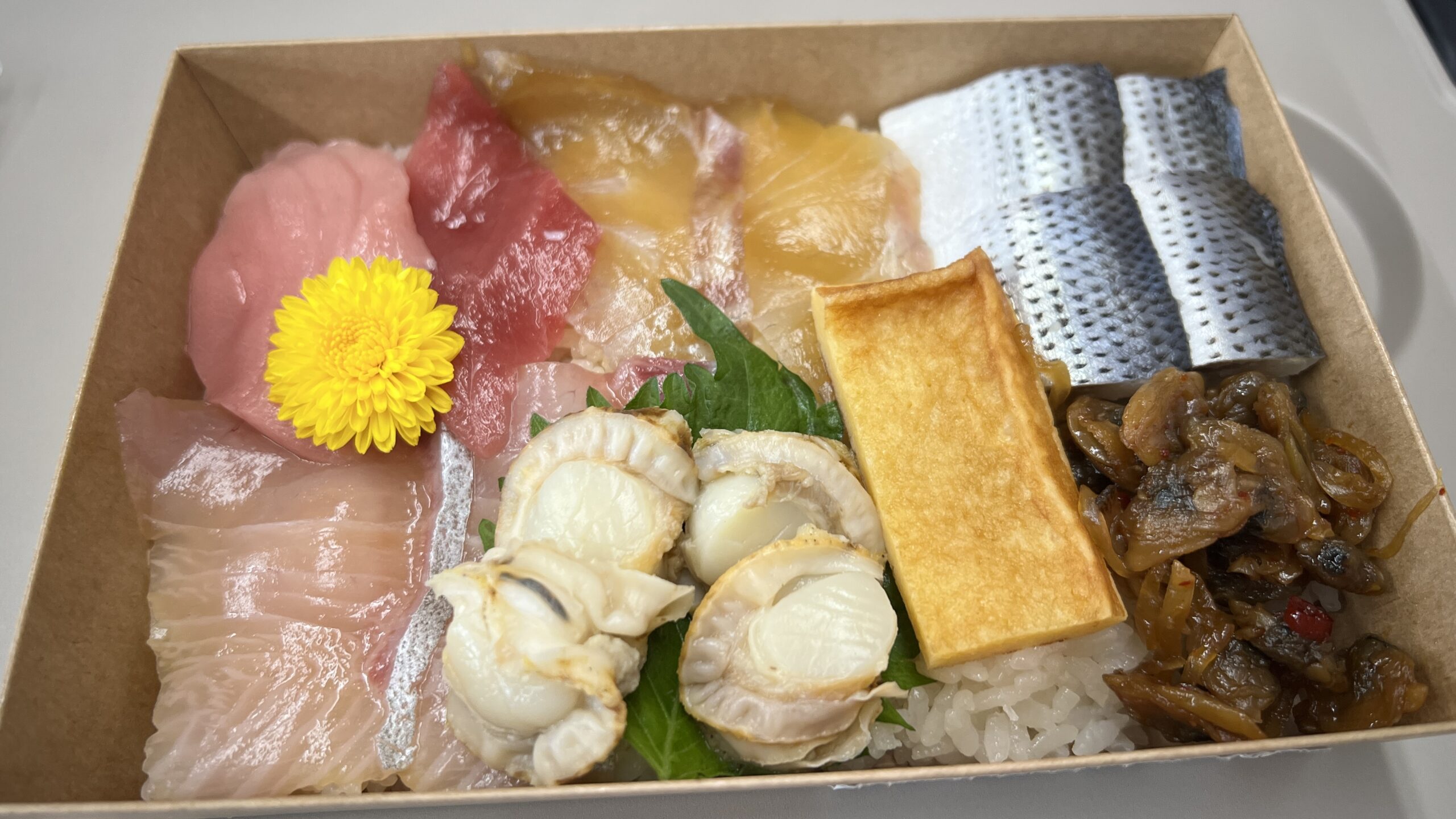
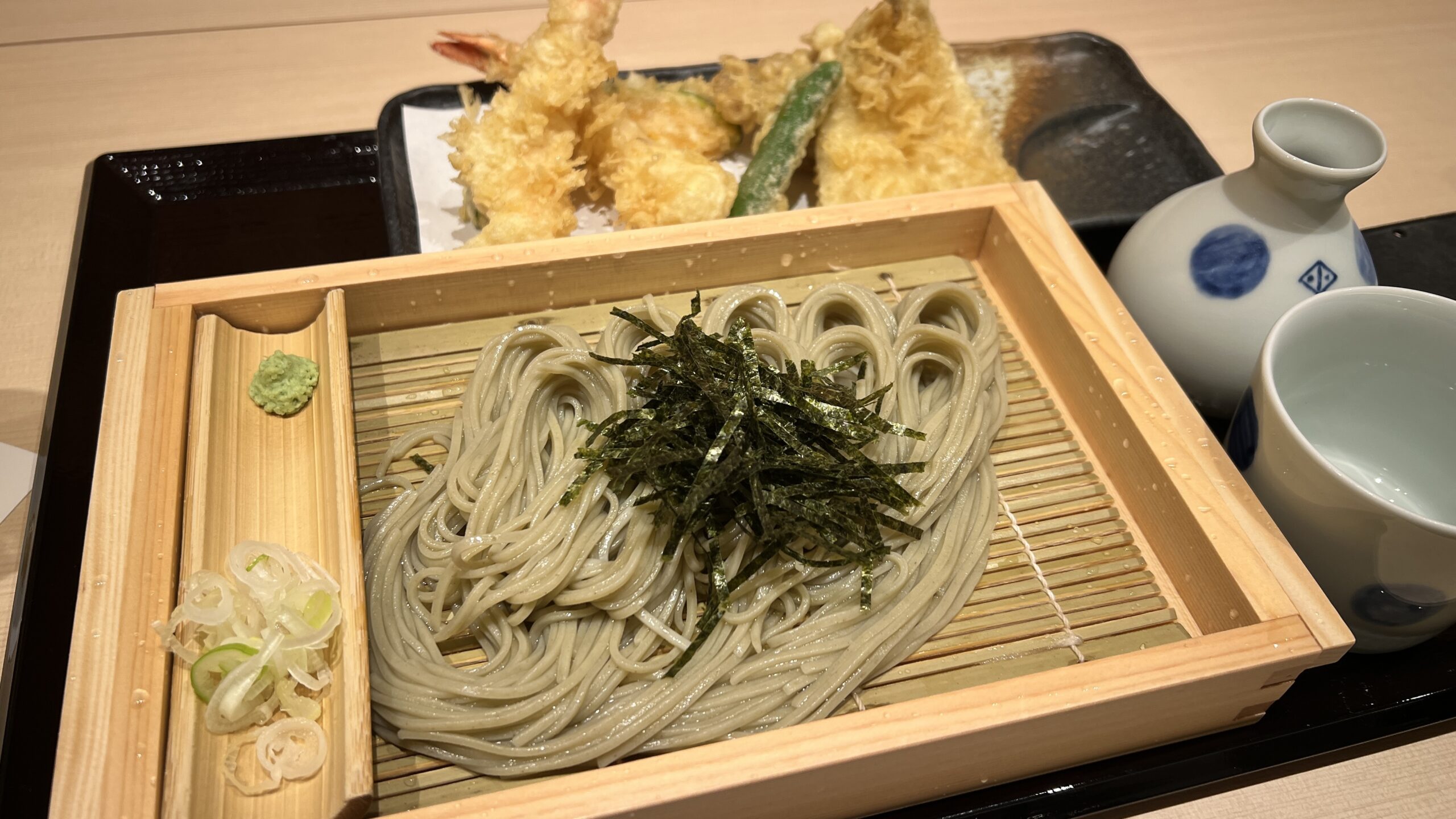
- Urasa Station
- Ryujushi
- 1st item: Abalone
- 2nd item: Ara mizuna with sansho pepper and sesame sauce
- Gari
- 1st piece: Wood ear mushroom and medium fatty tuna
- 2nd piece: Horse mackerel
- Volume 3: Otoro
- 4th piece: Kohada
- 3 items: Chawanmushi
- 4th item: Tuna Warabi
- 5th item: Chutoro and Udo Kinpira
- 5th piece: Purple sea urchin
- 6th piece: Botan shrimp
- 7th piece: Ark shell
- 6th item: Aqua pazza
- 8th piece: Clam
- 9th piece: Egg-cooked rice with salmon roe
- Item 7: Mafugu milt
- 10th piece: Nanban shrimp
- 11th piece: Nishibaikai
- 12th piece: Conger eel
- bowl
- Tamagoyaki
- alcohol
- Impressions
- information
Urasa Station
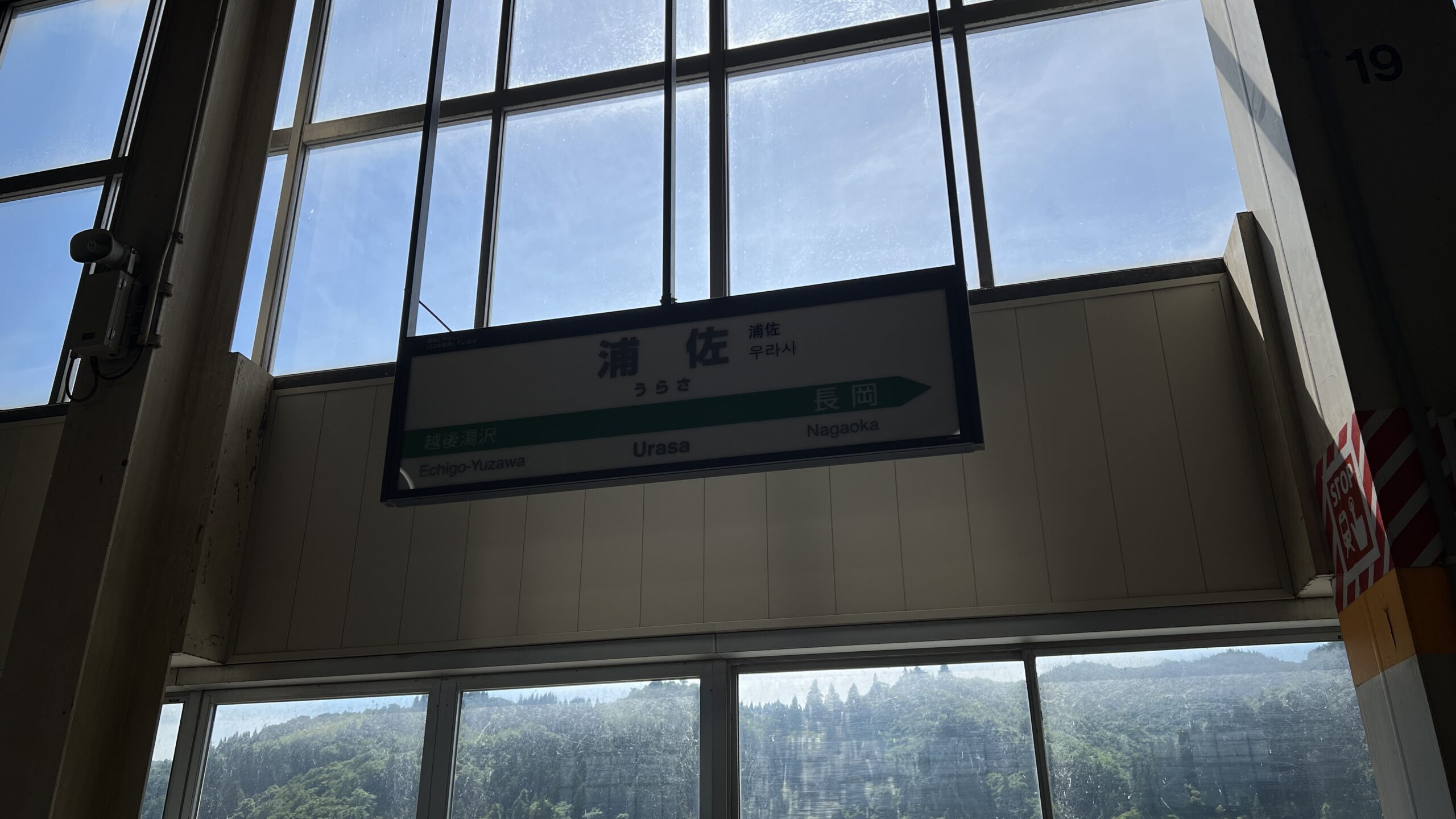
I am traveling from Tokyo Station to Niigata Station on the Shinkansen, but on the way I get off at Urasa Station.
Urasa Station has no hot springs or tourist spots nearby, so it is basically only used by residents, making it the station with the lowest number of passengers on the Joetsu Shinkansen.
I have been using the Joetsu Shinkansen for many years, but this was my first time getting off the train.
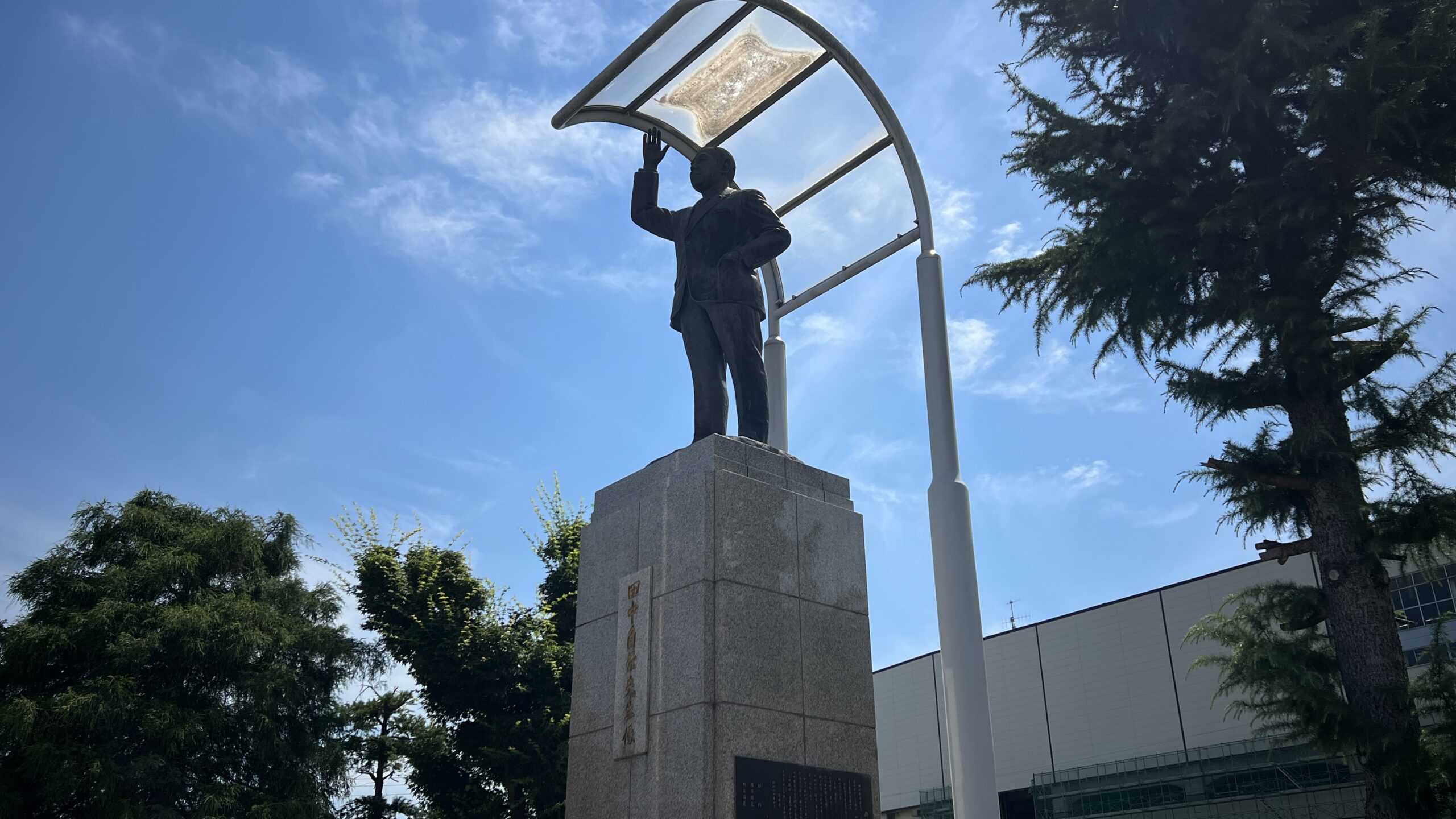
In front of the station is ``Kakuei TanakaThere is a bronze statue of
The Joetsu Shinkansen was created thanks to Kakuei Tanaka.
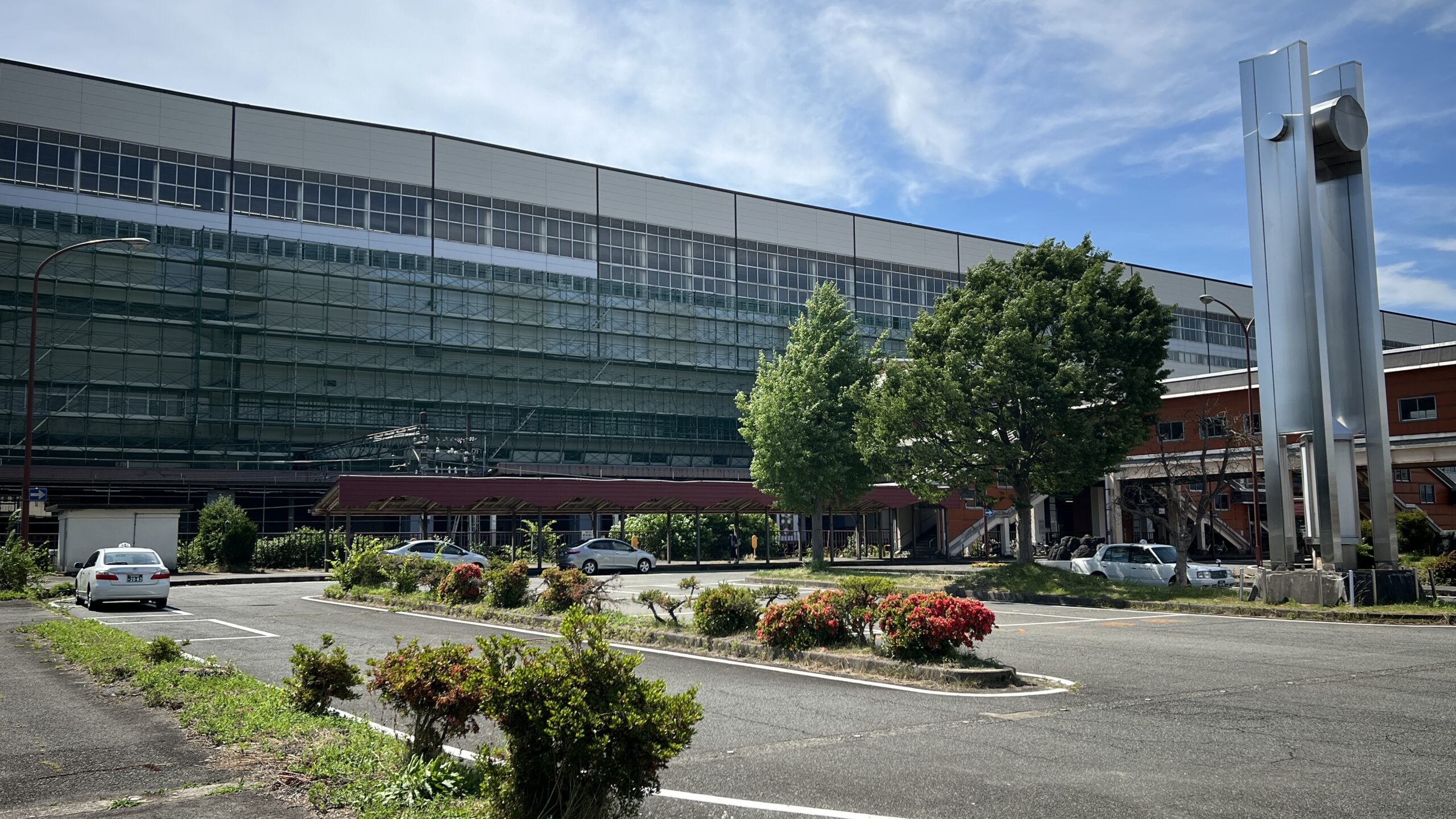
Taxis are always stationed at the east exit (Hakkaisanguchi) of Urasa Station.
The bronze statue is also located at the east exit (Hakkaisanguchi).
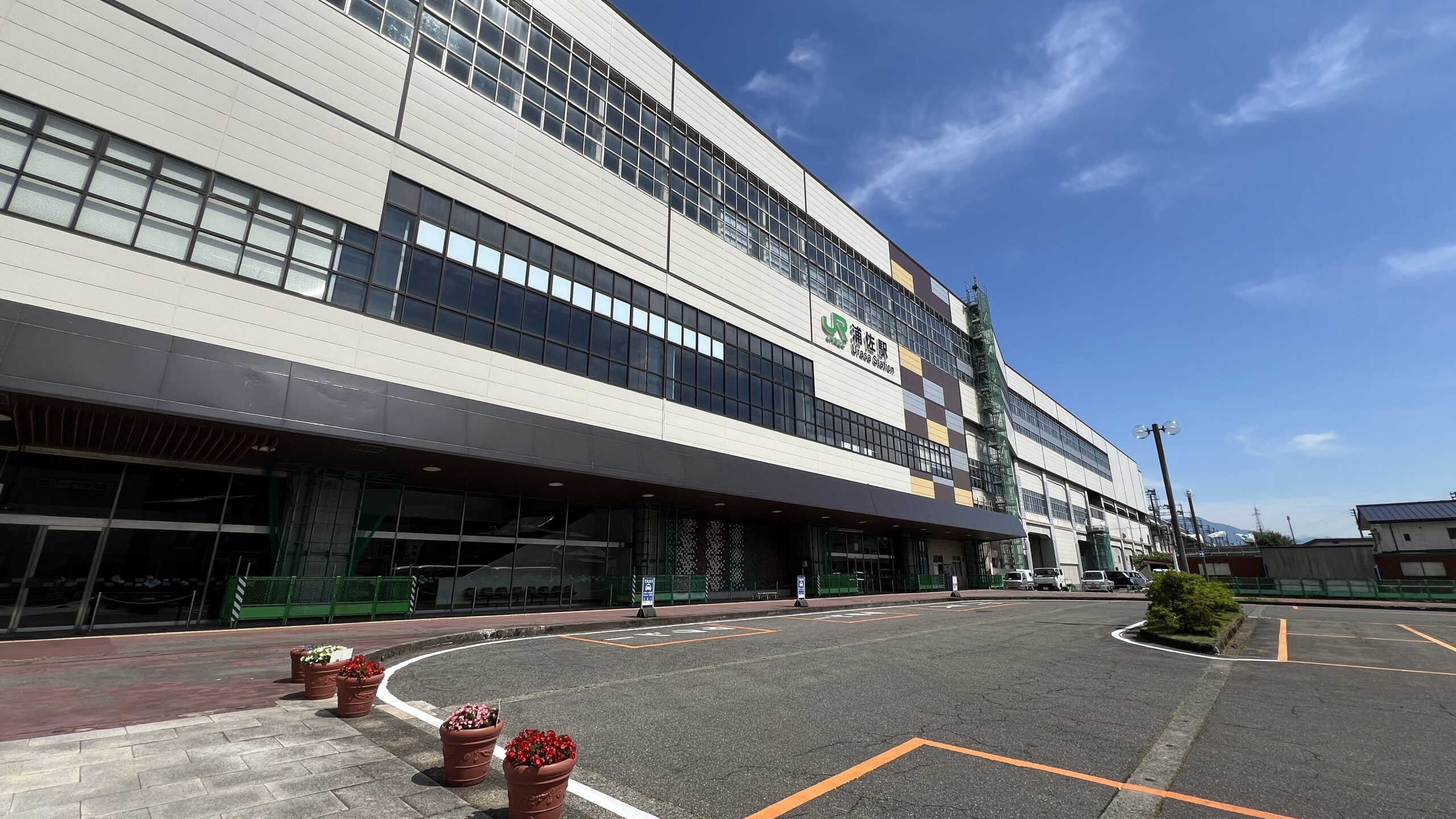
Out of curiosity, I also went down to the west exit (Bishamon Tenguchi), but it looked like there was a bento shop in front of the station, and there were no taxis stationed here.
Ryujushi
The reason why I got off at Urasa Station, which is only used by residents, was because even in such a city, the restaurant was awarded the Michelin Plate in 2020.Ryujushi” is there.
I enjoyed the fusion of sushi and ingredients from the Uonuma area, and to be honest, I started to wonder what counter sushi in such a remote area would taste like.
This time for lunch,Uonuma Gastronomy Premium Course (16,500 yen including tax)” I asked.
We took a taxi to the store, which took about 10 minutes (about 2,500 yen).
Now, let's start.
1st item: Abalone
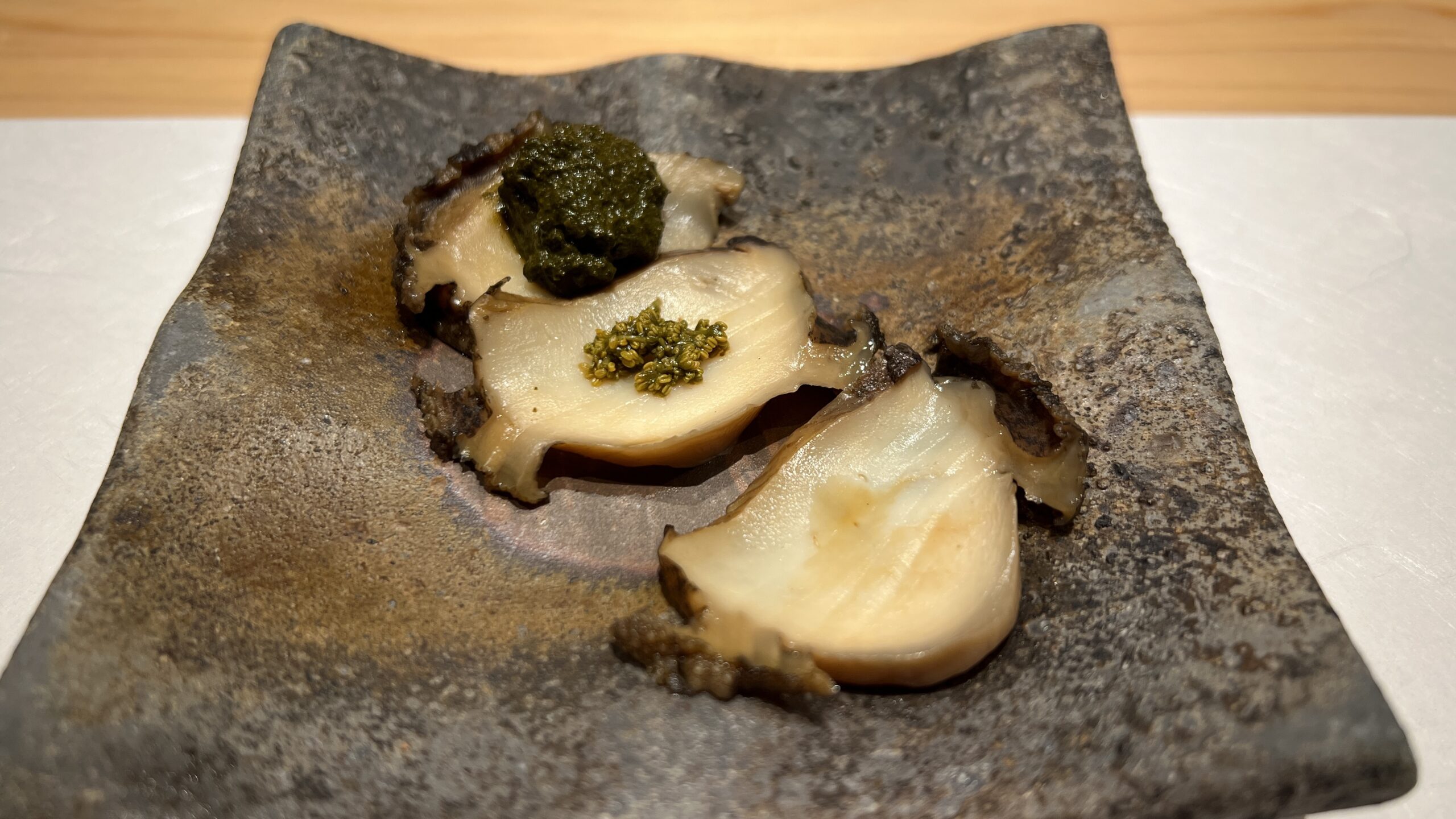
It is said to be from Sado and boiled with only sake and water.
You can eat it with 3 types: soy sauce, hana sansho, and liver.
soy sauce
The abalone is plump and has a strong and delicious flavor.
Japanese pepper
Hana sansho is delicious, isn't it?
It feels like I'm eating what's in season.
Liver
The liver has a rich flavor and is good for drinking.
2nd item: Ara mizuna with sansho pepper and sesame sauce
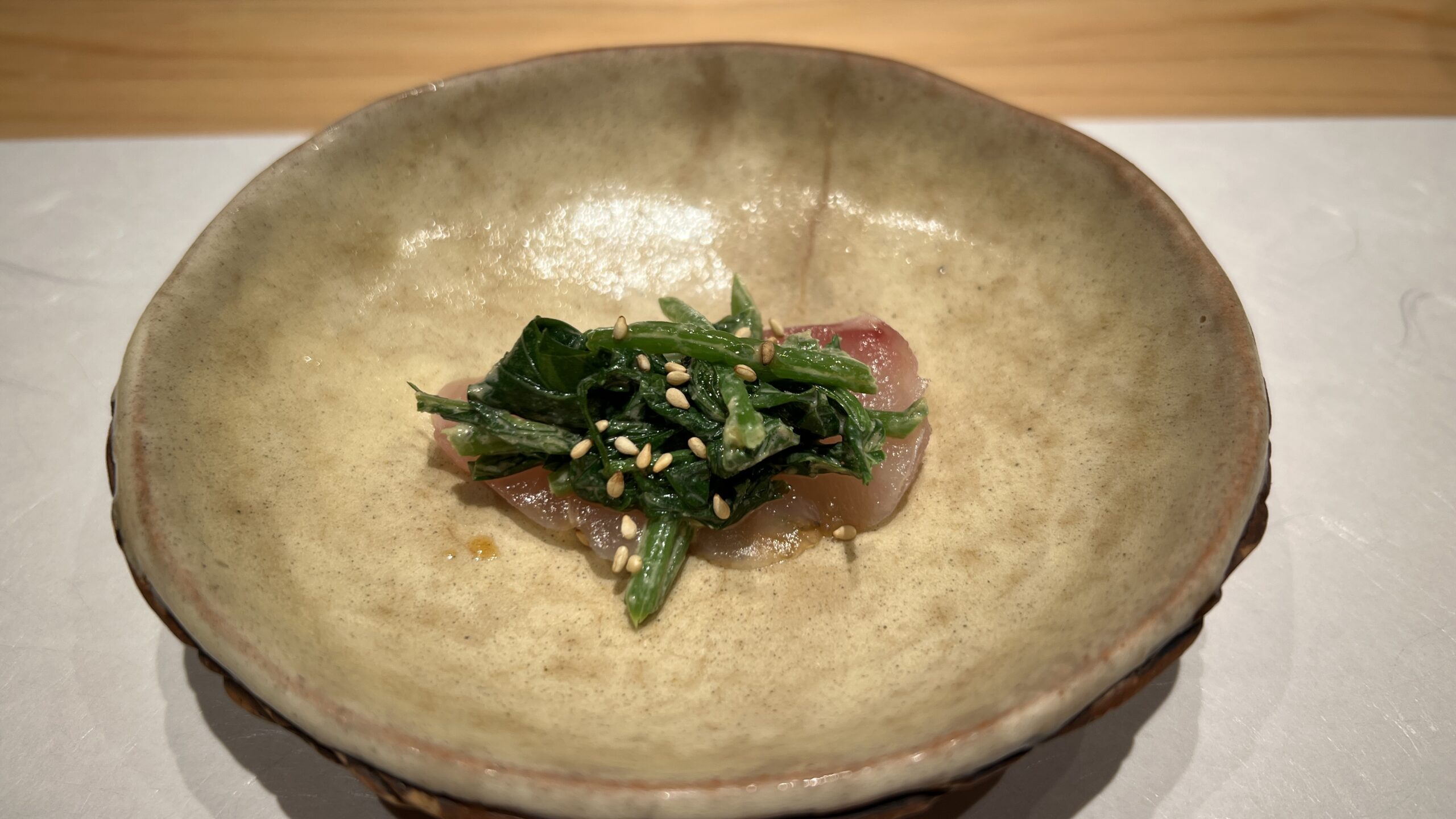
The ara itself has a sticky, plump texture and a delicious flavor.
The crunchy texture of mizuna is an accent, and the sesame and Japanese pepper linger on the aftertaste.
Gari
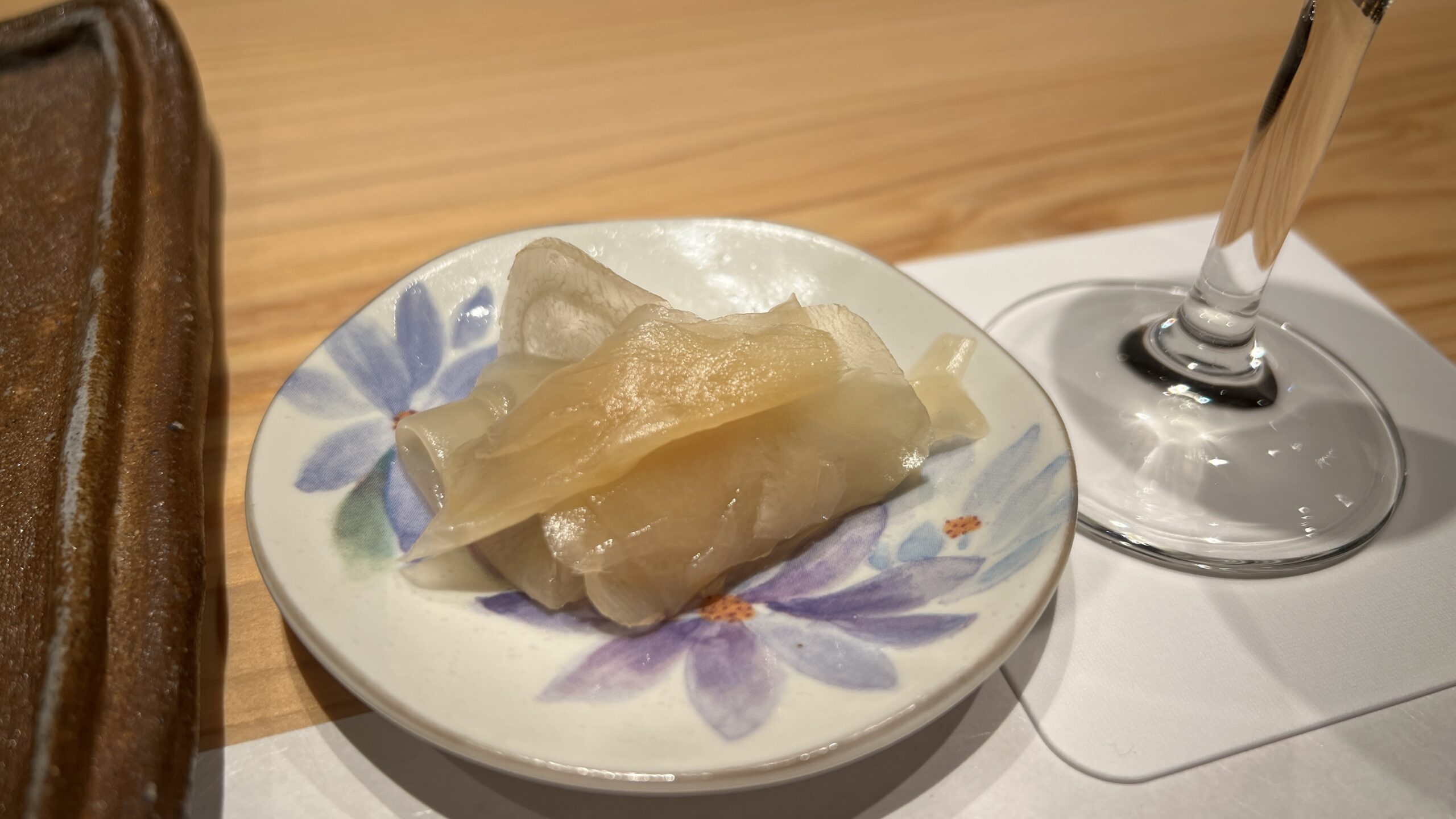
It gave me a refreshing impression of sweetness and spiciness.
Appetizers and nigiri are interwoven and served, so the gari will appear soon.
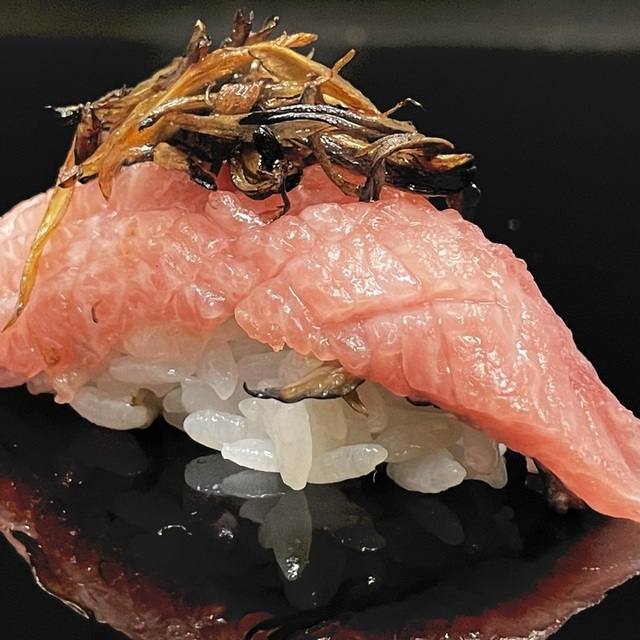
1st piece: Wood ear mushroom and medium fatty tuna
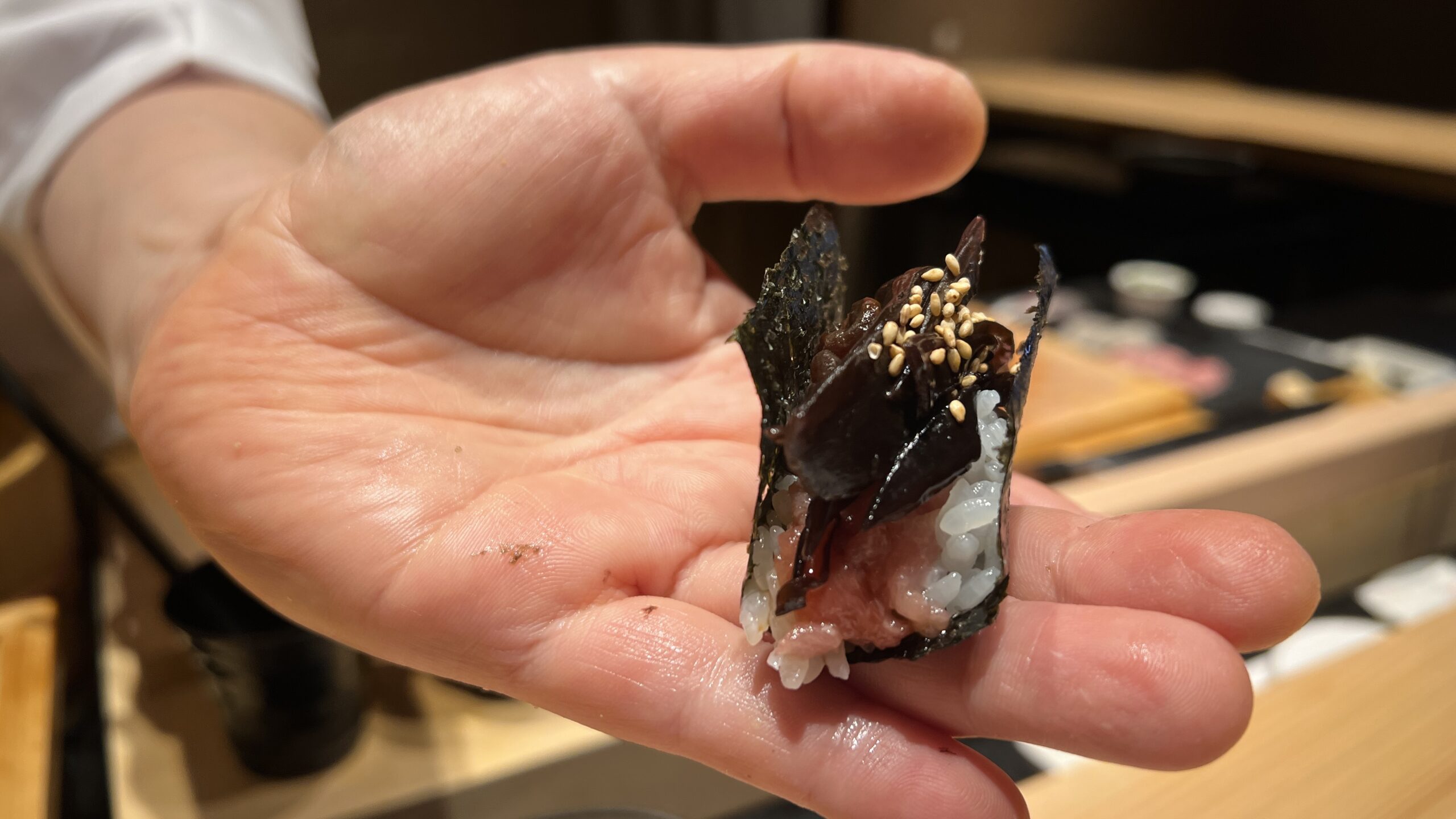
The medium fatty tuna itself has a good amount of fat, but it's not too greasy.
The wood ear mushroom has a gelatinous texture rather than a crunchy texture, and it gives the impression that it adds a little accent.
2nd piece: Horse mackerel
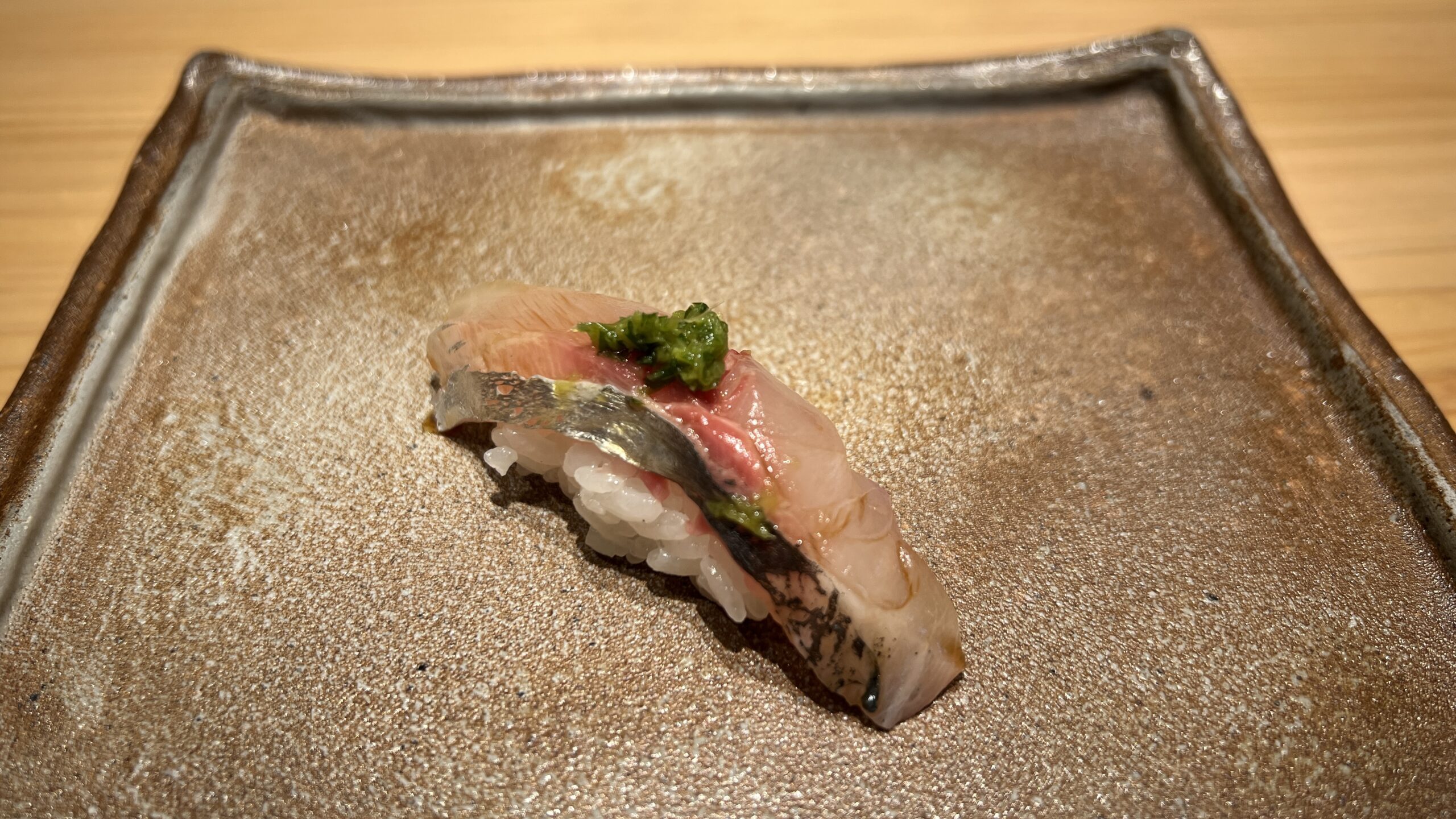
It is said to be from Awaji Island.
The taste is rich and strong.
As a result, I felt a slight wrinkle in my skin, but I think it's within an acceptable range.
Volume 3: Otoro
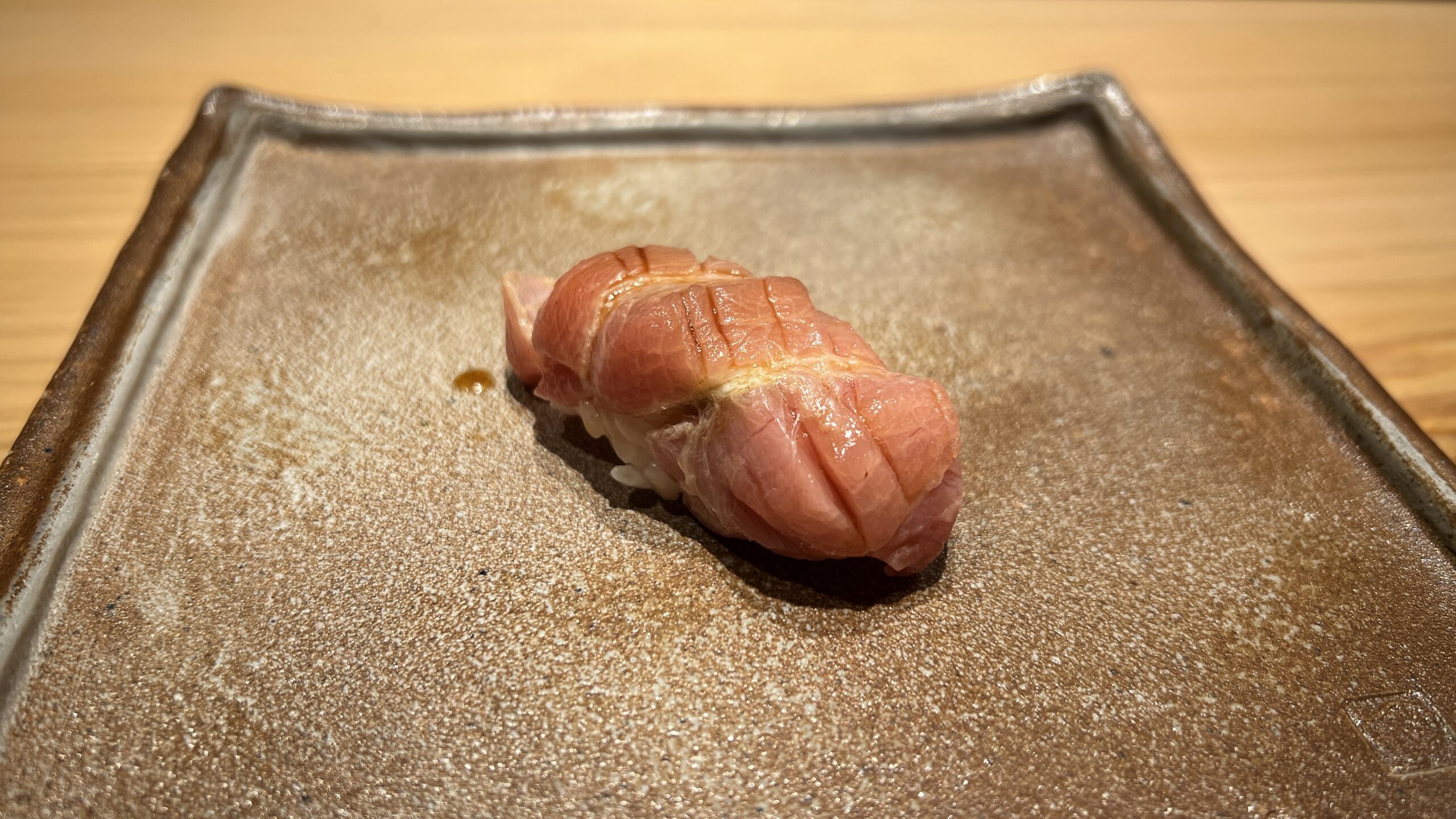
It is called Sakaiminato.
I felt the rich fat and flavor.
4th piece: Kohada
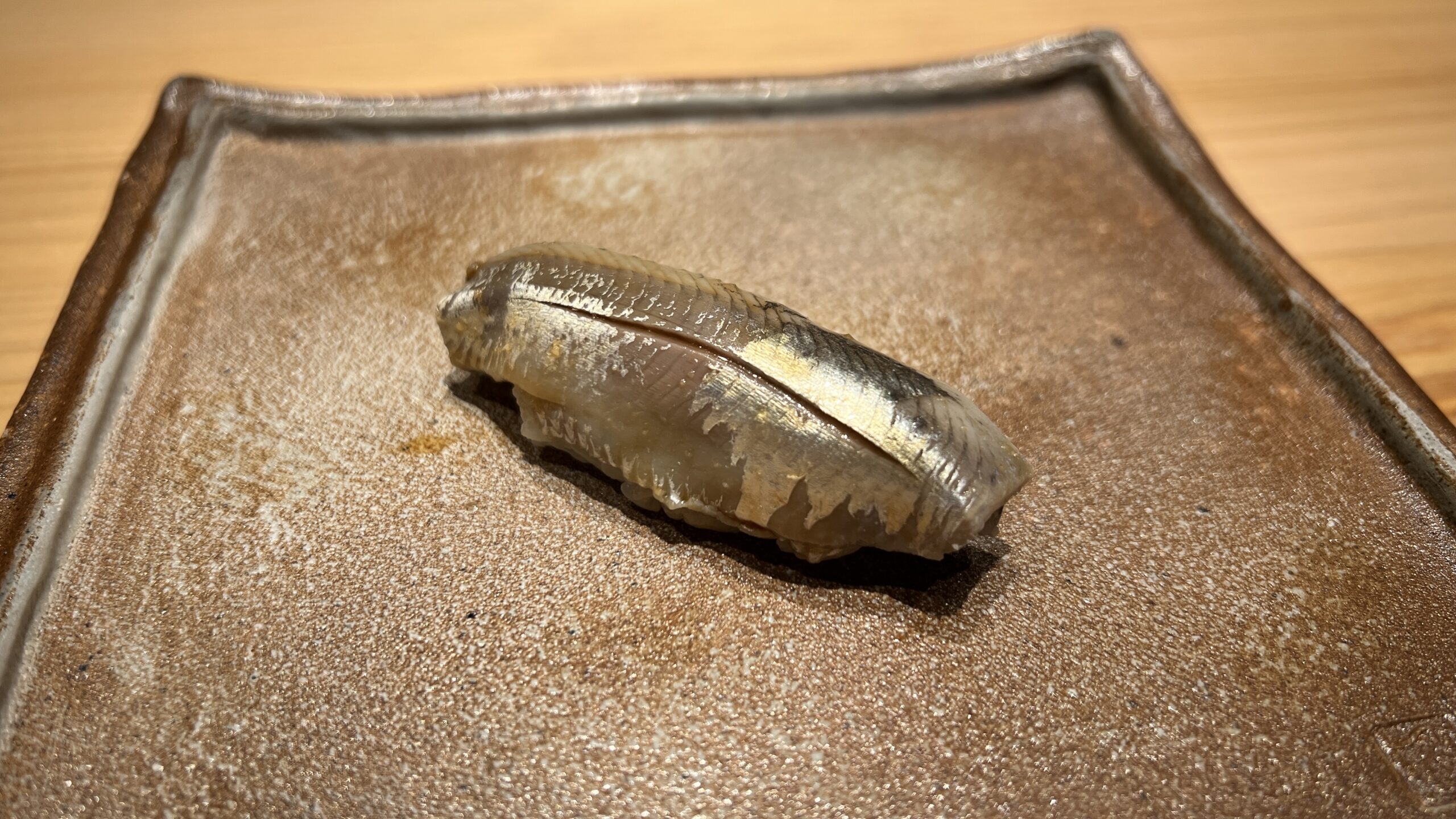
It is said to be produced in Saga Prefecture.
I think its distinctive feature is that the skin is peeled off.
It doesn't look like Kohada, but the skin is sometimes hard, so this is an ant.
The vinegar has a sharp effect.
It is said that there is a bit of sweet shrimp inside, and as you chew it, it becomes sweeter.
3 items: Chawanmushi
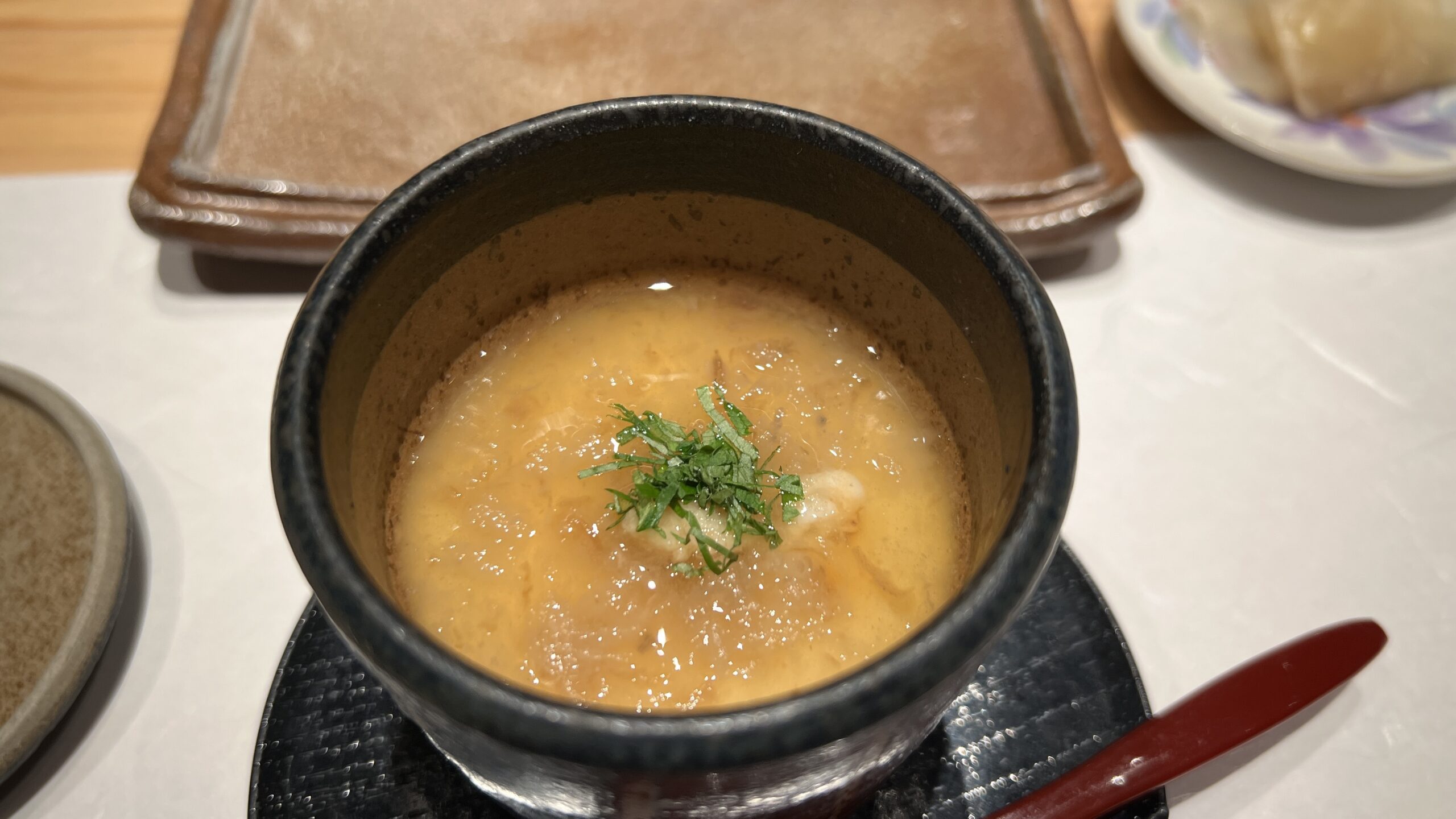
It contains lotus root paste and lotus mochi, a rice cake made from lotus root and joshinko flour.
The lotus roots were fragrant and the soup stock was strong.
4th item: Tuna Warabi
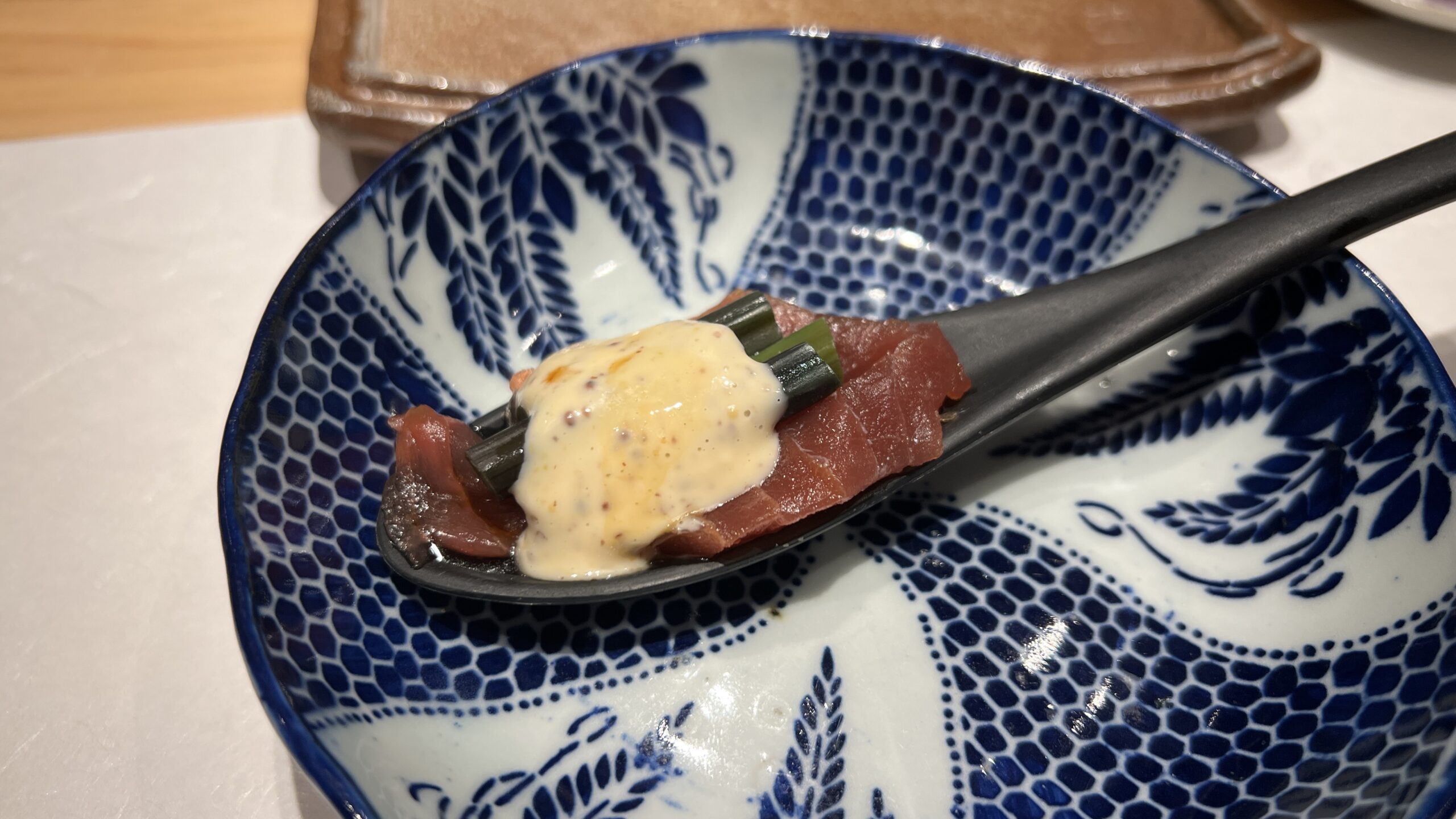
Serve with homemade mayonnaise containing tuna, bracken, Japanese mustard, and garlic.
You can enjoy a variety of textures and flavors such as the aroma of garlic, the crunch of mustard, and the crunch of bracken.
5th item: Chutoro and Udo Kinpira
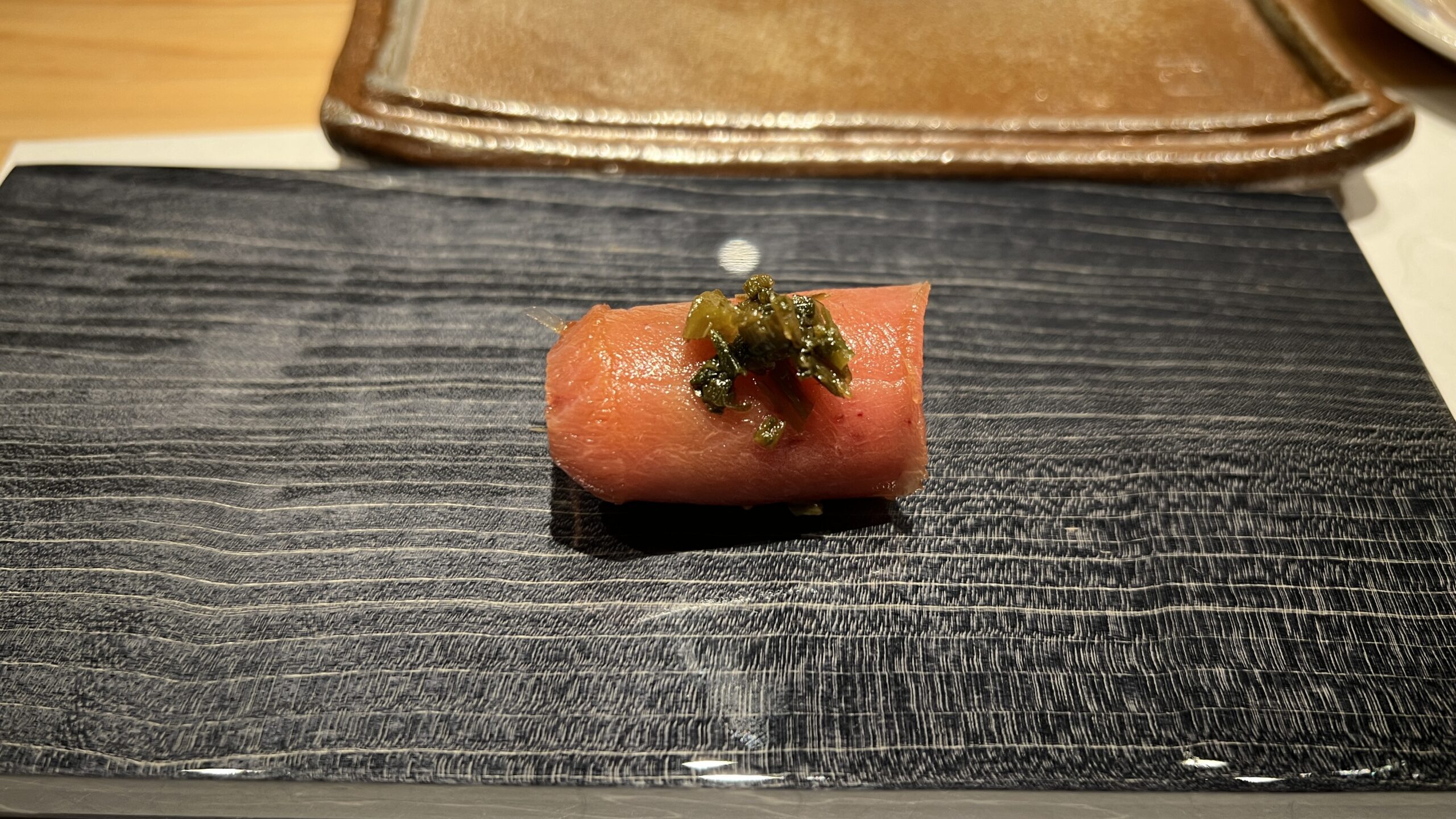
I could feel the fat in the medium fatty tuna, but I had the impression that the aroma was not as strong as the sesame oil.
This vessel has been specially treated by infiltrating the wood with resin.
This is also done by a company in Minamiuonuma.
Personally, I don't know much about it, but I can enjoy the utensils as well.
5th piece: Purple sea urchin
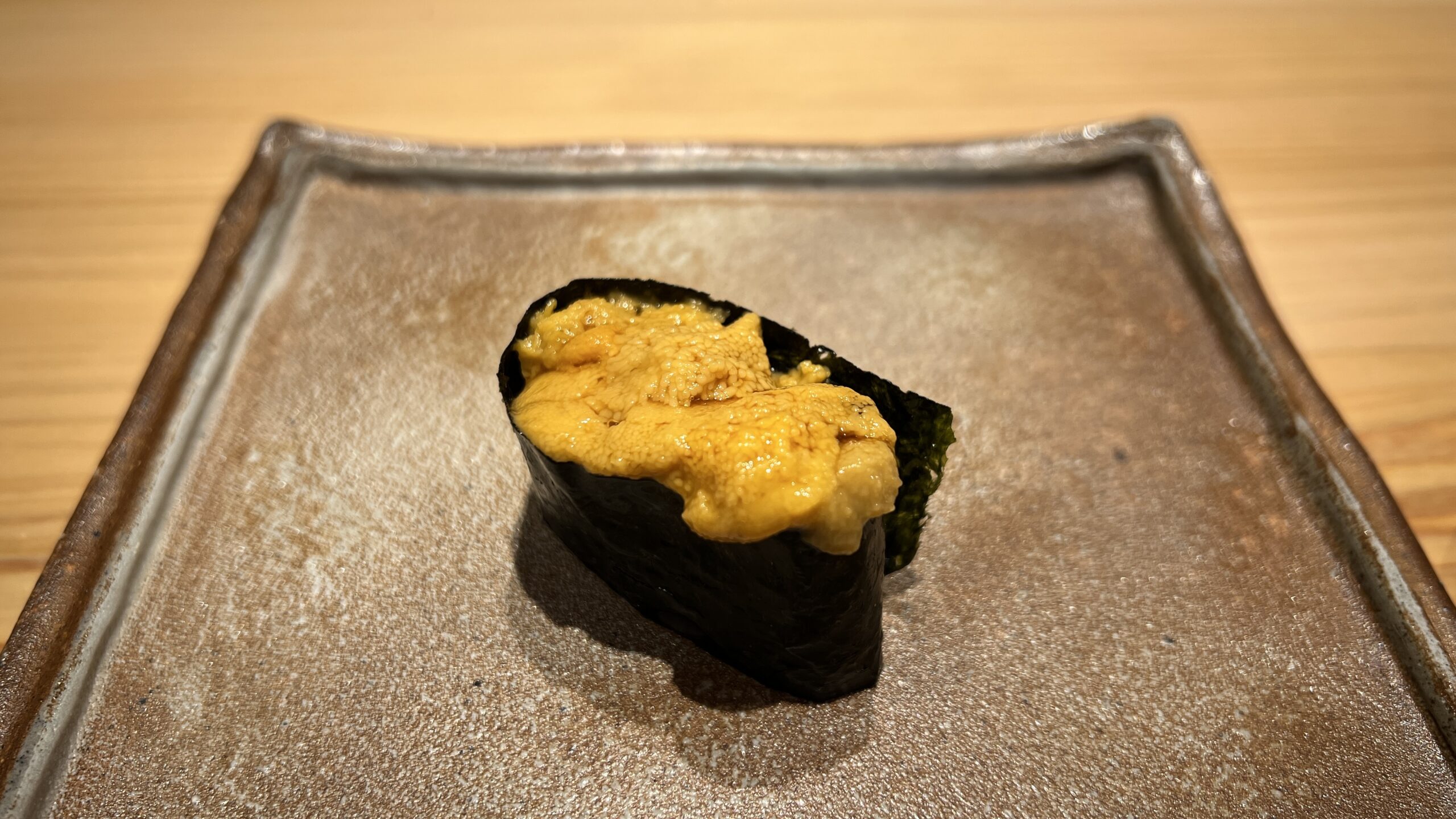
This is purple sea urchin that does not use alum and is harvested on the Pacific side of Aomori Prefecture.
It disappears quickly when you put it in your mouth, but the flavor is still there.
The seaweed had a nice seaside feel.
6th piece: Botan shrimp
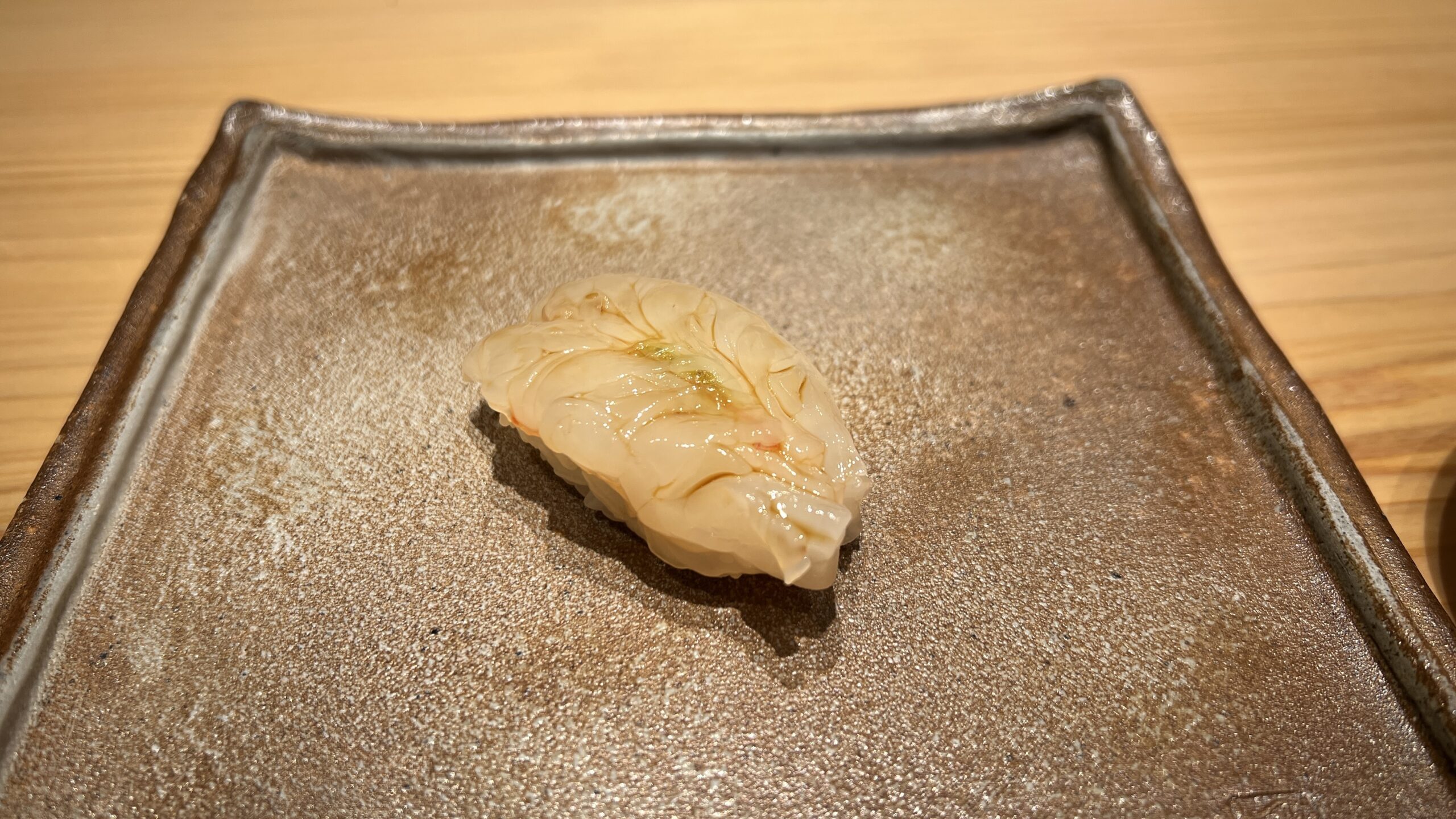
It is said to be from Sado.
It had a crispy texture and was rich and sweet.
button shrimp
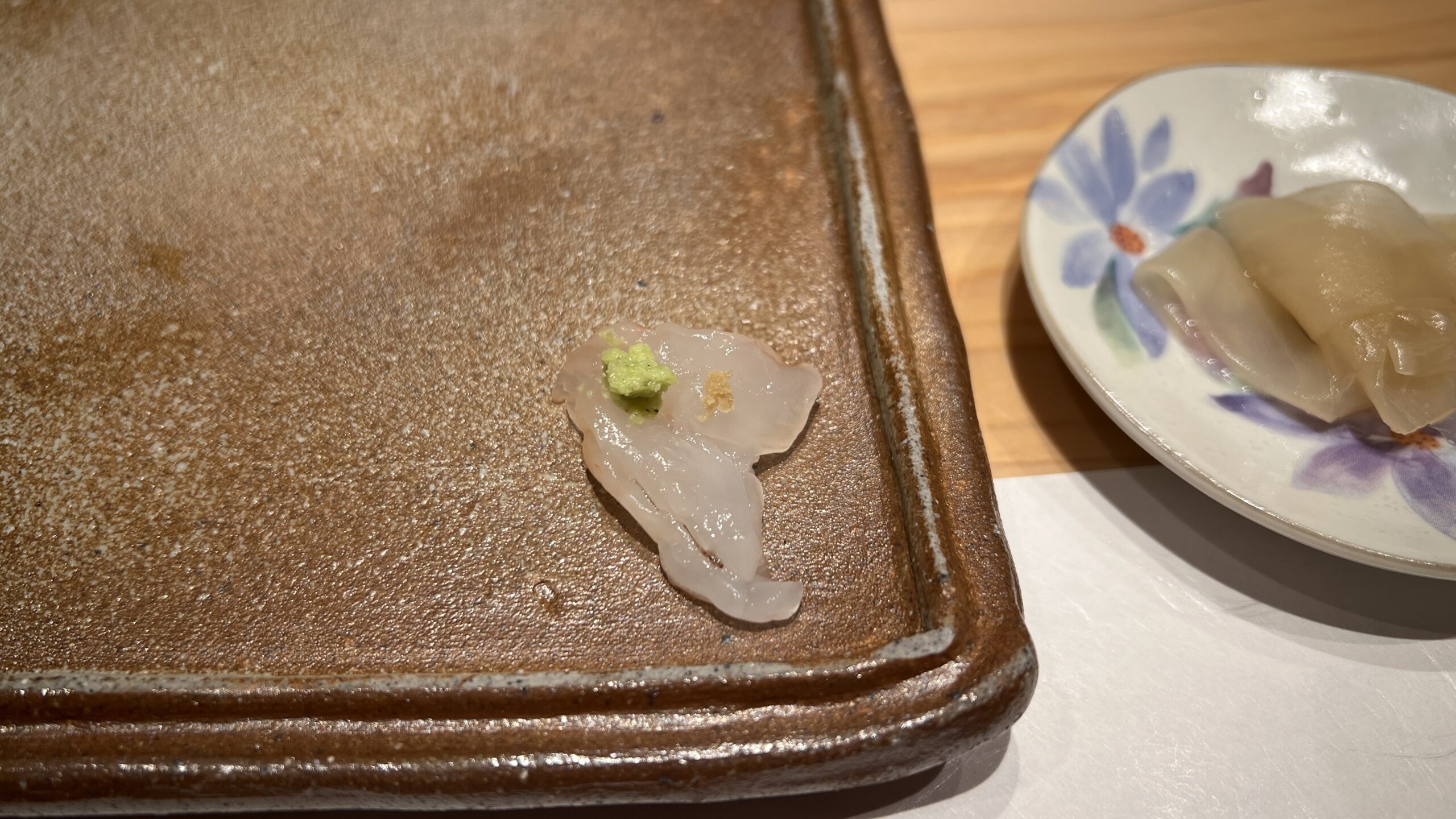
One fish seemed to be large, so I cut it up and received it.
Served with wasabi, botan shrimp miso, and salt made from salt.
I'm happy because my mouth is full of shrimp.
7th piece: Ark shell
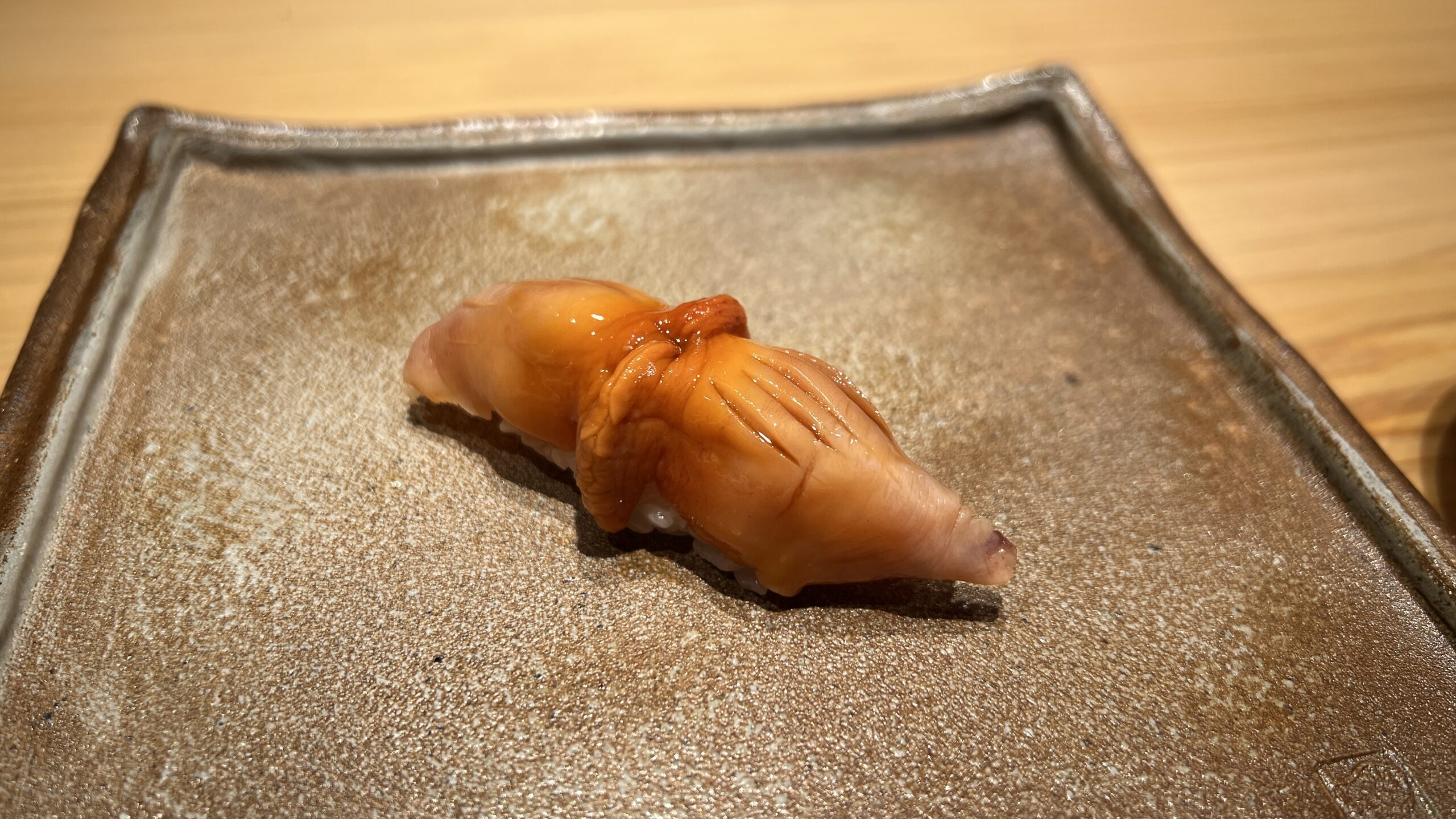
It is said to be from Yuriage.
It has a nice melon-like scent similar to red shellfish.
The texture was also nice and crunchy.
6th item: Aqua pazza
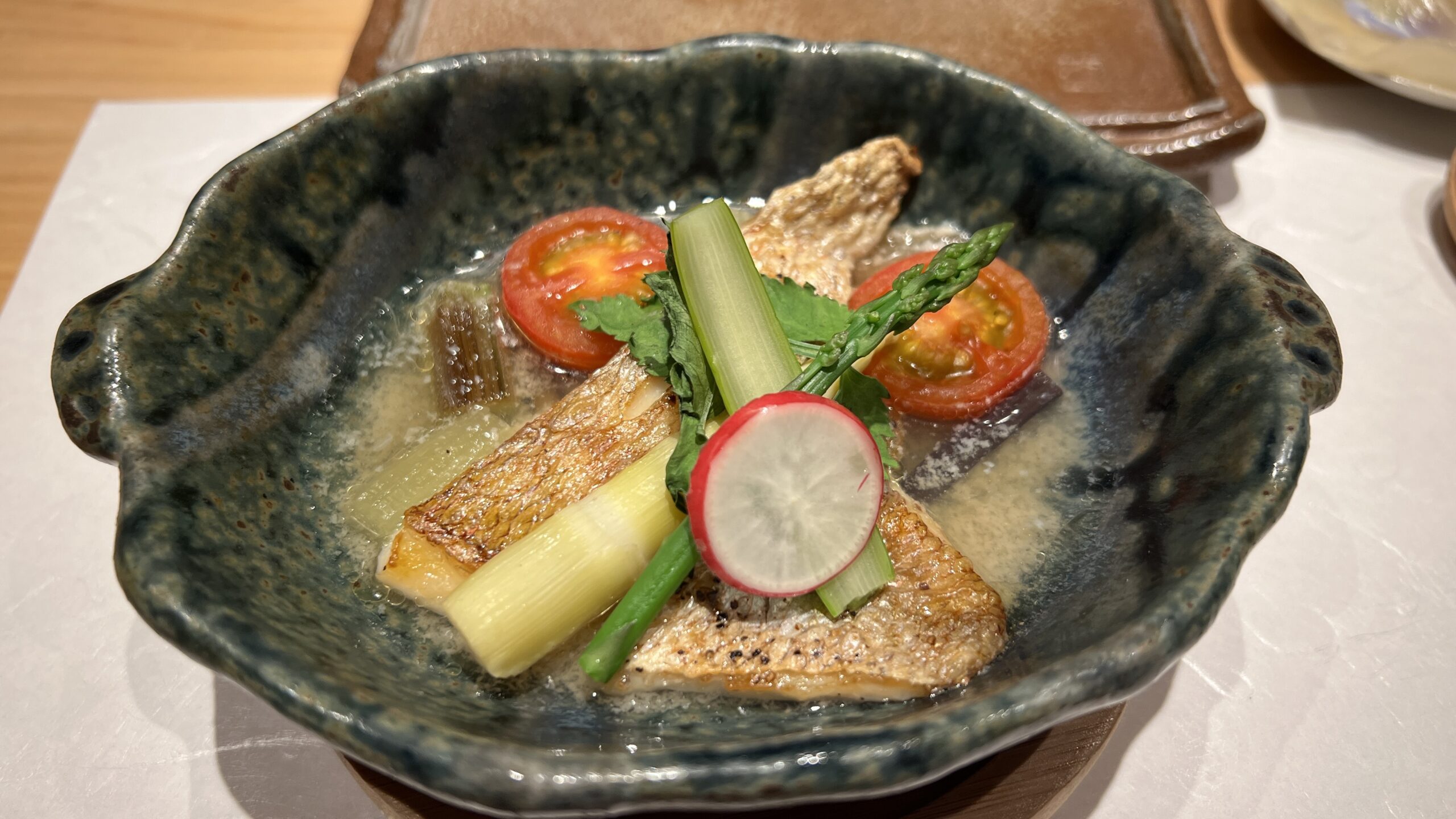
I never expected to be able to eat aqua pazza at a sushi restaurant. .
It contains sea bream from Awaji Island, so plenty of vegetables from Uonuma are used.
The soup stock was quite strong and I could really taste the flavor of the seafood.
The vegetables are delicious.
All of them have an impression that they are two to three levels stronger in flavor than vegetables bought at the supermarket.
8th piece: Clam
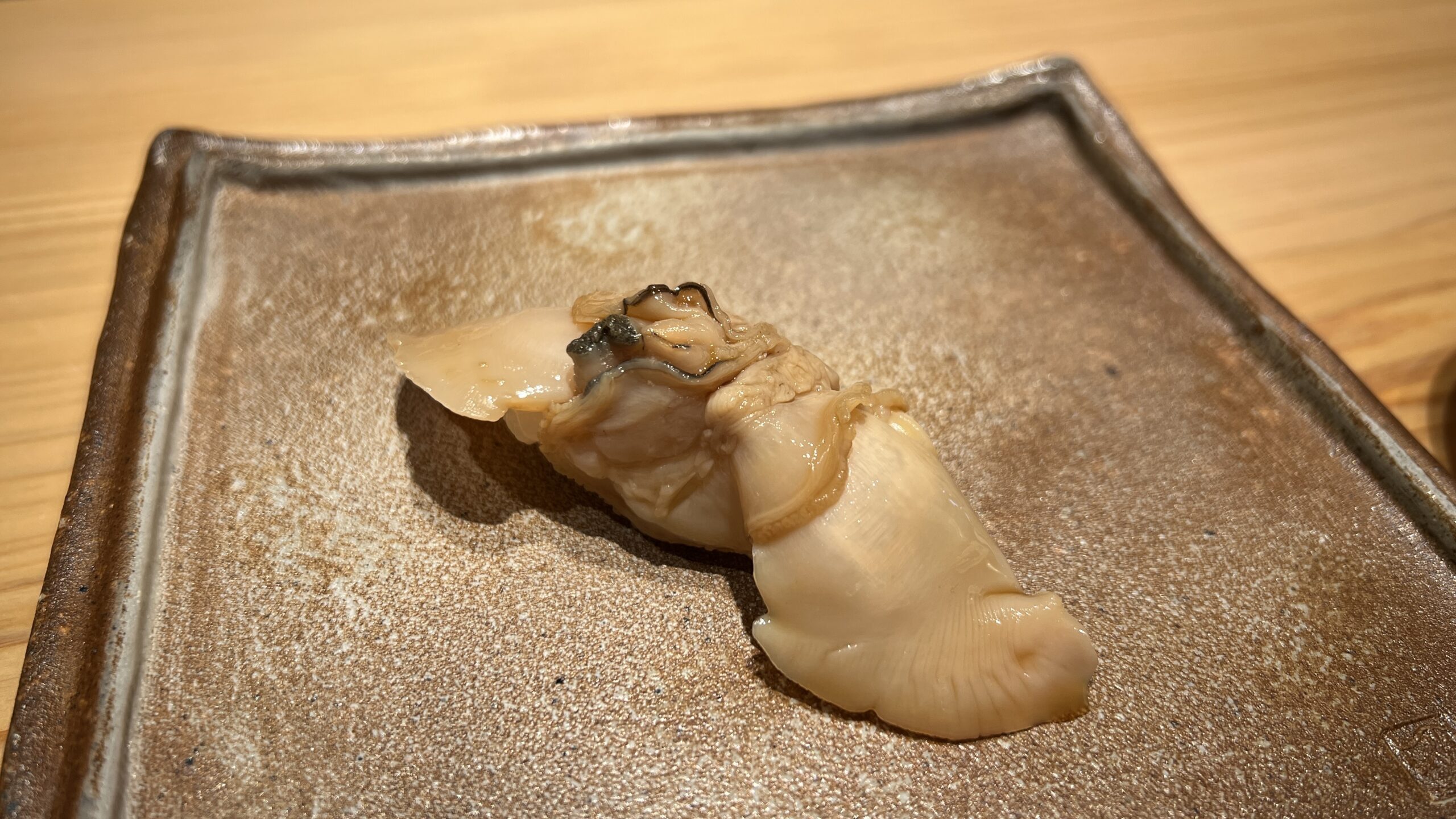
It is said to be produced in Chiba Prefecture.
It was a bomb of flavor and had a nice crunchy texture.
9th piece: Egg-cooked rice with salmon roe
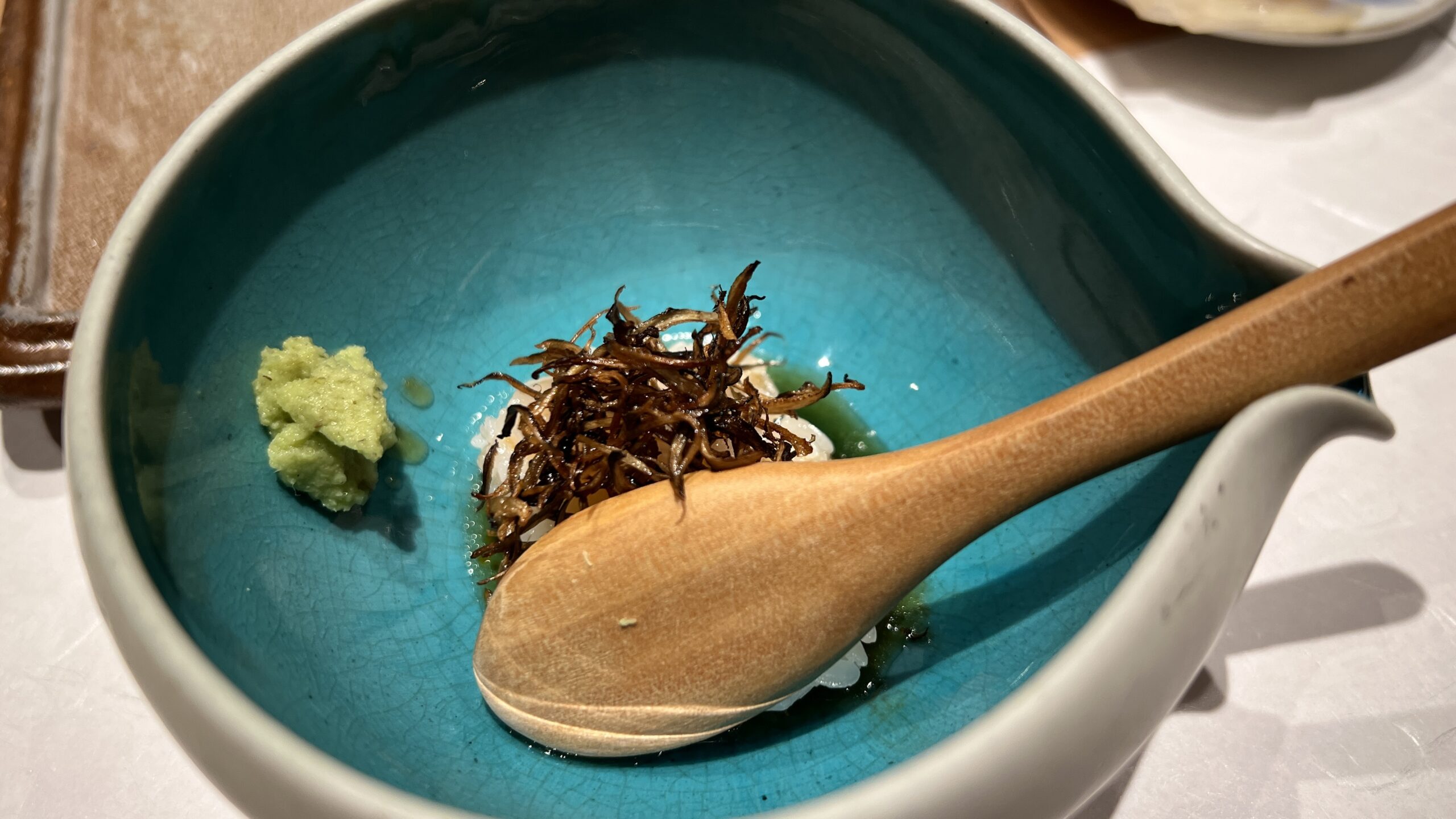
Sorry for the bad photo taking. .
It's rice with egg because it's topped with pureed salmon roe.
The ones on top are black maitake mushrooms that have been pasteurized.
If you heat it properly, the aroma will be much better.
It was a dish that you could enjoy both in flavor and aroma.
Item 7: Mafugu milt
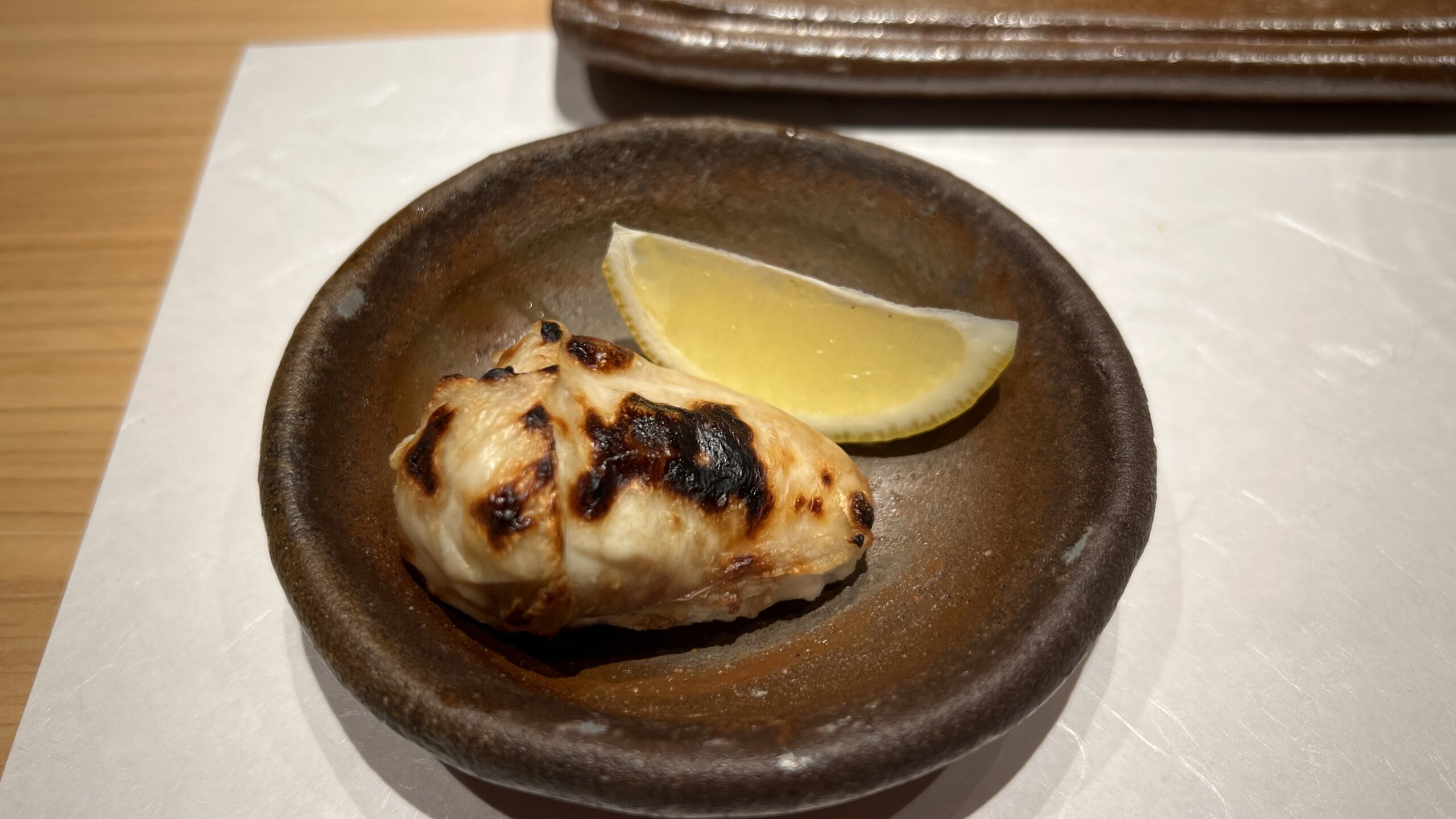
It gave the impression that the skin was a little strong.
It's not a pretty way to eat it, but I like to pick it up and eat it with a glass of sake.
It was creamy, but I wouldn't say it was rich.
10th piece: Nanban shrimp
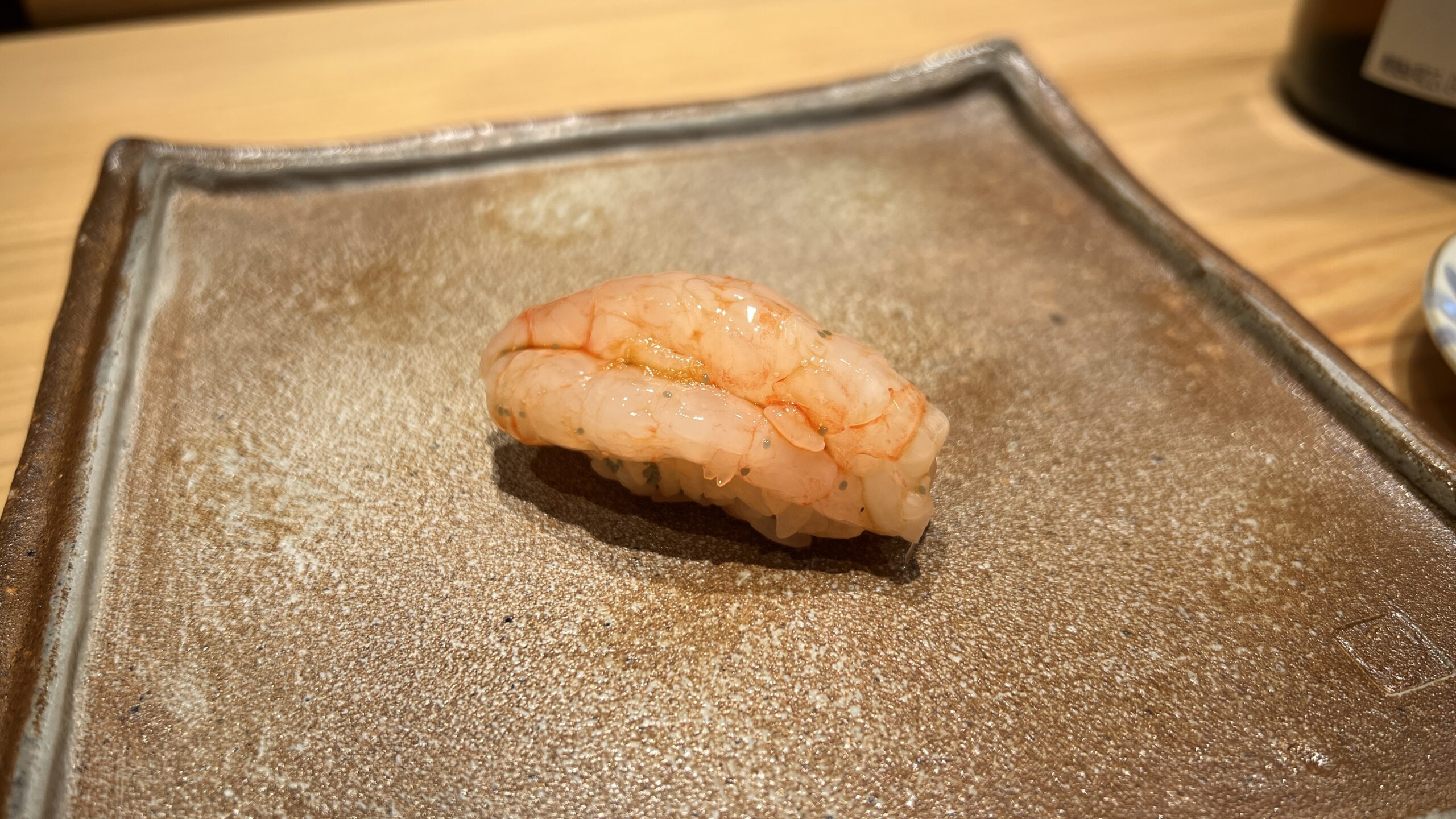
Nanban shrimp is sweet shrimp.
It is said to be produced in Sado and aged for 2 days at -2℃.
It has a rich, sticky texture and is sweet.
11th piece: Nishibaikai
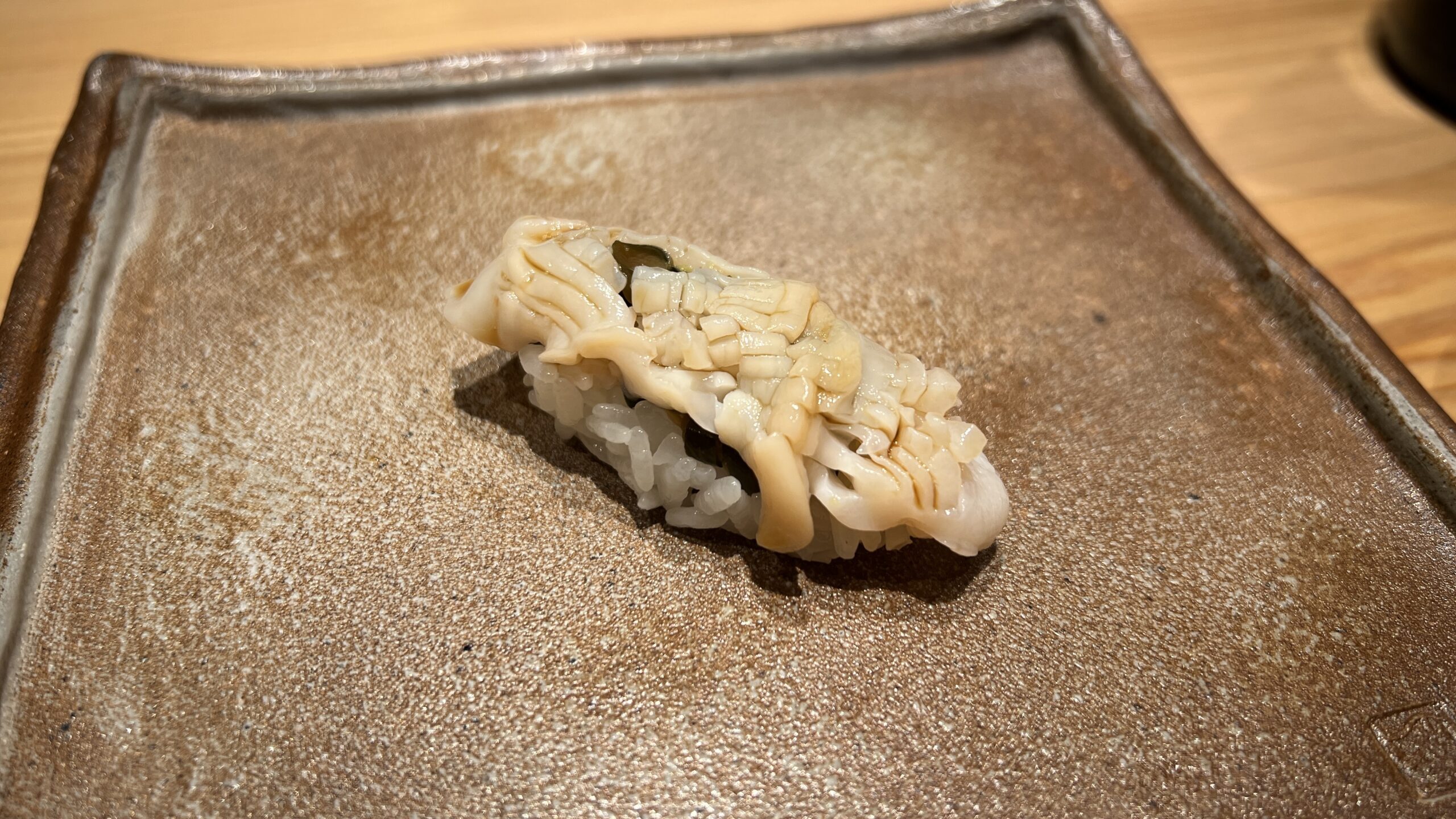
I like the crunchy texture and the flavor of the sea.
It is said that there is cucumber tsukudani inside.
12th piece: Conger eel
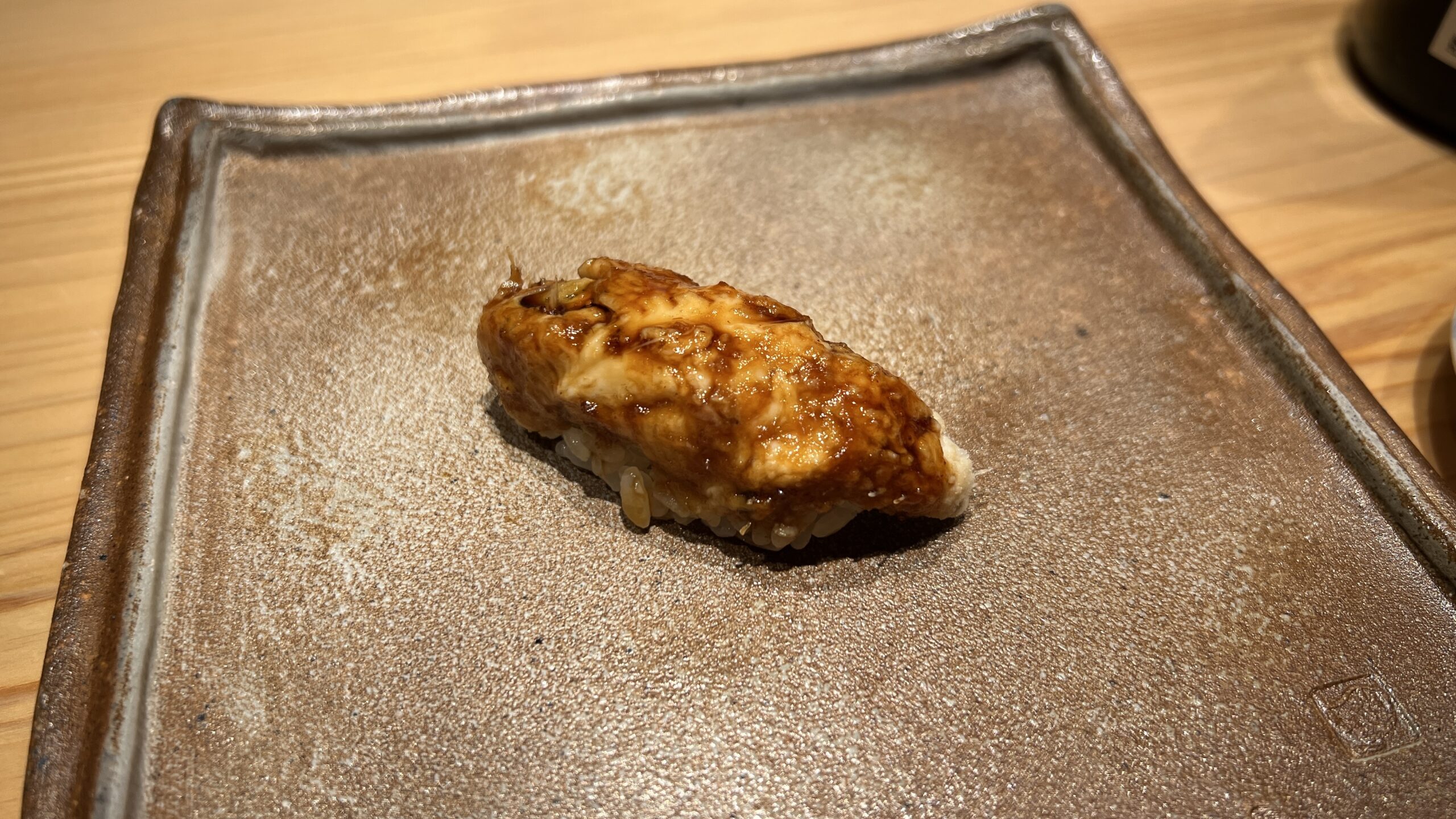
It has a fluffy texture and is just delicious without being addictive.
bowl
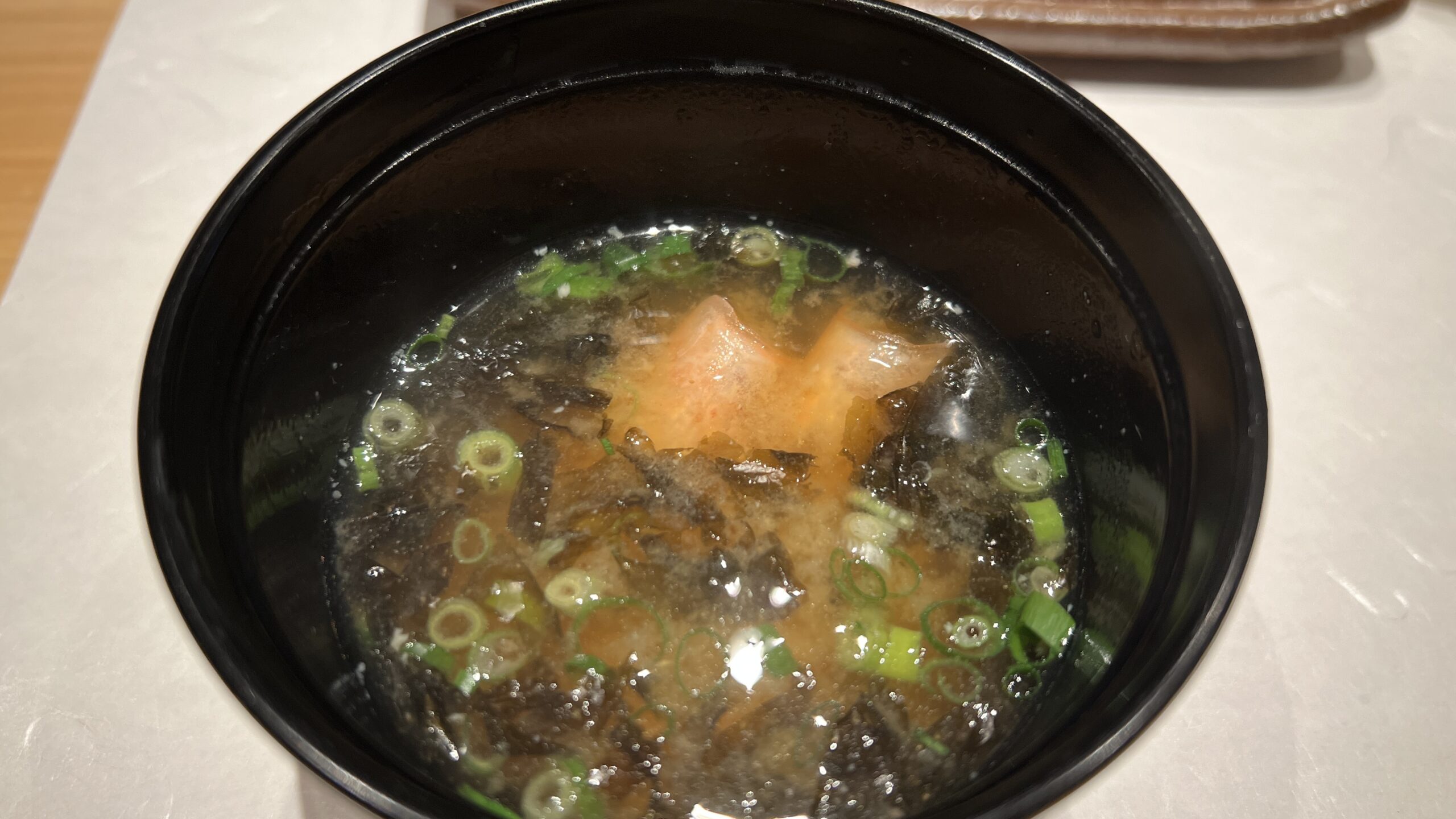
The shrimp stock comes out well and is delicious.
It stains after drinking alcohol.
Tamagoyaki
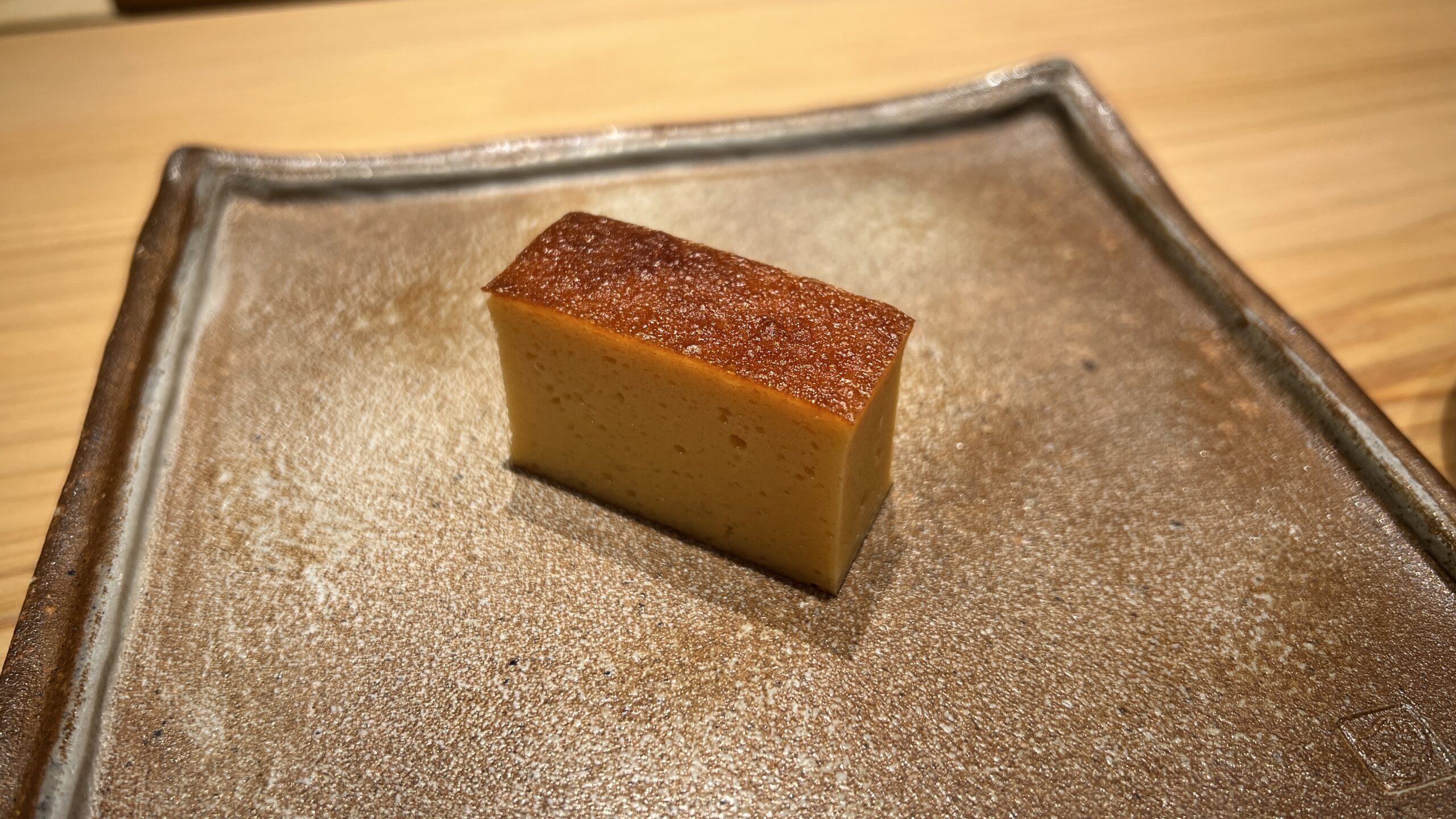
This type is not sweet and has a fragrant soup stock.
alcohol
I received two types of Japanese sake.
Hakkaisan Awa White Koji Junmai Daiginjo
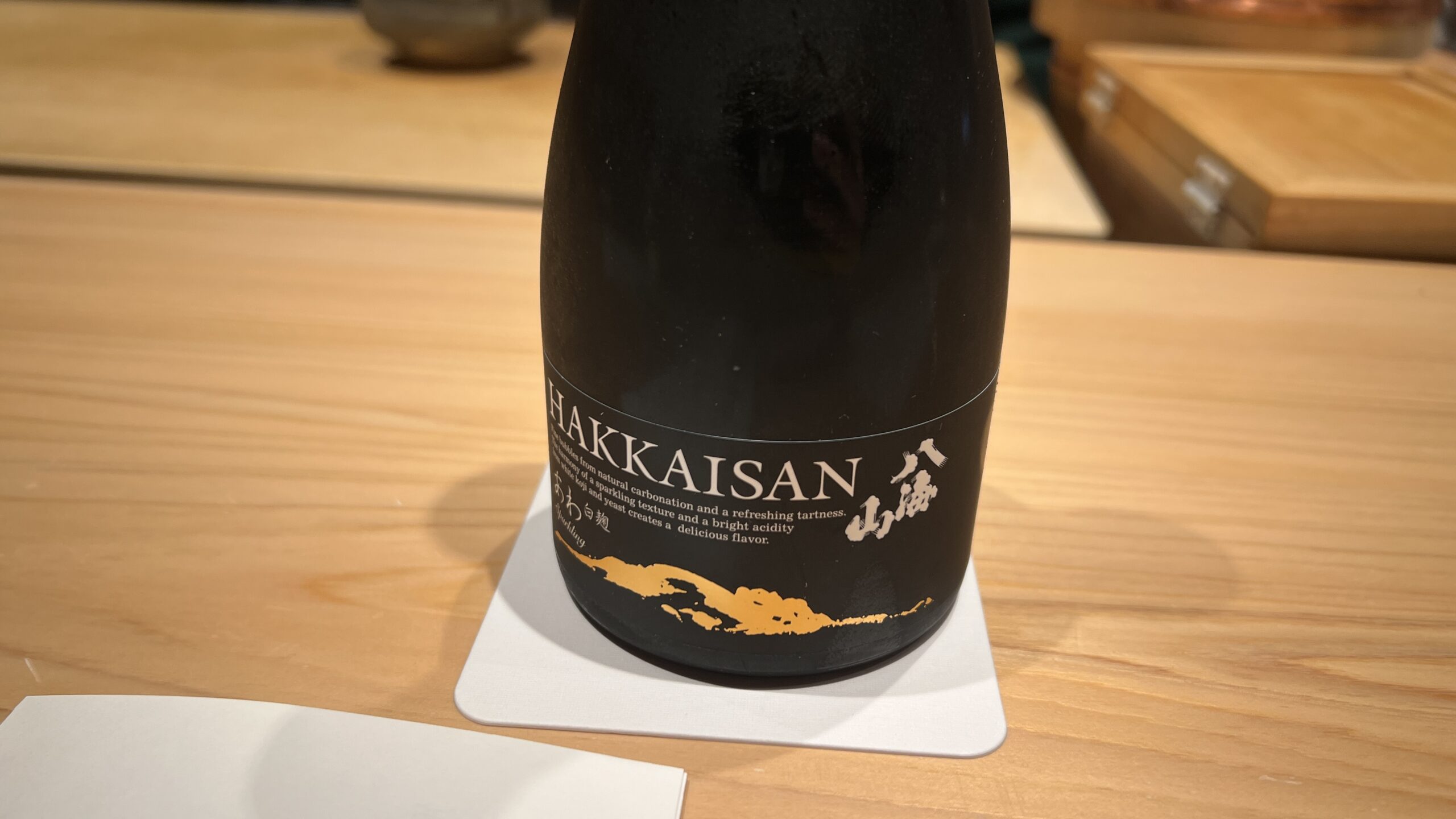
This is a rare bottle that is only available at 10 liquor stores nationwide.
By the way, Hakkaisan's ``Official online storeYou can purchase it from ``.

Since it is foam, only bottles were available.
It was mildly sweet and didn't interfere with the meal, but it had a strong presence.
It's easy to drink, so I think you'll enjoy it from start to finish.
Hakkaisan Uonuma
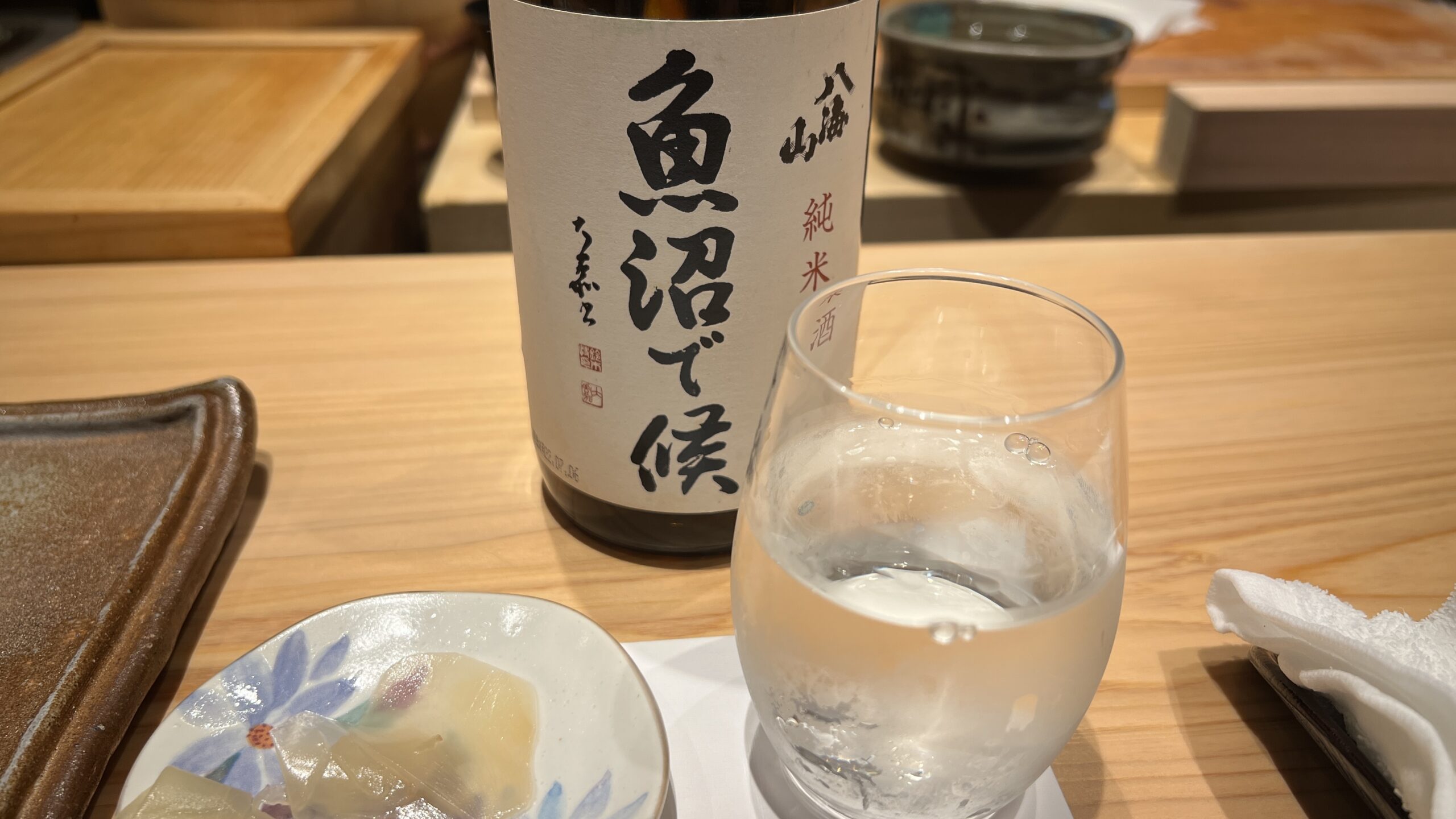
This is a bottle limited to the Uonuma area.
Just because it's limited edition doesn't mean it's expensive; it's a regular sake that costs about 1,200 yen for 720ml.
However, this is rich and goes well with cooking.
Held in March, “Niigata sake campI drank it for the first time at the time of the event, and I was so disappointed that it was only available in the Uonuma area.
Impressions
The above consisted of 7 snacks, 12 nigiri pieces, a rice bowl, and an omelet.
The price was about 40,000 yen for two people.
This will cost you a round-trip taxi fare from Urasa Station (approximately 2,500 yen each way x 2).
My impression is that if you eat it in Tokyo, it will cost about double or 20,000 to 30,000 more, so I think the cost performance is good.
I think the ingredients are not limited to those from Niigata prefecture, but are also sourced from famous production areas.
Overall, I feel that the quality of the sushi and snacks is high.
However, I was left with the impression that it was a little lacking in terms of the taste of the local food and fusion with Uonuma ingredients that I had personally expected.
The combination of sushi or fish with wild vegetables and mushrooms is just a combination of 1+1 and 2, so it's better to eat them individually. . I think there was a combination that I thought.
I think the combination of wild vegetables and mushrooms is the biggest selling point, so if this is too subtle, it will leave an unsatisfying impression.
This time I visited in June, and I heard that some of the wild vegetables were sold out early, so I guess I went during a difficult season for fish as well.
This may be the reason, so next time I would like to change the season and visit around winter or spring.
Considering the price and quality, I think it's definitely a good value for money.
However, I think it is also true that there are easily accessible restaurants in Niigata City where you can eat in the same price range and quality.
If the quality of this time continues even if the season changes, I think there is little need to get off at Urasa Station and visit.
information
Online reservations are now possible.

I think the biggest problem is access.
This time I visited at noon from 12:00, but I think the best option is to take the Shinkansen, which departs from Tokyo at 10:15 and arrives at Urasa at 11:42.
Taxis are always available, and it takes about 10 minutes from Urasa Station to the store, so you can arrive just before the start.
For your return trip, please let the store know and they will call you a taxi.
Basically, it seems like they come from Urasa Station, so it takes 10 minutes to arrive, so I think it would be a good idea to count these 10 minutes backwards when calling.
On the way back, I headed towards Niigata, and was able to catch the Shinkansen departing from Urasa at 14:08 with plenty of time to spare.
For Tokyo, I think the best option is to leave Urasa at 13:58.
Urasa Station has only one Shinkansen train per hour, both to Niigata and Tokyo.
Also, there are only Newdays inside the station, and there are places around where you can kill time, but I think it's better to be careful about the time.
As for the return Shinkansen, if it doesn't coincide with an event, I think it would be a good idea to buy it at the ticket vending machine on the day without making a reservation in advance.