- Nagaoka Shokudo Tokyo Ramen Yokocho Branch
- Kirin City Yaechika
- Aozora Liner Tokyo Station Kajibashi Parking Lot - Ujiyamada Station
- Impressions
Nagaoka Shokudo Tokyo Ramen Yokocho Branch
Today we will take a night bus to a certain place.
The night bus departs at 22:40, and the current time is 21:00, so I came a little early to get something to eat before boarding.
I actually wanted to have a few drinks and then finish off with some ramen, but all the restaurants were crowded and had passed their last orders, so it didn't seem possible. .
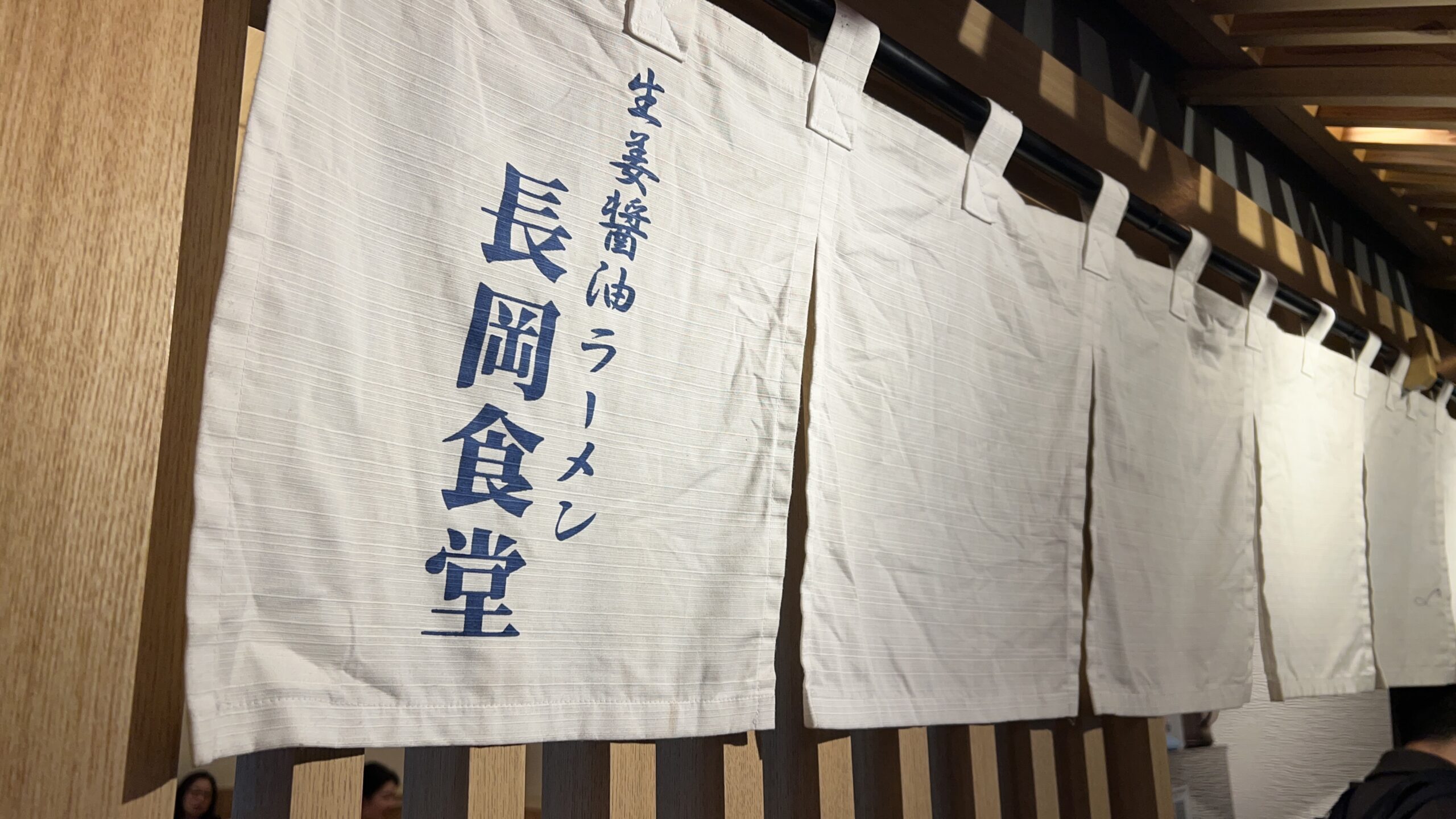
In that case, I immediately switched to ``Nagaoka Shokudo Tokyo Ramen Yokocho Branch” I visited.
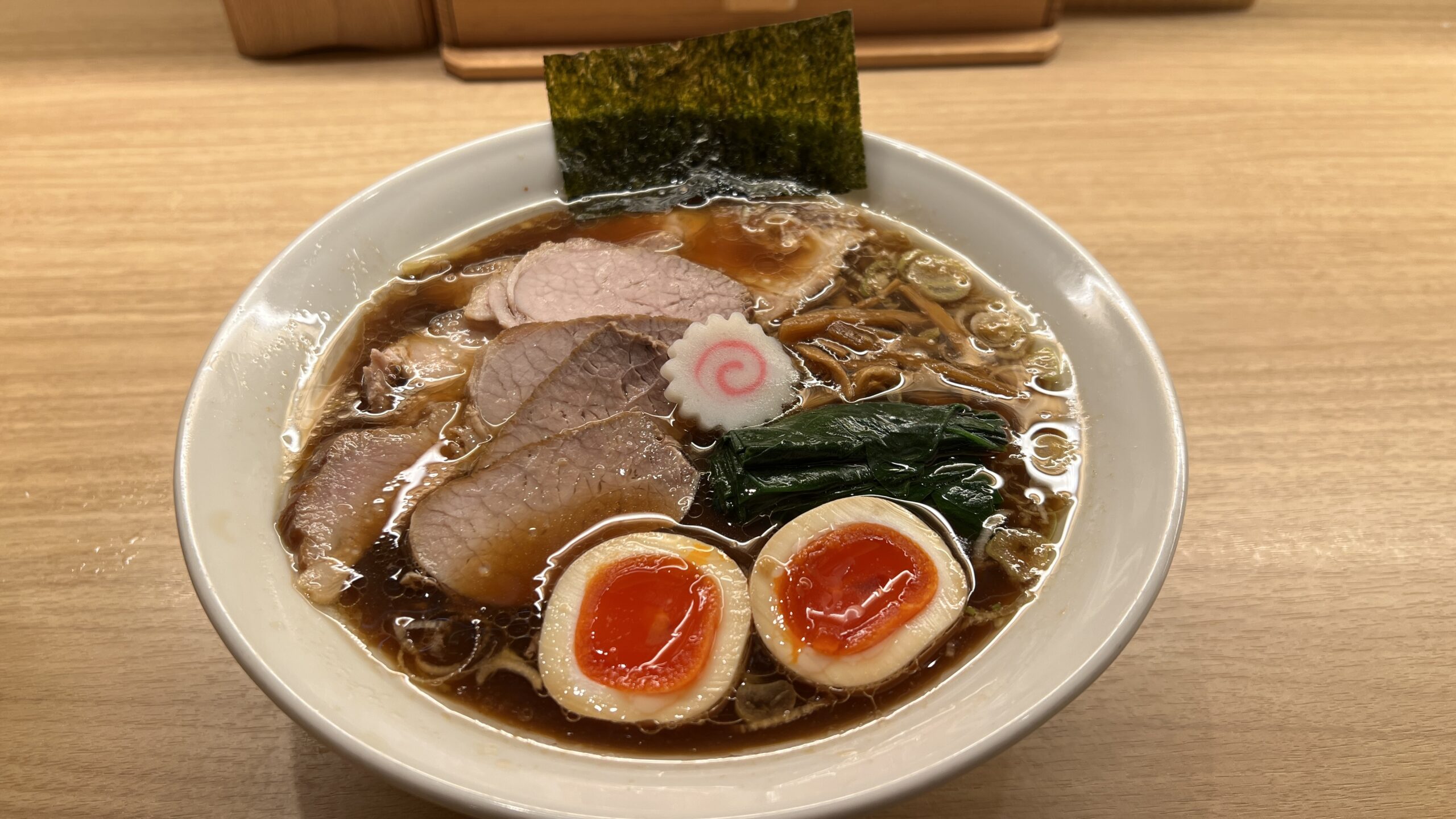
This time, “Ajitama (Seasoned Egg) Soy sauce half-charshu noodles (1,150 yen)” I ordered.
It had a sharp soy sauce and tonkotsu flavor, with a hint of ginger in the aftertaste, and was close to a Nagaoka ginger soy sauce type, but it had an extra mysterious sweetness that made it hard to say it was a Nagaoka ginger soy sauce type.
If this sweetness could be improved, it would come close. .
I would like to visit again sometime.
Kirin City Yaechika
After the meal, I went to a convenience store and bought some things I needed, but there was still time until departure time.
While wandering around Tokyo Station underground looking for somewhere to kill time, I found a restaurant that seemed like it could fit just one person.
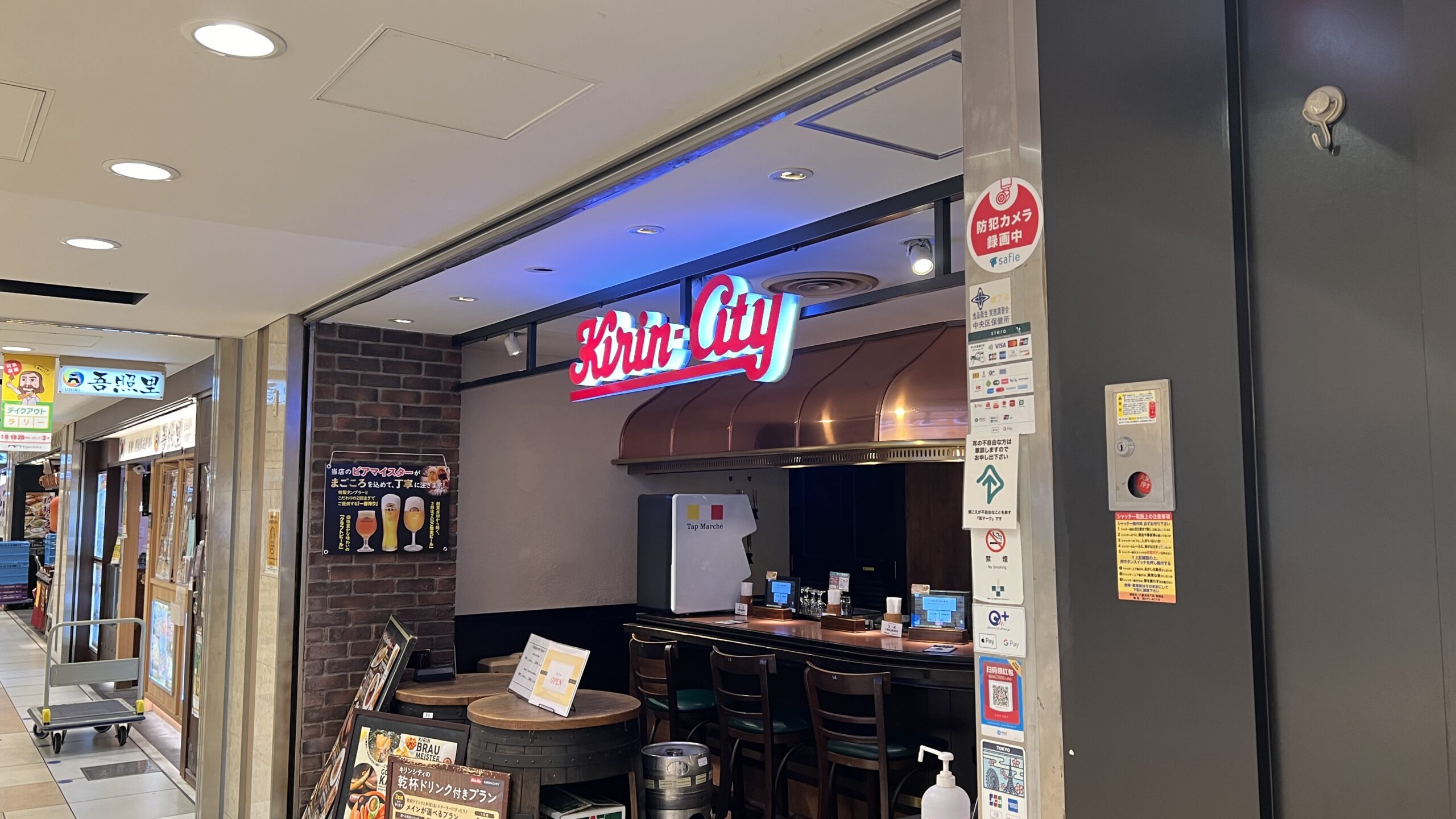
So, ``Kirin City Yaechika”.
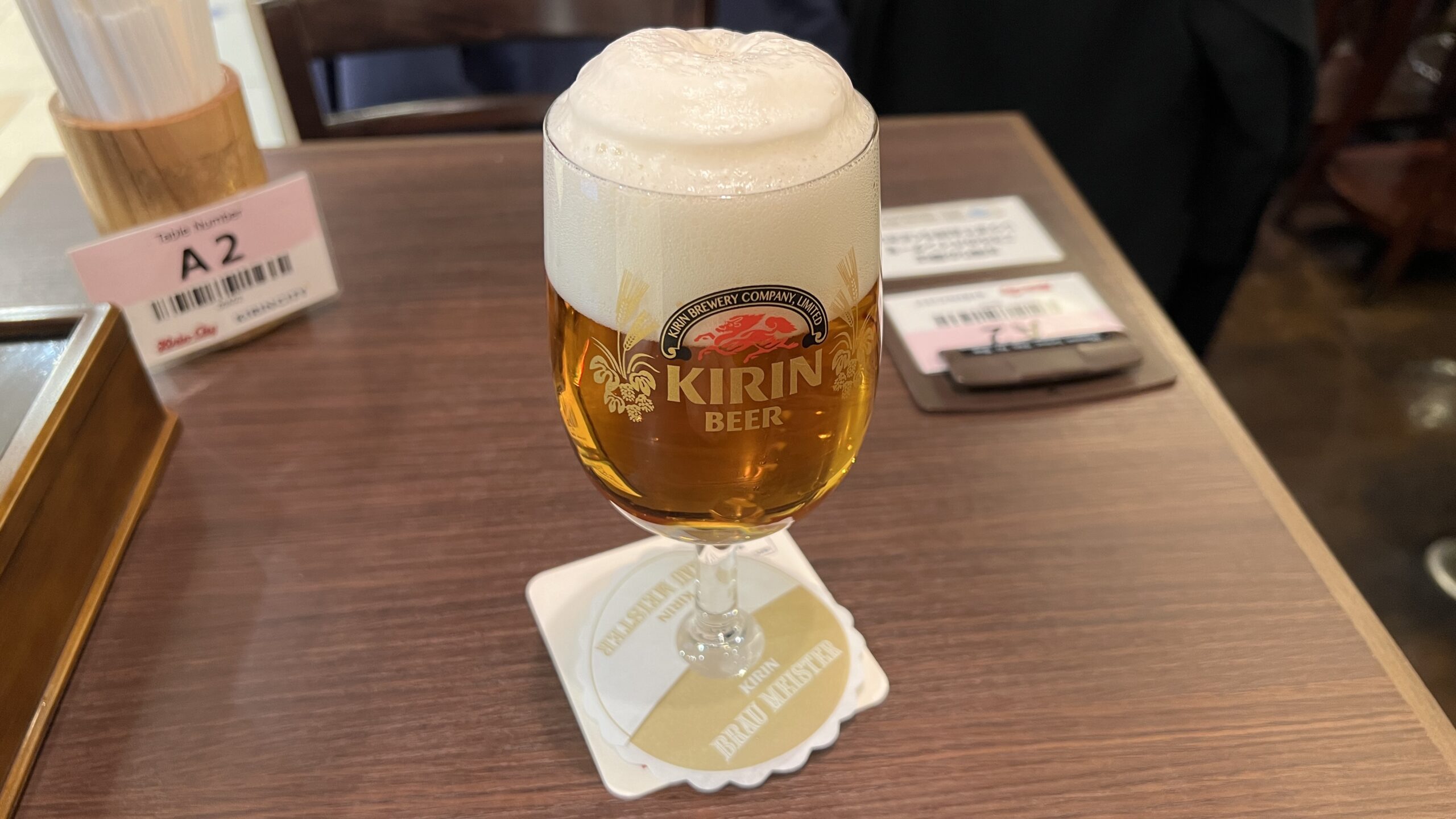
It's hard to drink at regular shops.Kirin Braumeister Regular size (700 yen)” I received it.
I was able to enjoy a special beer that was poured three times.
The special pouring method makes it delicious, and it's not too expensive, so I'd like to visit again next time.
Aozora Liner Tokyo Station Kajibashi Parking Lot - Ujiyamada Station
The main purpose of this trip wasWhiskey Lovers Nagoya 2025I'm participating in a whiskey event called ``, but my recent worry is that I'm stuck in a travel rut.
Every year I go to Nagoya, drink at Meieki, Sakae, and Imaike, participate in events, and come back, and it never looks the same. .
This time, I wanted to add a bit of an accent, so I decided to take a ride the day before and head to Ise first.
The general way to get to Ise from Tokyo is to take the Shinkansen to Nagoya, and then take the limited express to Ise City Station or Ujiyamada Station.
If you go this way, even the first train will arrive around 9:00, which is a little late to start visiting the shrine.
So I came up with the idea of taking a night bus from Tokyo to Ise.
If you take a night bus, you can arrive at Ise even earlier.
However, I once used a four-row night bus when I was a new graduate traveling from my parents' home (Niigata) to Tokyo. .
I couldn't even sleep, and when I thought I could finally sleep, I woke up because the person next to me was sleeping poorly.I had the worst trauma instilled in me, and I haven't taken a night bus in over 10 years.
There are some flights that arrive earlier if you have 4 rows of seats, but I decided to take the Aoki Bus Aozora Liner from Tokyo to Ise (Ujiyamada Station) this time as I thought it would have at least 3 rows of independent seats.
The train departs from Tokyo Station's Kajibashi Parking Lot at 22:40 and arrives at Ise (Ujiyamada Station) at 8:20.
The route is only about 40 minutes different from the Shinkansen route, but it's always better to get there early.
reservation
For reservations,Rakuten Travel”.
The flight departed on Thursday and cost 7,500 yen.
1% points will be returned for the pre-tax charge of 6,818 yen, so 68% points were awarded.
If you are traveling in the Rakuten Economic Zone, it would be a good idea to make a reservation through Rakuten Travel.
Tokyo Station Kajibashi Parking Lot
Kajibashi Parking Lot at Tokyo Station is located between Tokyo Station and Yurakucho Station.
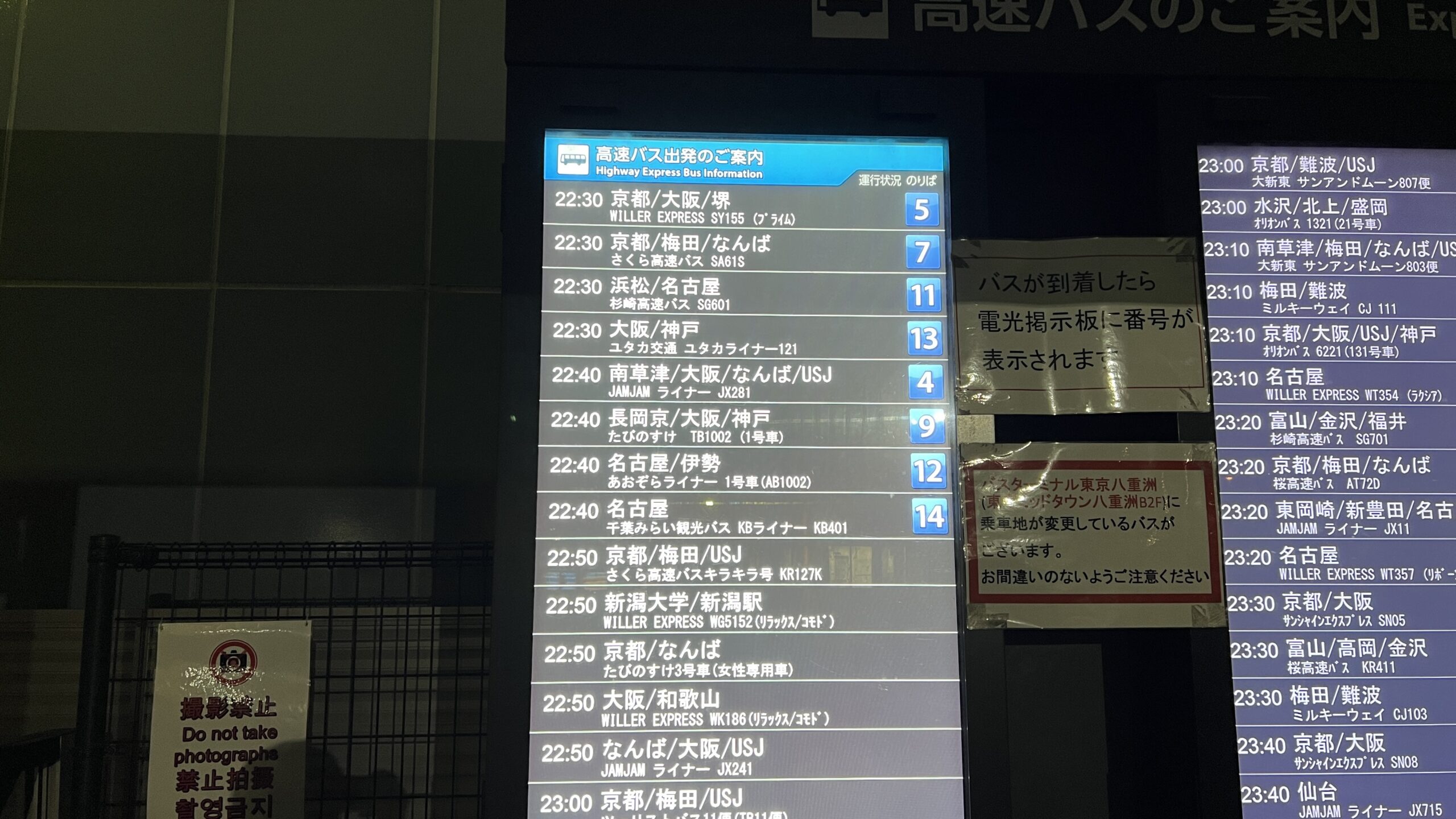
There are quite a number of buses in service, so it's a good idea to check the timetable and bus stops.
There is a waiting room, but it's quite crowded so you should expect to be seated.
There are minimal facilities such as toilets and vending machines.
There are no convenience stores, so if you need anything other than drinks, it's best to buy them in advance before heading out.
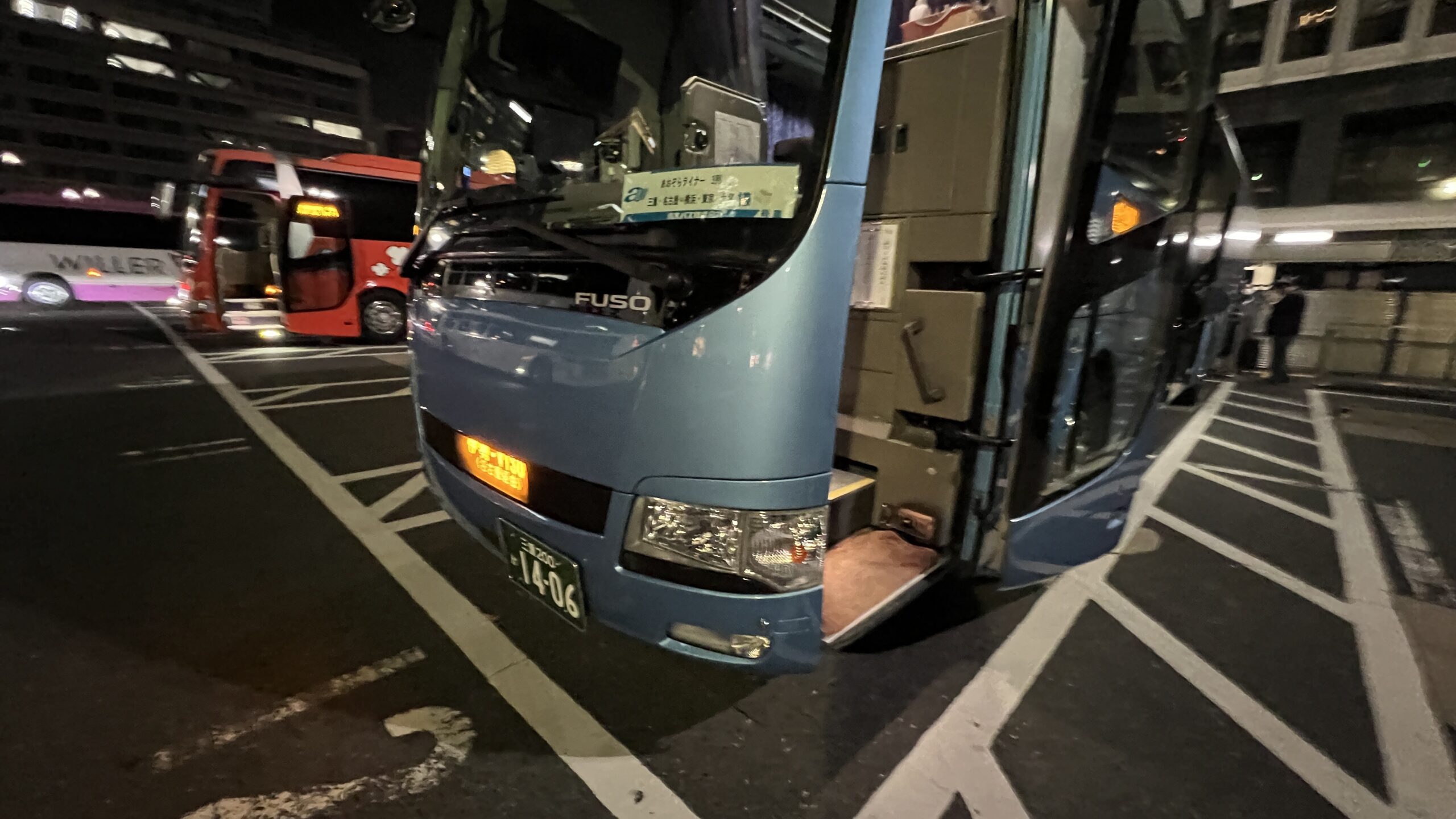
Now that the time has come, we gingerly board the bus.
seat
The seats are 3 rows of independent seats.
My seat position was by the window on the right side facing the direction of travel.
You cannot choose your seat position; you will be given your seat number at the time of check-in, and only then will you know your seat position.
feet
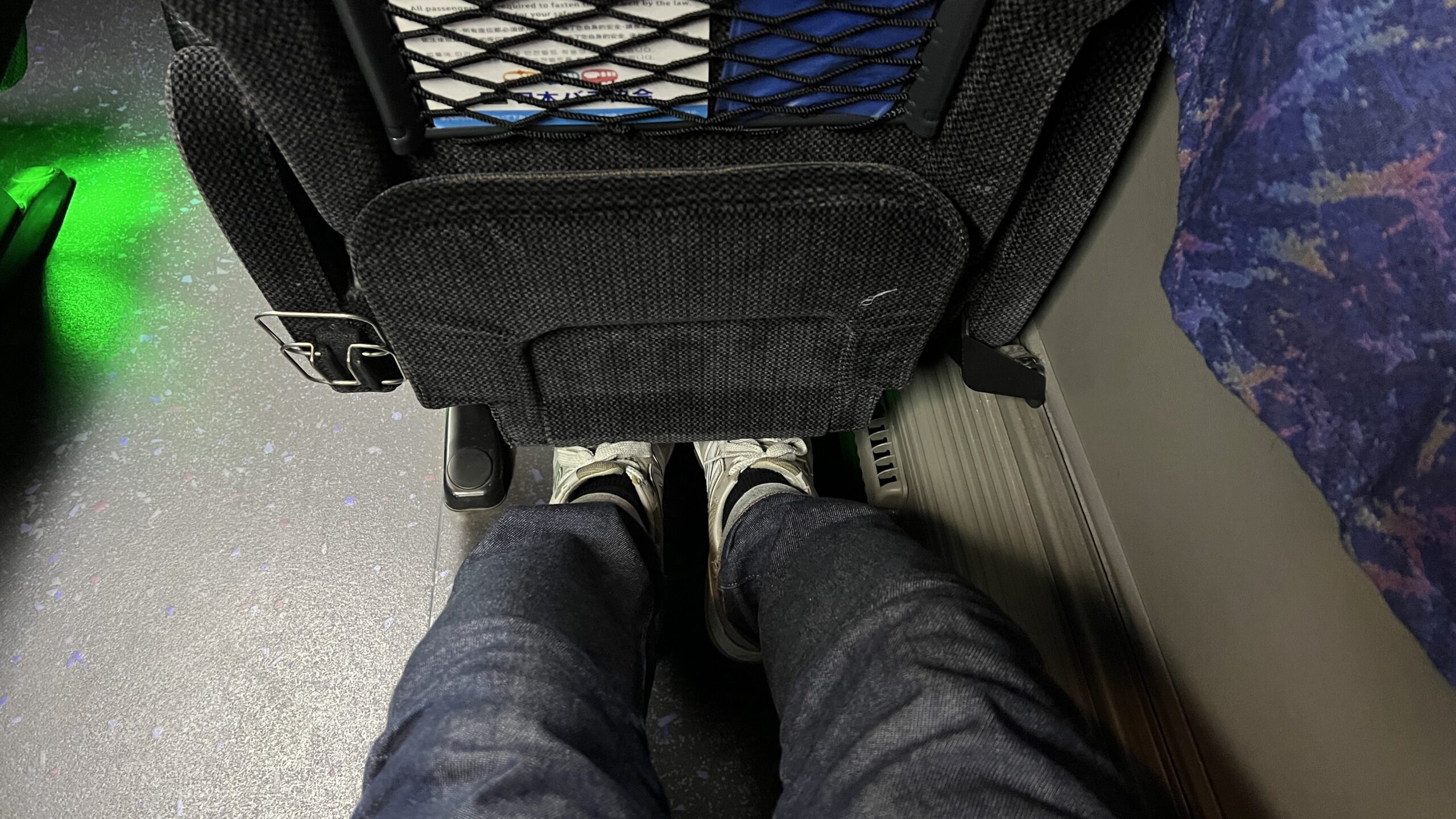
The distance between me and the seat in front of me means that I can't fully or completely stretch my legs, but I can stretch them out to a certain extent.
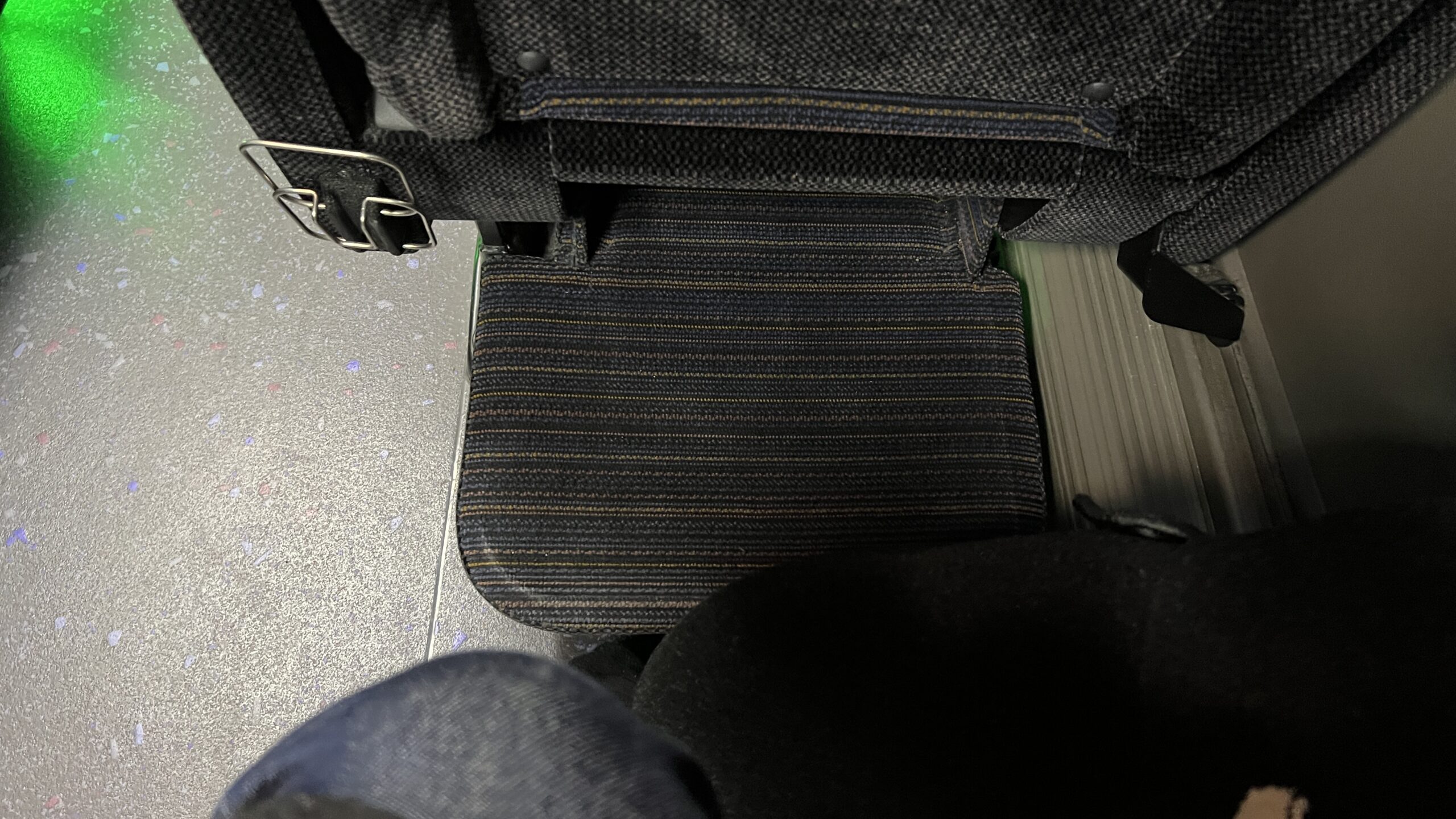
There was also a footrest, although it was a little narrow.
plastic bottle holder
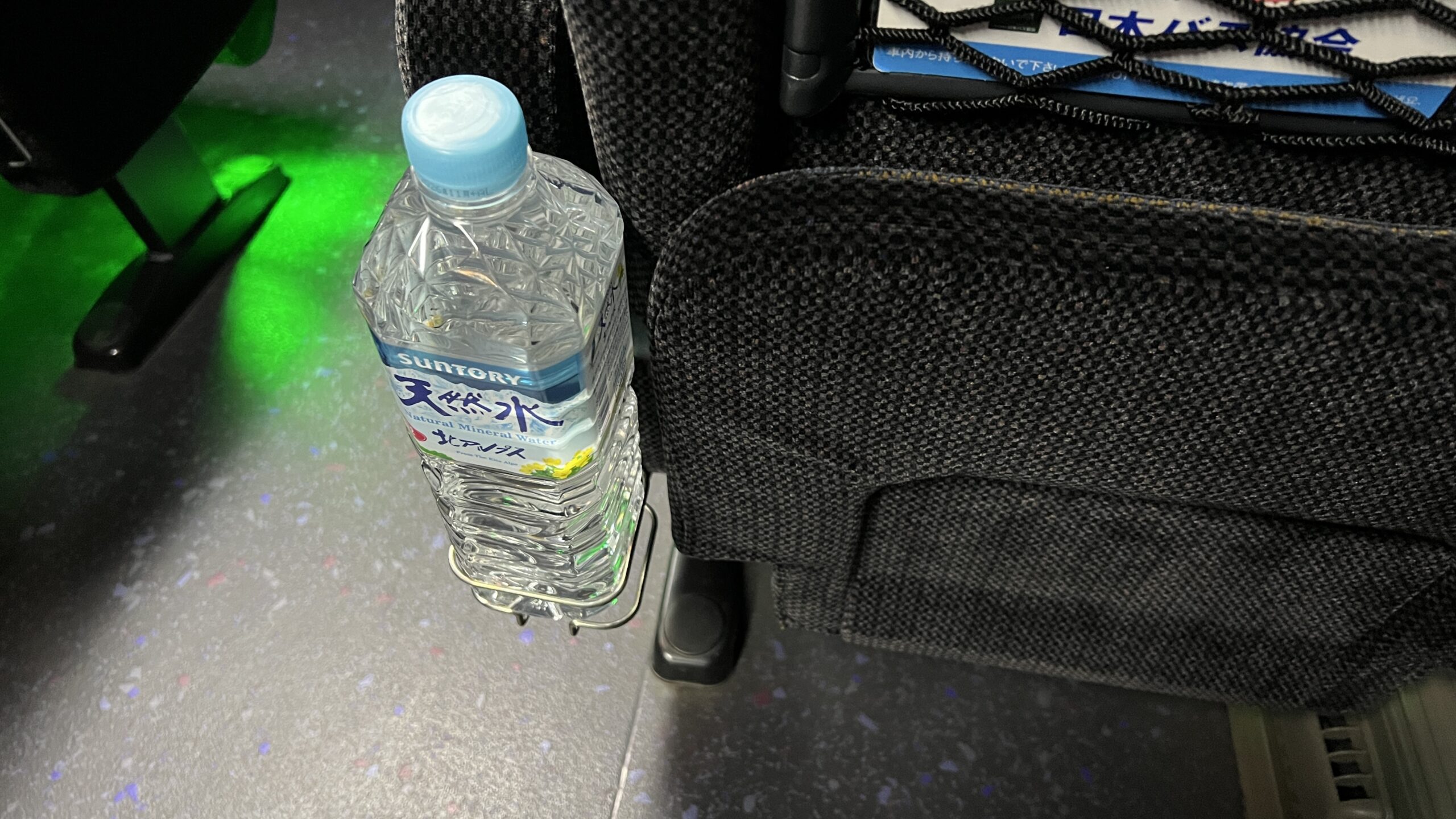
There was also a plastic bottle holder.
The plastic bottle in the image is a bit large at 900ml, but it just barely fit inside.
outlet
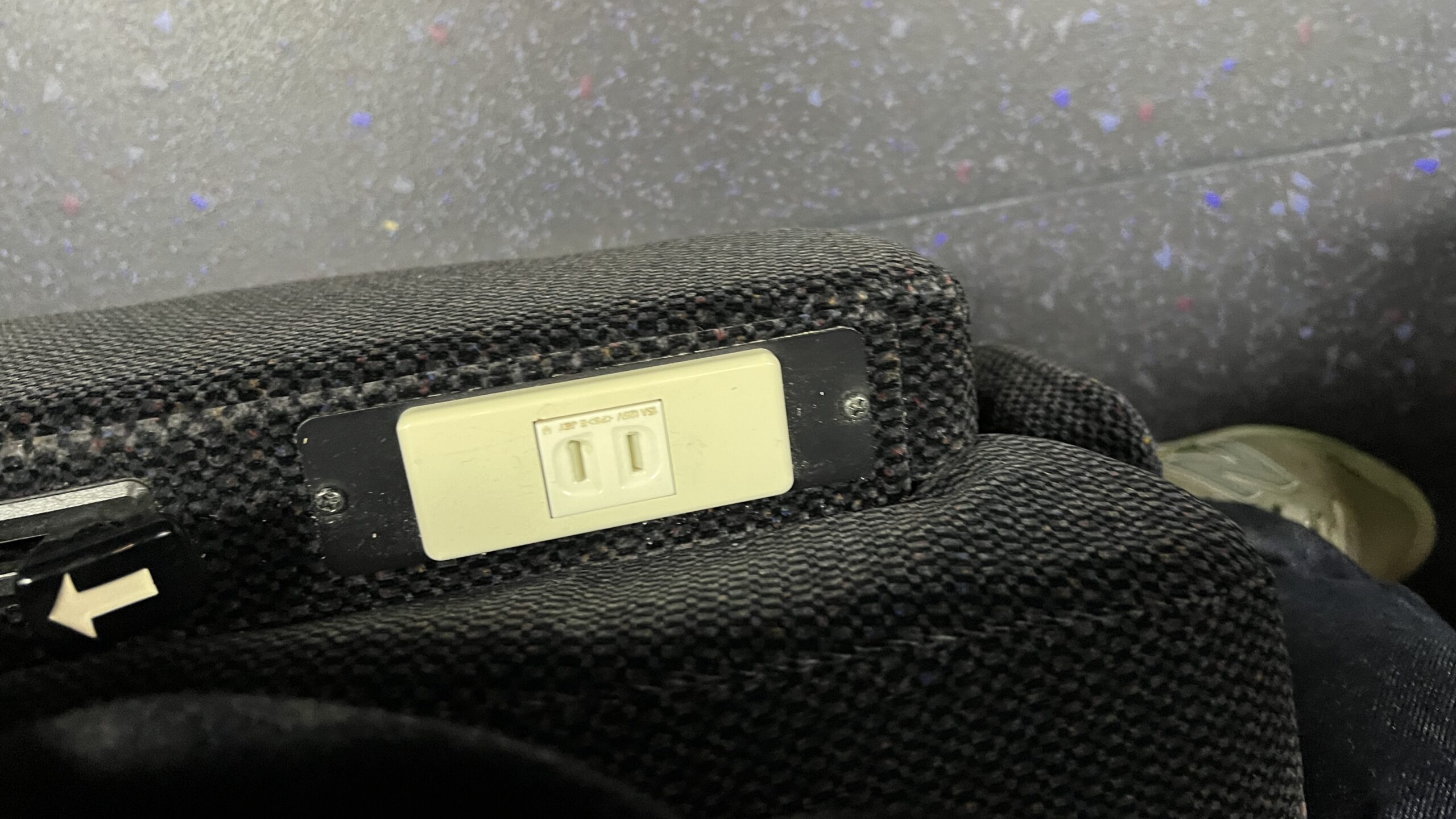
There was one outlet.
It's a nice point that it uses a normal outlet instead of a strange USB.
reclining
The reclining angle is about 270 degrees, which is not completely flat, but it gives the impression that it reclines quite a bit.
If you knock it down too much, it will affect the space behind you, so I thought it was important to say something when you knock it down and be considerate in how you knock it down.
toilet
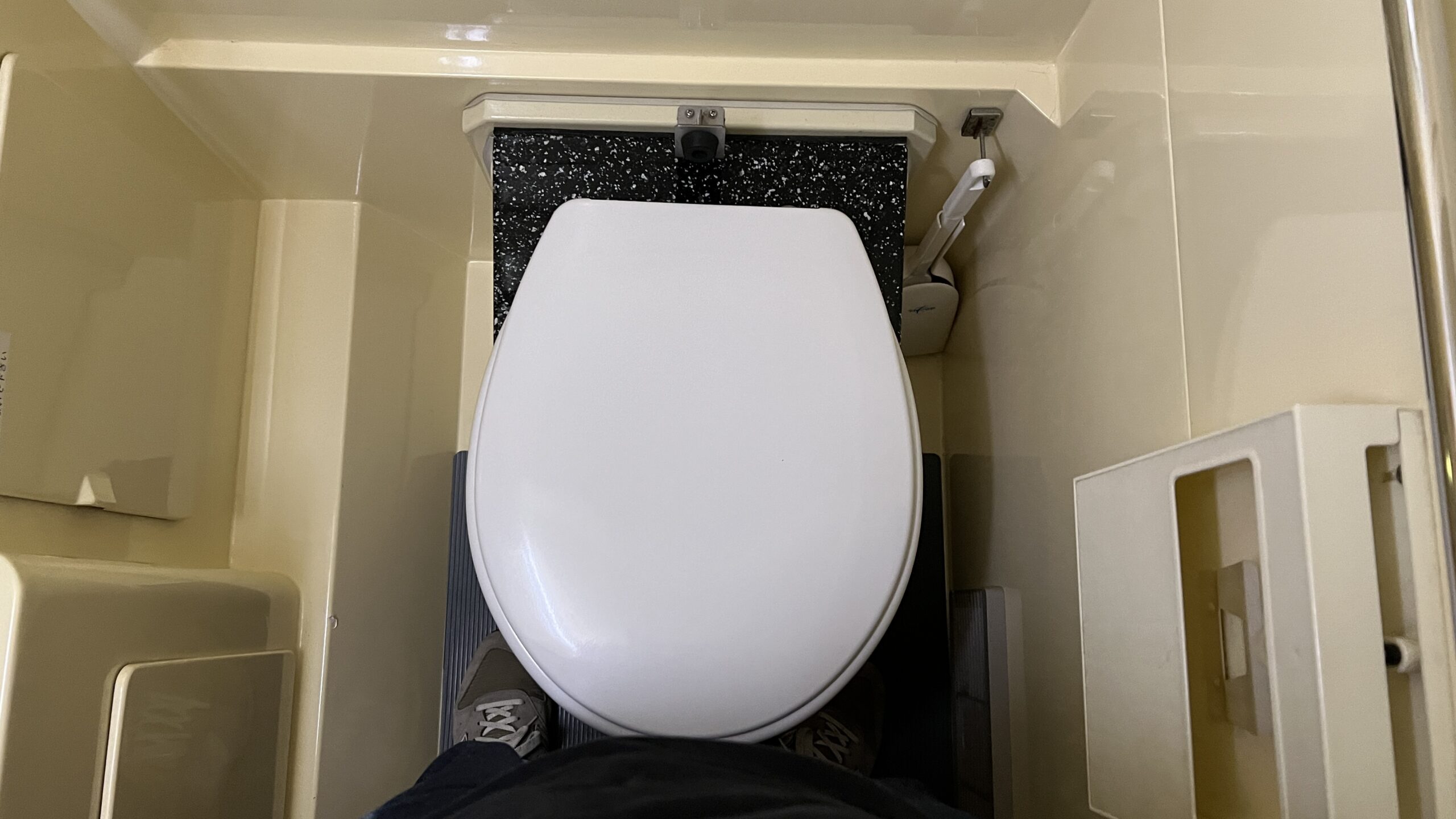
There is also a toilet inside the bus.
The car shakes quite a bit while driving, so you might get sick, but it's nice to be able to use the restroom without having to park or wait for a break.
Tokyo Station - Haneda Airport/Yokohama Station - Ebina SA
When you depart from Tokyo Station, you will go to Haneda Airport and Yokohama Station, where people will board the train.
It seems that the place was fully booked today.
Shortly after departing from Yokohama Station, the lights inside the train will be completely turned off, and from then on, the use of devices with light-emitting screens, such as smartphones and tablets, will be prohibited.
Breaks will take place every two hours from departure.
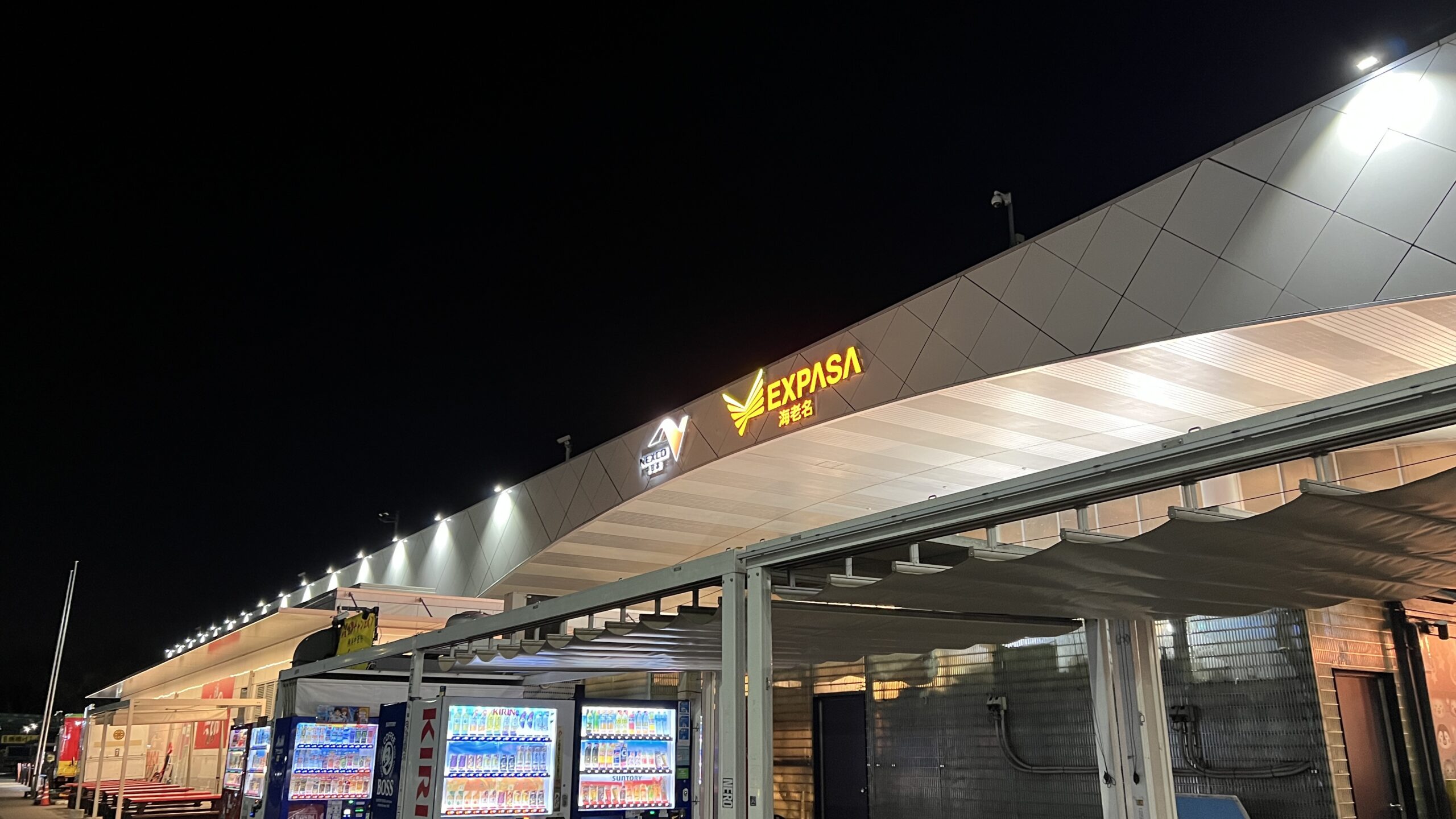
The first break was at Ebina SA around 0:30.
Since Yokohama Station was leaving at 0:00, I woke up feeling like it would be a waste if I slept in those 30 minutes.
It doesn't matter if you get off the train or not during your break, but since my body is stiff, I got off the train and moved around a bit by going to the restroom, checking out the souvenir corner, etc.
I don't own a car and only use public transportation, so I felt a strange sense of elation as it was the first time in many years that I had been to a parking area late at night.
The break will be approximately 10 to 15 minutes.
I just went to the bathroom, didn't do anything special, got back on the bus, and headed out.
Ebina SA ~ Kakegawa SA
After getting on the bus, I take some melatonin and fall asleep.
The 3-row independent seats meant there was no one next to me, and I could recline quite a bit, and I had bought an inflatable neck pillow at a 100-yen shop beforehand, so I was surprisingly able to sleep on it.
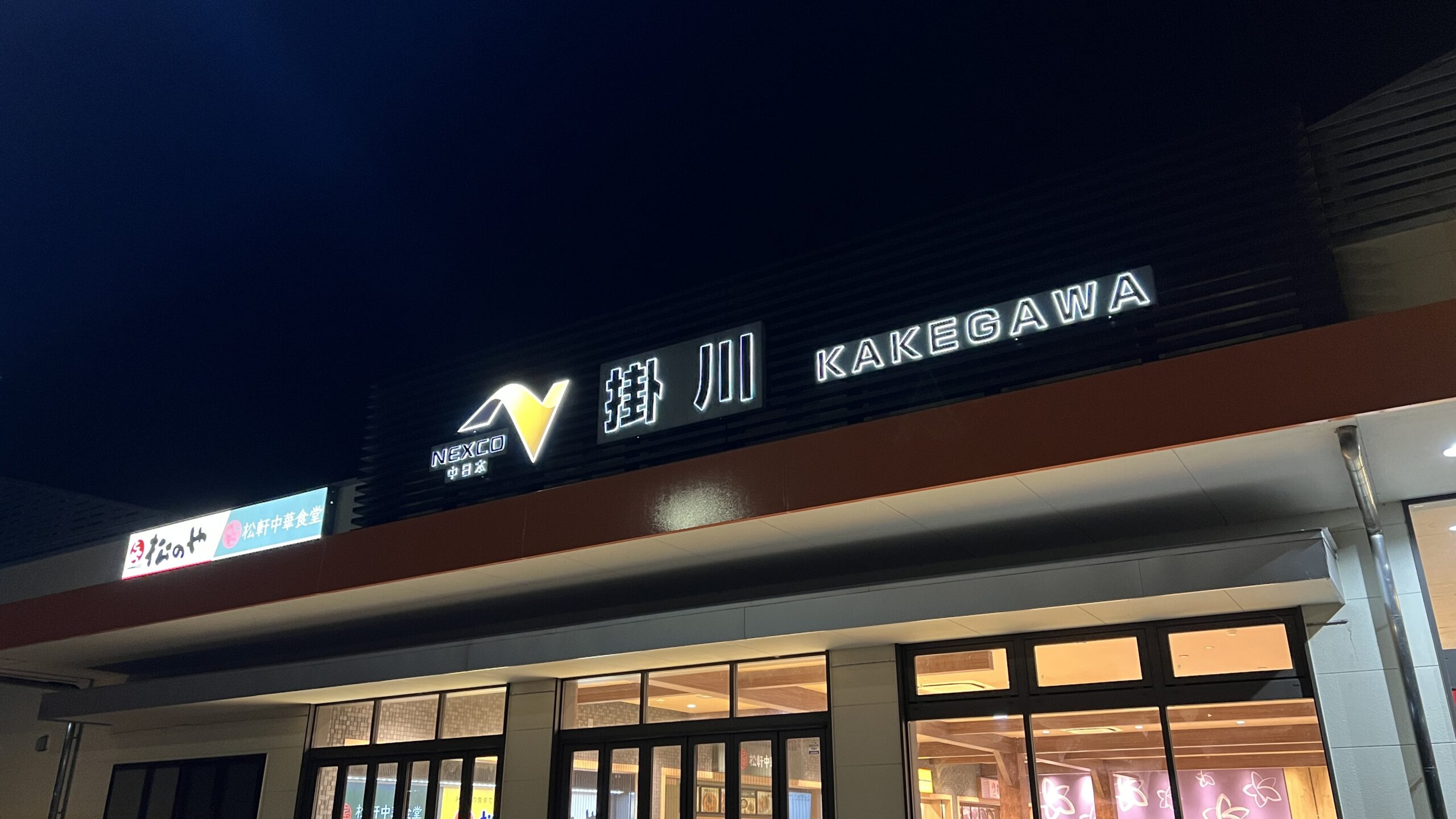
The next break will be at Kakegawa SA around 2:50.
It always happens because of the vibrations when you arrive, or because someone else is getting off the train.
Since I woke up, I decided to go down.
I was impressed by the large amount of tea being sold in the souvenir corner, which made me feel like I was already in Shizuoka.
We got back on the bus and set off again.
Kakegawa SA ~ Nagoya ~ Gozaisho SA
After leaving Kakegawa SA, I managed to fall asleep again.
We arrived at Sakae Station around 5:15 and Nagoya Station around 5:30, where quite a few people got off.
People heading towards Mie, including myself, continued to ride, but there were also a few people heading from Nagoya to Mie.
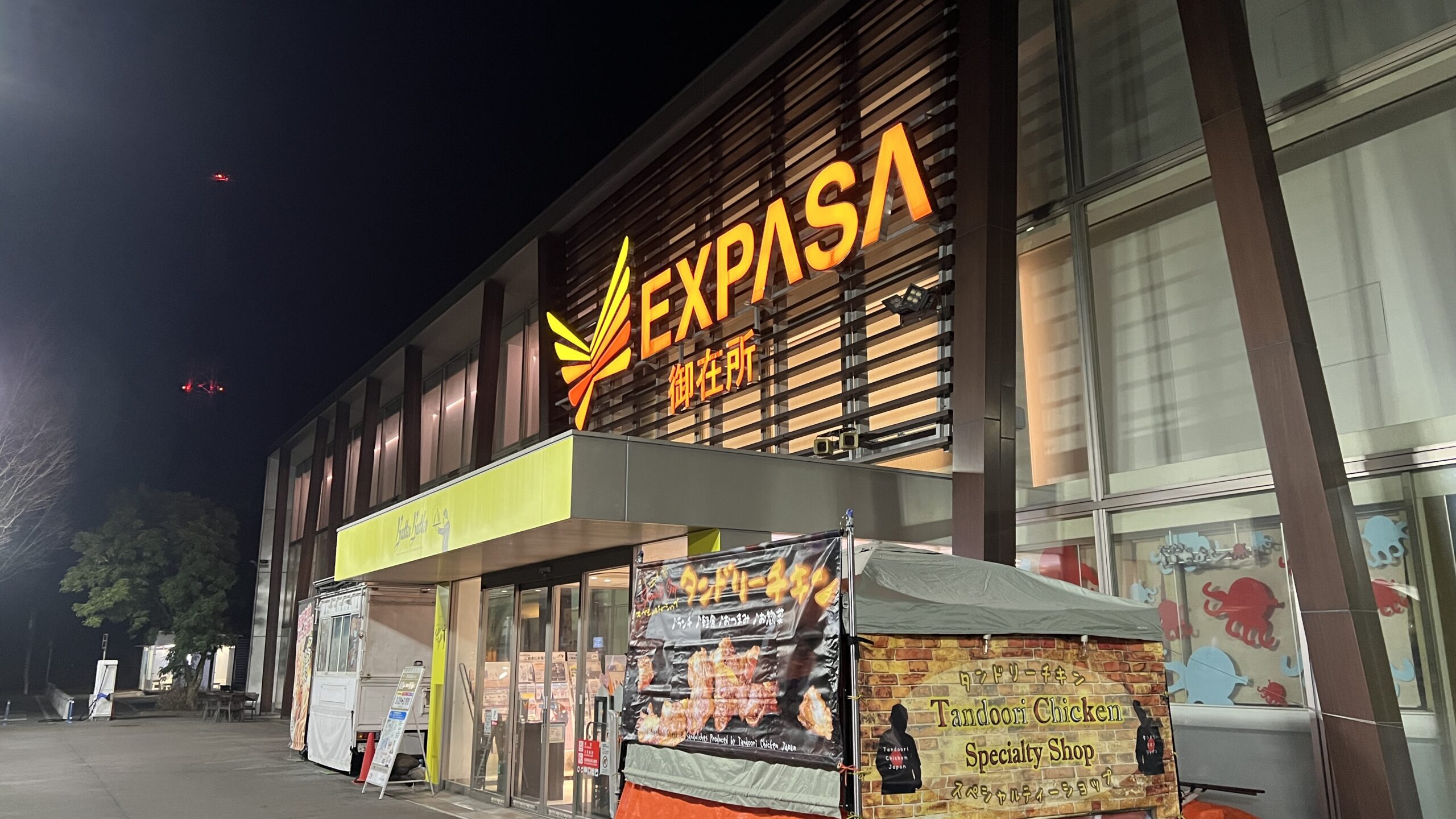
Around 5:50, about 20 minutes after leaving Nagoya Station, I took a break at Gozaisho SA.
I couldn't fall asleep after 20 minutes, so I decided to get off.
Again, I didn't do anything special, just looked at the restrooms and souvenir corner, got back on the bus, and set off.
Gozaisho SA - Ise (Ujiyamada Station)
After leaving Gozaisho SA, you will have to get off at Yokkaichi, Tsu, Matsusaka, etc., so continue on while making stops.
There were fewer people, and I wasn't woken up when I got off, so I was able to sleep most of the way to Ise (Ujiyamada Station), where I got off.
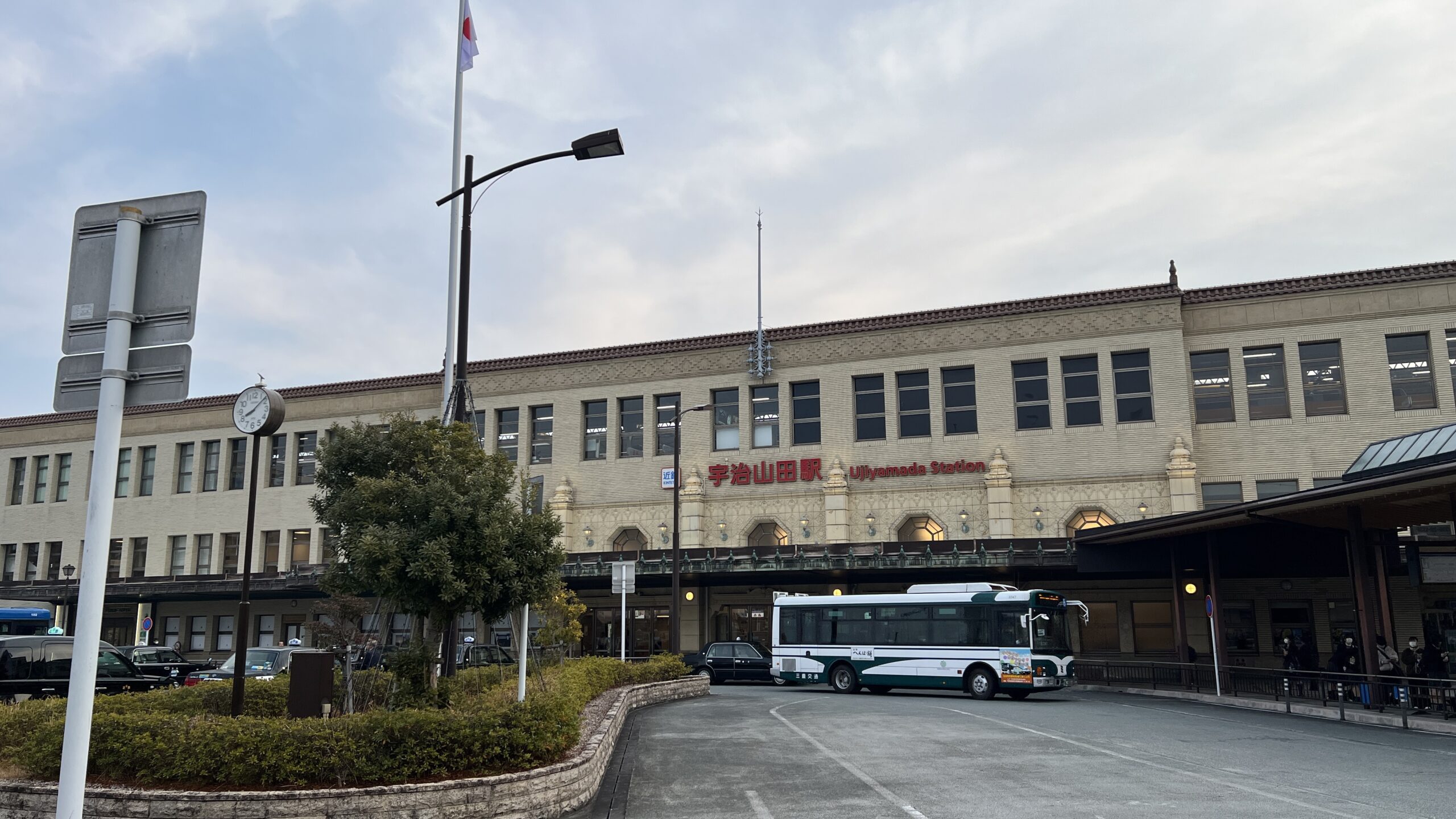
We arrived at Ujiyamada Station earlier than planned at around 8:10.
The long journey of about 10 hours finally came to an end.
Try using the express bus
I took an express bus for the first time in 10 years, and while it wasn't as good as the Shinkansen, I thought it wasn't bad.
The most impressive thing was that eating and drinking on express buses was basically prohibited, and there was a strict rule that prohibited the use of smartphones and tablets after lights out.
Drinking water and tea for hydration purposes is OK, but drinking alcohol on express buses is prohibited.
In addition, it is prohibited to eat foods that make noise when eaten, such as foods with smells or plastic packaging, and it is no exaggeration to say that almost all foods are prohibited.
No one used their smartphones or tablets after lights-out, which was a problem 10 years ago, and no one was woken up by the light from the LCD screen.
By having 3 rows of independent seats, I was able to spend my time without interference from the person next to me.
The only concern I have is that I wake up every two hours because I wake up every time I take a break.
I ended up sleeping twice and sometimes three times, but I was still able to sleep for about 6 hours in total and was able to function normally after arriving.
As expected, you can't beat traveling by Shinkansen and sleeping in a hotel, but this would cost nearly 20,000 yen, but this time I was able to use it for 7,500 yen, so considering the price difference I think it's well worth it.
Also, I would like to use it depending on the destination.
Things I should have brought
Here are some things I wish I had brought with me:
- melatonin
- noise canceling earphones
- eye mask
- neck pillow
- mask
melatonin
Melatonin is a hormone supplement that promotes sleep.
A prescription is required to purchase it in Japan, but it can be purchased from overseas by personal import.
I always say ``iHerbI am purchasing from ``.
I think sleeping pills would be fine, but I thought it would be better to have some kind of sleep-related supplement or medicine.

noise canceling earphones
Basically, there is no conversation inside the car, but you can hear the sound of the car running, some snoring, and breathing, so it is not completely silent.
So I think it would be a good idea to use noise canceling or earplugs.

eye mask
Although the lights inside the car are completely off, it is not completely dark, and the lights sometimes turn on when getting on and off the train.
So, I think it would be a good idea to have an eye mask as well.
This time I'll only be taking the night bus to go, so I'll use a disposable ``megrhythm” I took it with me.

neck pillow
There is some cushion on the seat like a headrest, but I think it would be better to have a neck pillow as the pillow will lift your lower back.
You can inflate the air yourself, and if it's a 100-yen item, you can throw it away at the site and take it home, so it won't take up too much luggage.
If you ride often, I think a reusable type would be fine.
mask
The inside of the car isn't extremely dry, but although measures are taken to prevent dryness and ventilation, it's a closed room, so I think it's a good idea to wear a mask to protect yourself from colds and flu.
Impressions
I ate ramen at Tokyo Station that night, drank some alcohol, and then took a night bus for the first time in 10 years.
It didn't feel too bad, I was able to get a good night's sleep, and I think I'll be able to do things after arriving without any problems.
Now, for the first day, we will be sightseeing in Ise, so please look forward to it.