Store Information
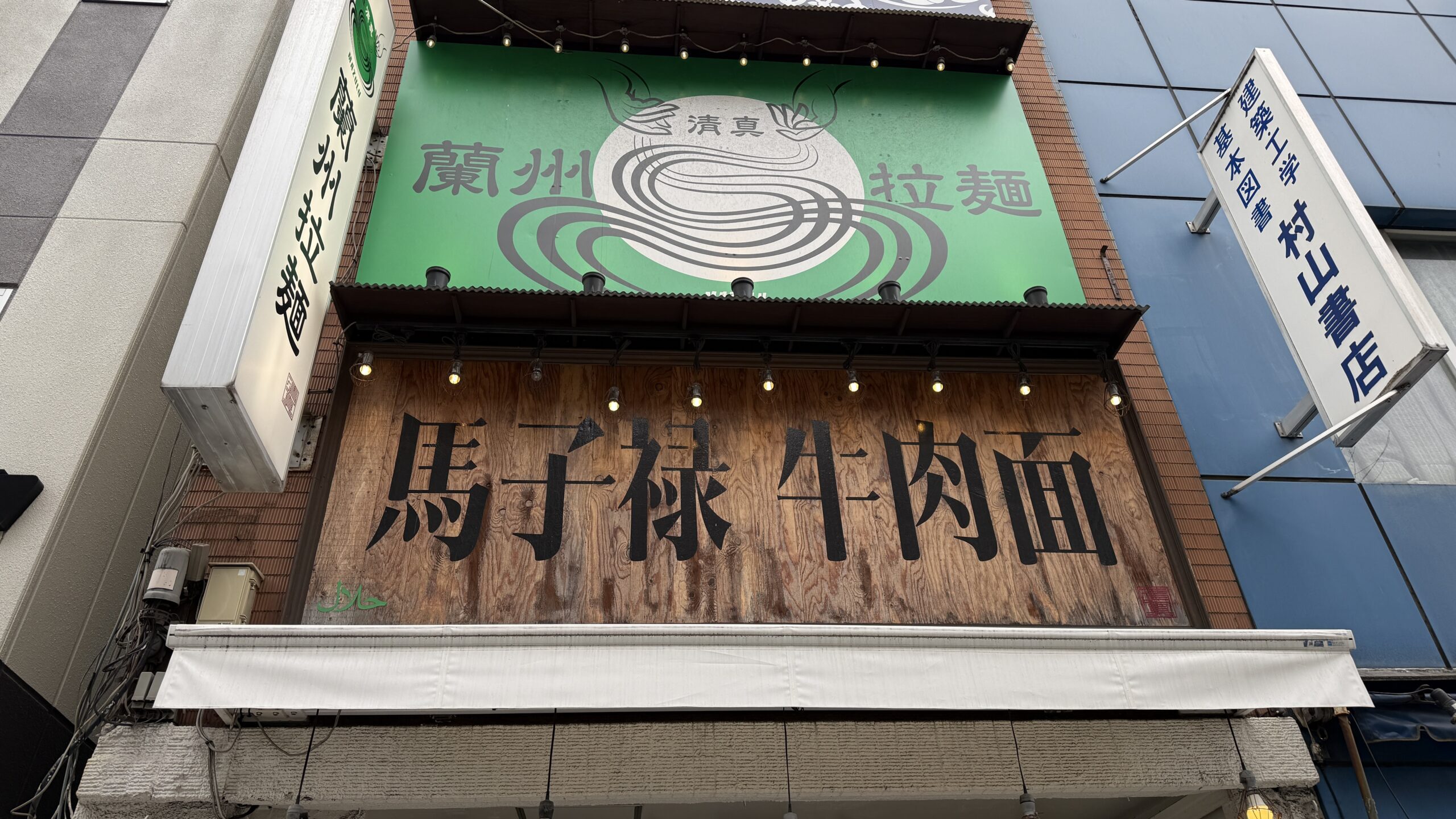
Business hours: Monday to Friday 11:00 to 15:00, 17:00 to 20:30 / Saturdays, Sundays, and holidays 11:00 to 20:30
Closed: None
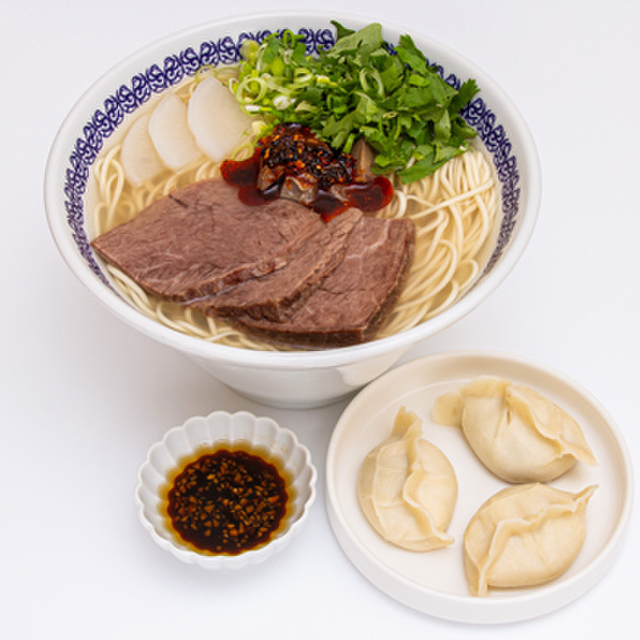
Access: About 3 minutes walk from Exit A7 of Jimbocho Station on the Toei Mita Line, Toei Shinjuku Line, and Tokyo Metro Hanzomon Line.
Tabelog
Google Maps
Visit and Queue Information
Date of visit: March 2026 Weekdays
Visiting time: around 11:00
Queue: none
Crowd status: There is plenty of space in the store
Seat: table seat
I visited on a weekday around 11:00, right after the store opened, so it was relatively empty.
As for the customer base, I got the impression that the customer base was about 50-50 split between Japanese and Chinese.
There was also the atmosphere that Chinese customers who were probably tired of Japanese food were visiting in search of the authentic taste.
This is a valuable restaurant where you can enjoy the taste of China in Jimbocho, Tokyo.
Ordering and Payment
Payment method: Card, electronic money, QR code payment not possible
Menu
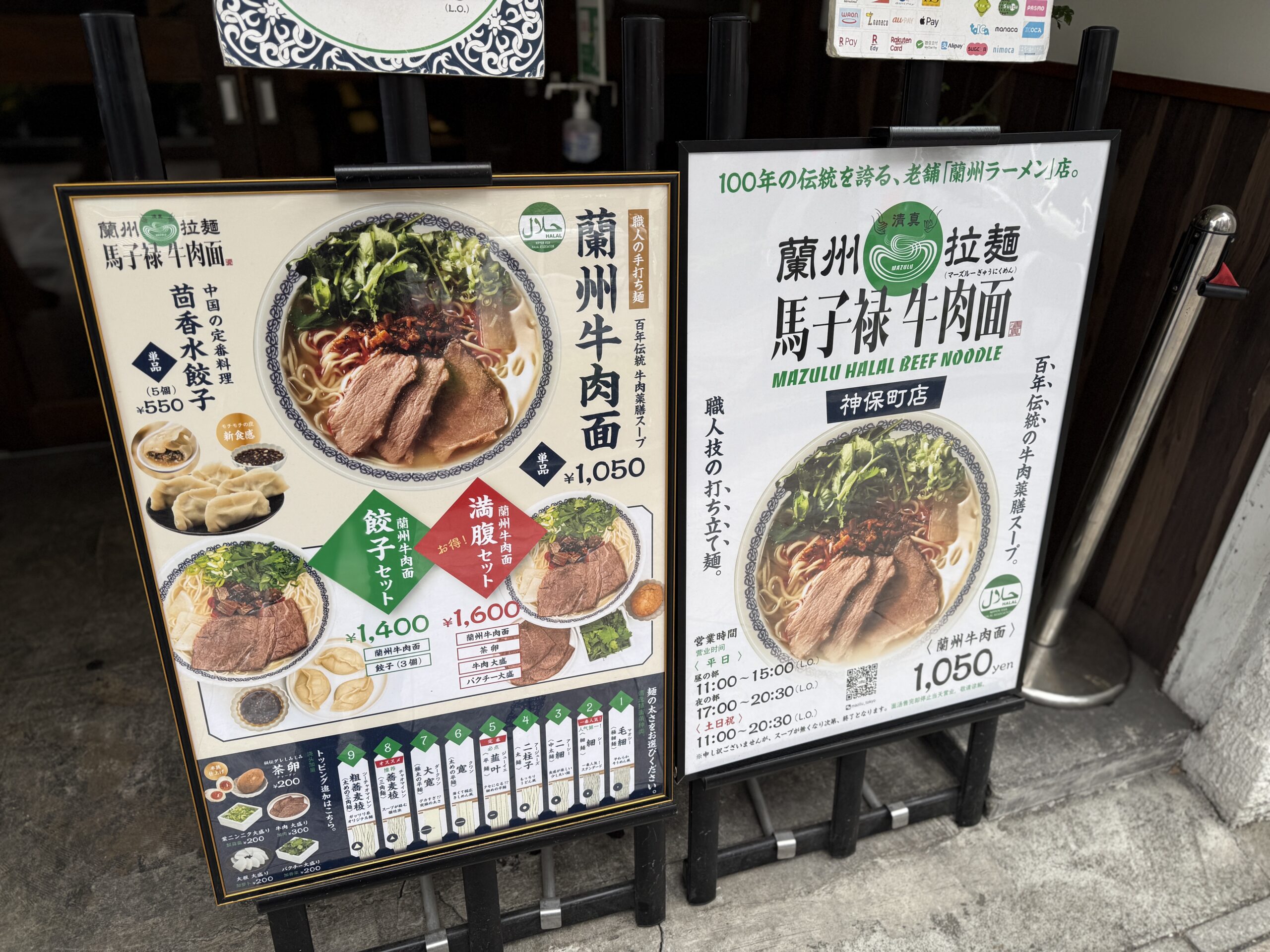
The menu is simple: Lanzhou beef noodles, toppings, and boiled dumplings.
Gyoza set + tea balls

This time, the set includes Lanzhou beef noodles and boiled dumplings.Gyoza set (1,400 yen)” and “Tea balls (200 yen)” I ordered.
You can choose from nine different noodle sizes and shapes, and this time we chose the most popular, number 2 (thin).
I also asked for chadama, the so-called Chinese version of flavored balls, as a topping.
When you enter the store, you order and pay at the cash register, take a seat, and when you're done, the staff will bring it to you.
It was served within 5 minutes after ordering.
So let's have it.
Soup
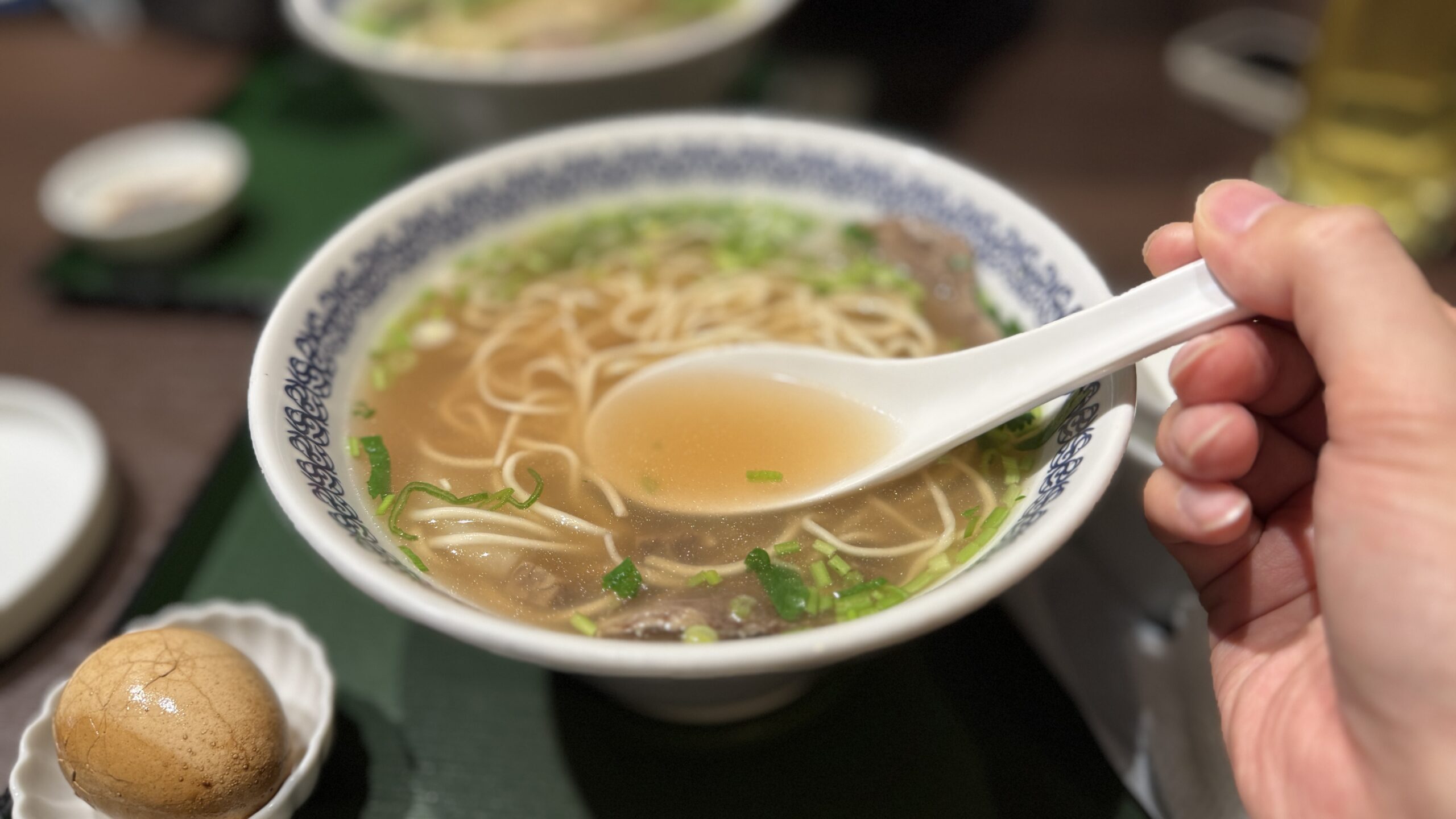
Lanzhou Beef Noodles or Lanzhou Ramen are characterized by a soup made from beef bones, topped with coriander, green onions, garlic leaves, and chili oil.
As described, the soup has a gentle beef bone-based taste, and although it has a beefy flavor, it is not heavy.
The coriander and green onions give it a nice flavor.
It also contains garlic leaves, which is a nice accent.
Although it has a medicinal aroma, it is not too strong and is quite easy to drink.
You can have it as a finishing touch after drinking, on a hangover day, or even as a regular breakfast.
In fact, it's so sweet that you'll want to eat it in the morning.
By default, it is drizzled with chili oil, but personally I didn't think it was necessary, so I had it on a separate plate or in a container.
I ended up not using it...
I think adding chili oil would add spiciness and aroma and change the impression, but personally I preferred the soup as is.
Noodles
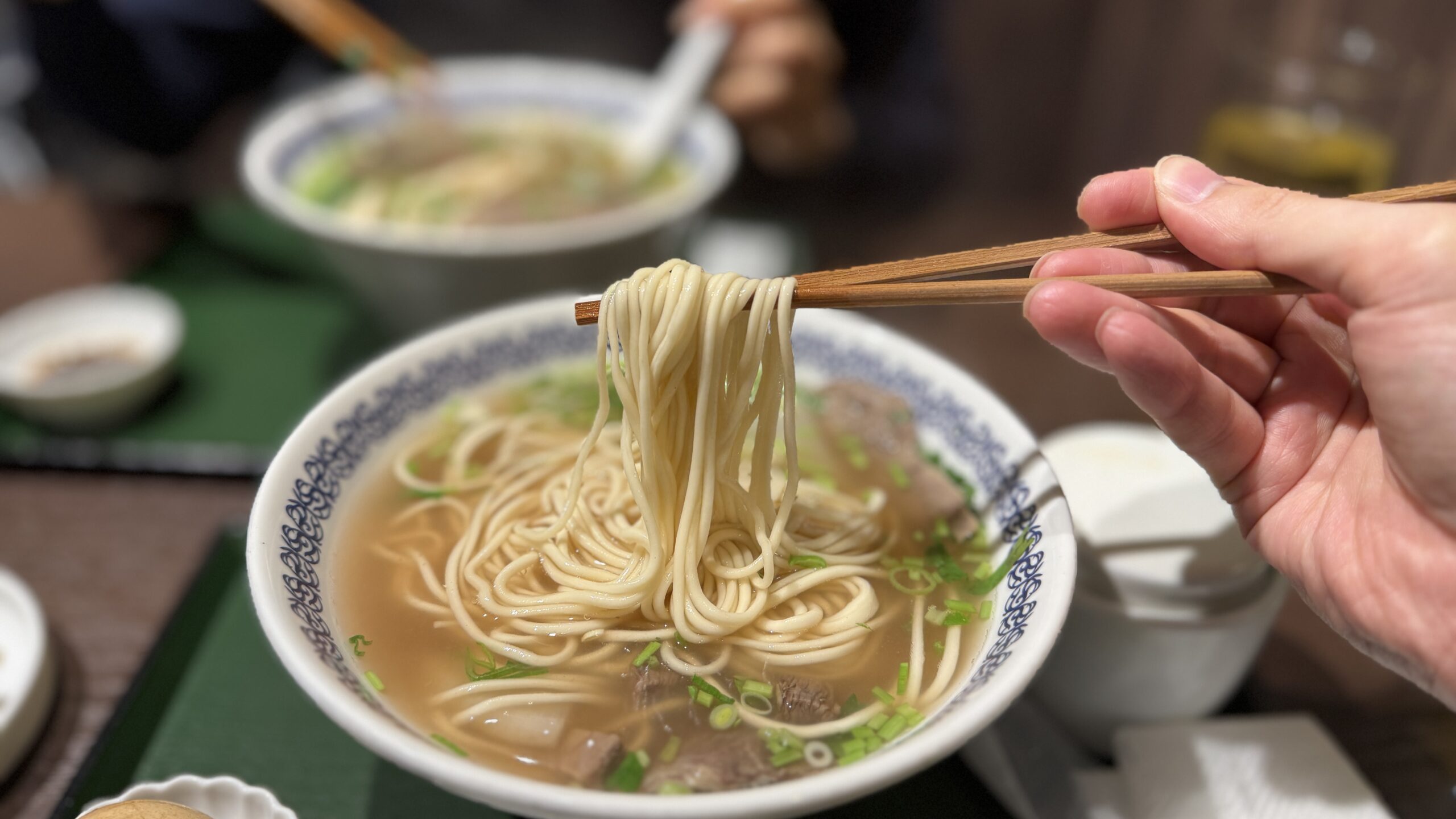
For the noodles, I chose the second type of thin noodles, which are the most popular.
Even though they are thin noodles, they have a slightly different impression from regular ramen thin noodles.
It has a unique firmness.
The texture is different from udon and ramen, but since Kansui is used, I think it's similar if you imagine it as ramen.
It has the elasticity of hand-stretched noodles, but it also has a firm bite.
It's nice to slurp, and goes well with soup.
If you are used to Japanese ramen, it may feel a little strange at first, but as you eat it more and more, you will become addicted to it.
Personally, I really like this noodle.
beef
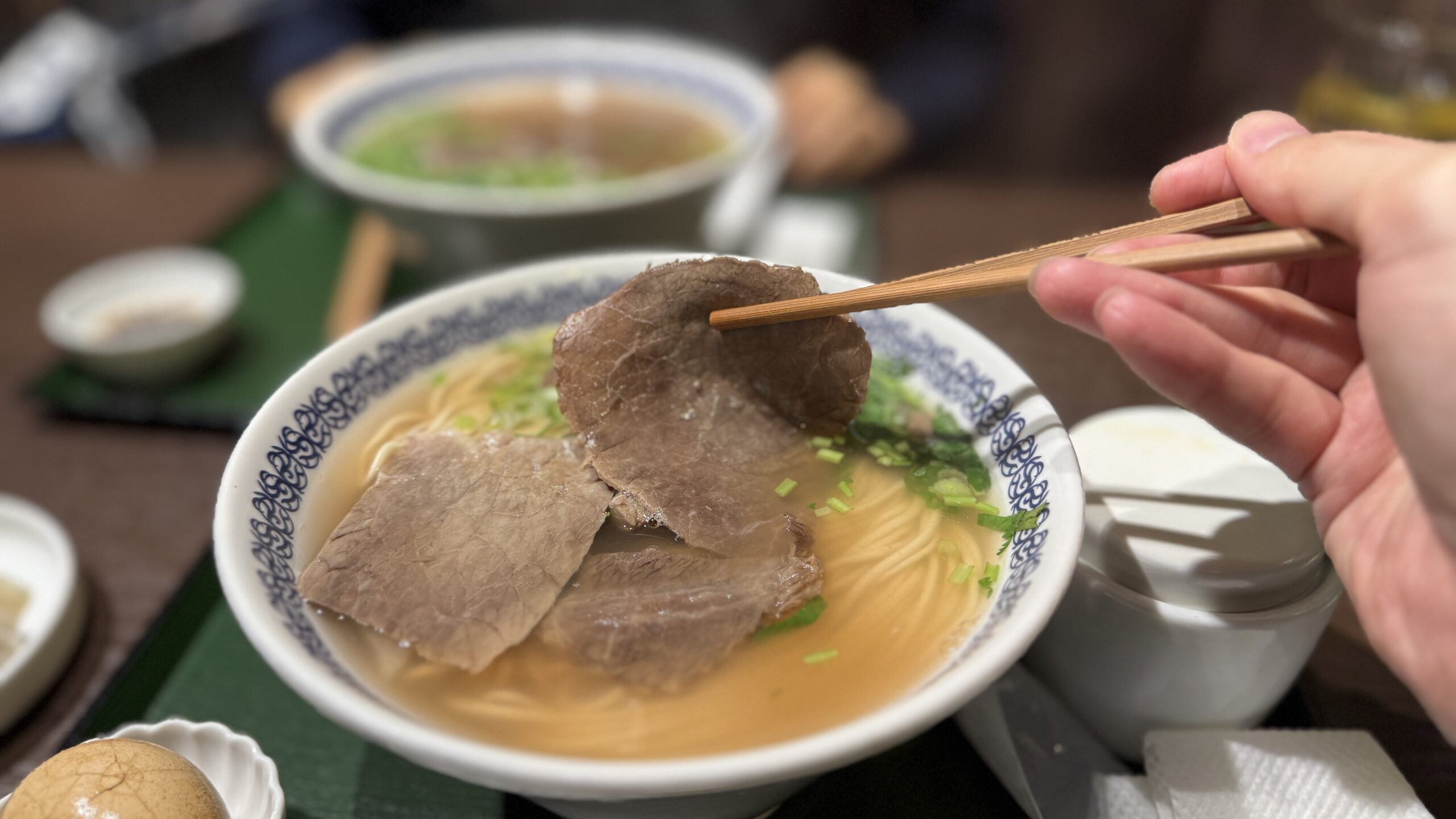
The beef has a strong flavor similar to beef tendon.
The soup itself has a fairly mild taste, but the beef has a strong flavor.
This strong seasoning is a nice accent to the gentle soup.
The meat has a good flavor and is delicious even when eaten with noodles.
Radish
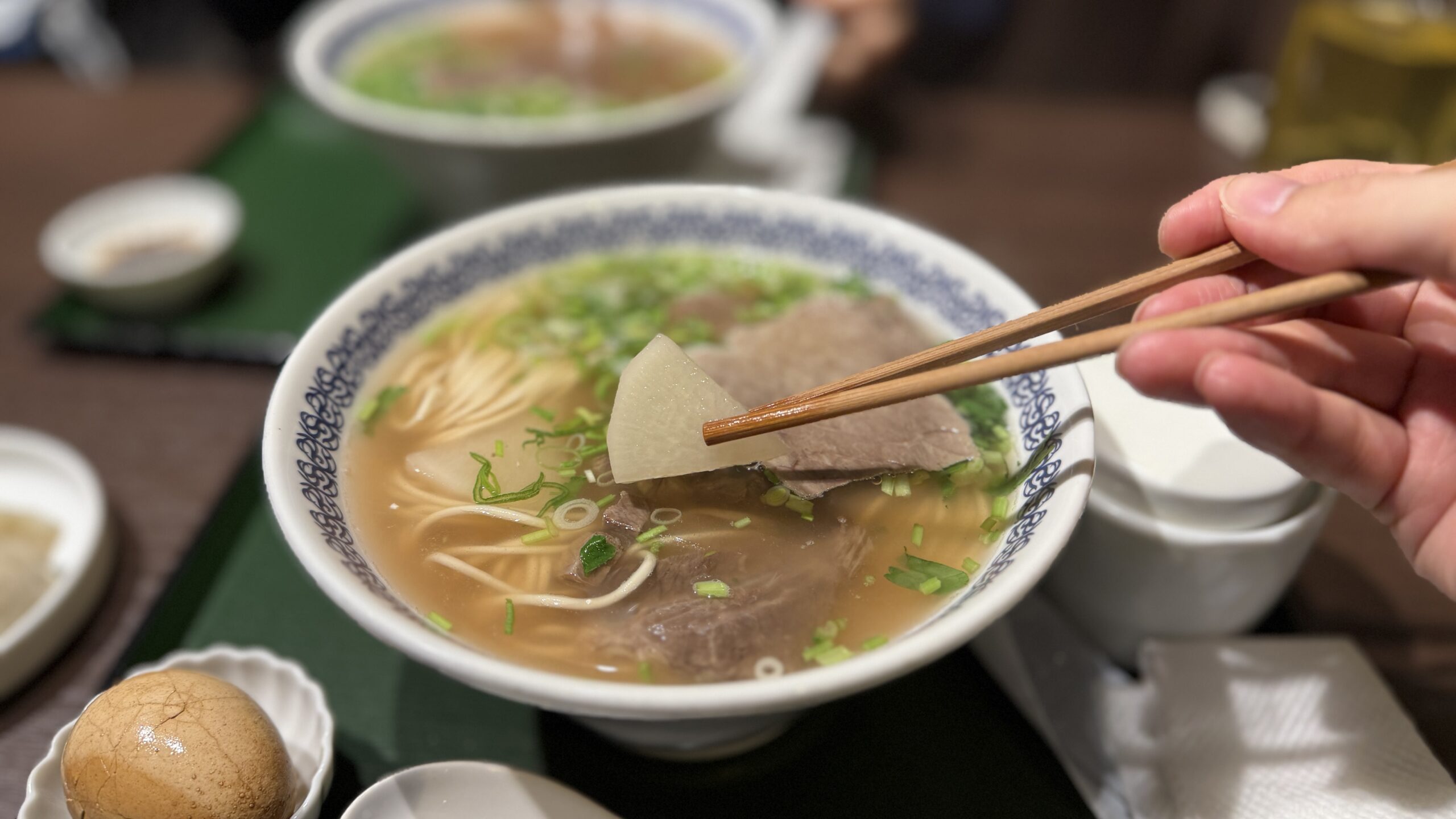
It is also distinctive that it contains daikon radish.
I feel like the combination of ramen and radish is not often seen in Japanese ramen.
However, it goes well with a gentle beef bone-based soup.
The daikon radish soaked in the soup makes a good chopstick rest.
If it were just beef and noodles, it would be monotonous, but the addition of daikon radish makes it a little different.
Chadama
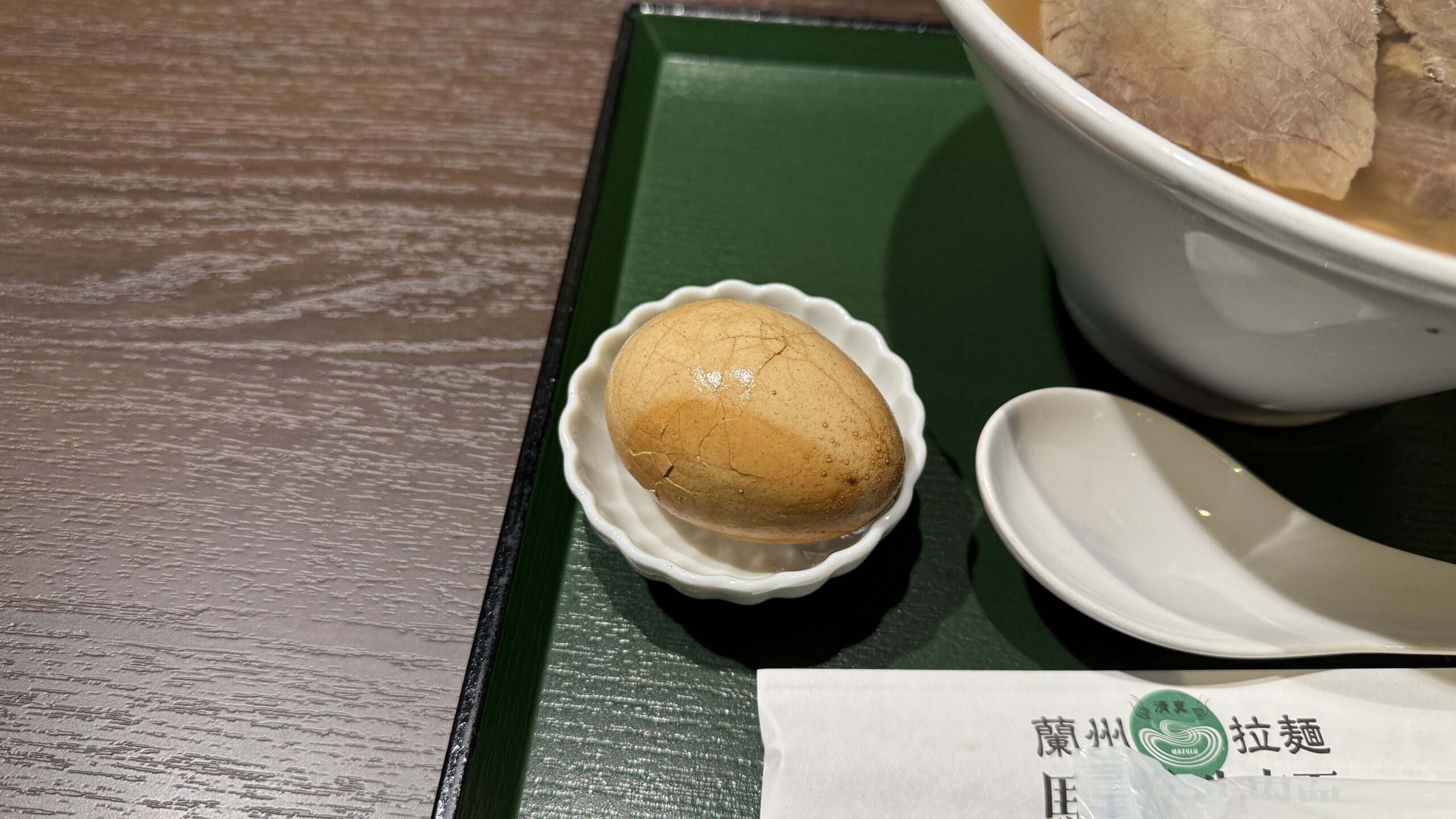
Chadama has a unique flavor that is boiled in tea.
It has a different atmosphere than the flavored eggs at Japanese ramen restaurants.
In addition to tea leaves, it also contains spices such as star anise, so it goes well with Lanzhou beef noodle soup.
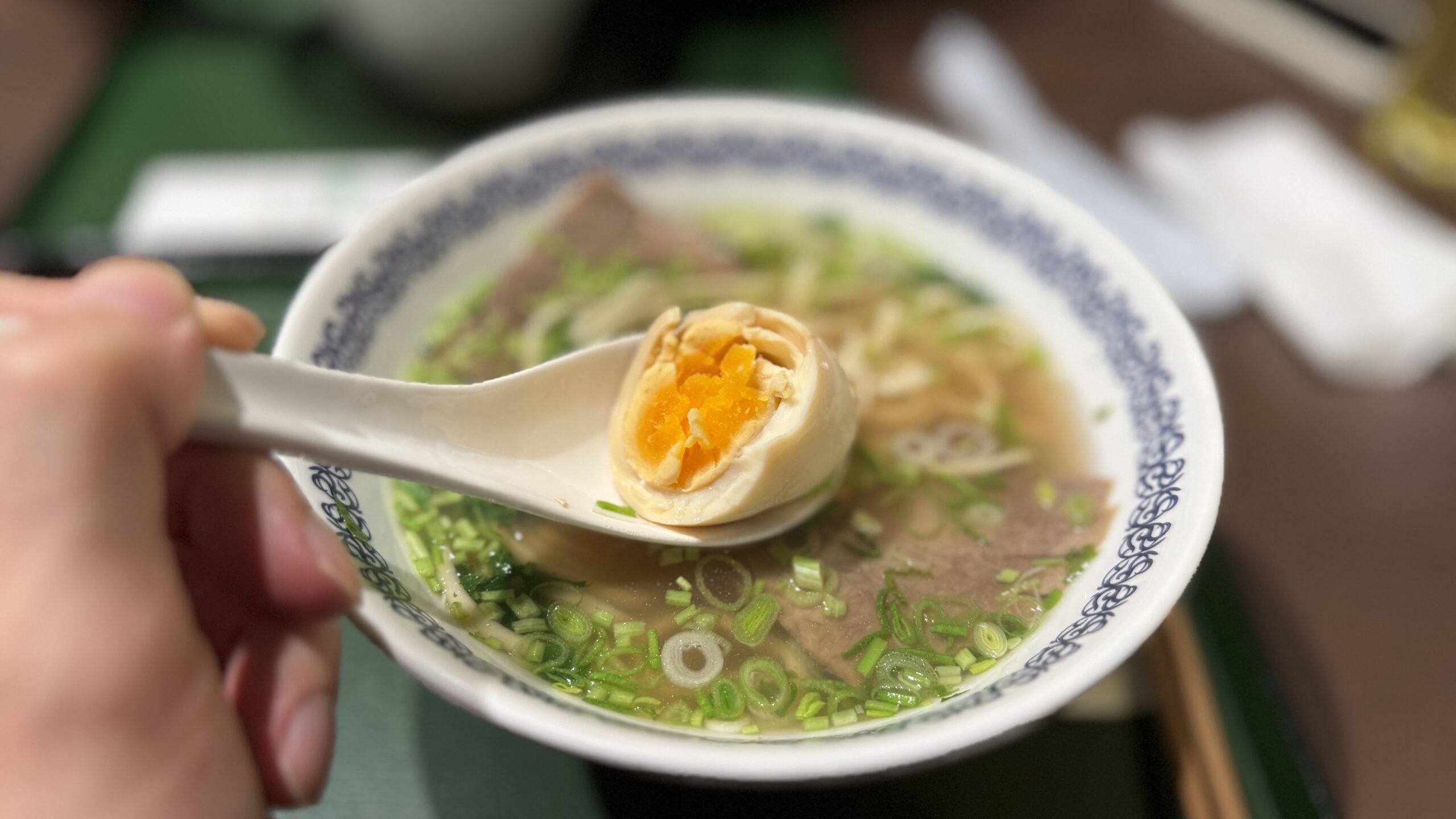
However, the fact that it is half-ripe rather than fully ripe gives the impression that it is Japaneseized.
Sui Gyoza (Boiled Dumplings)
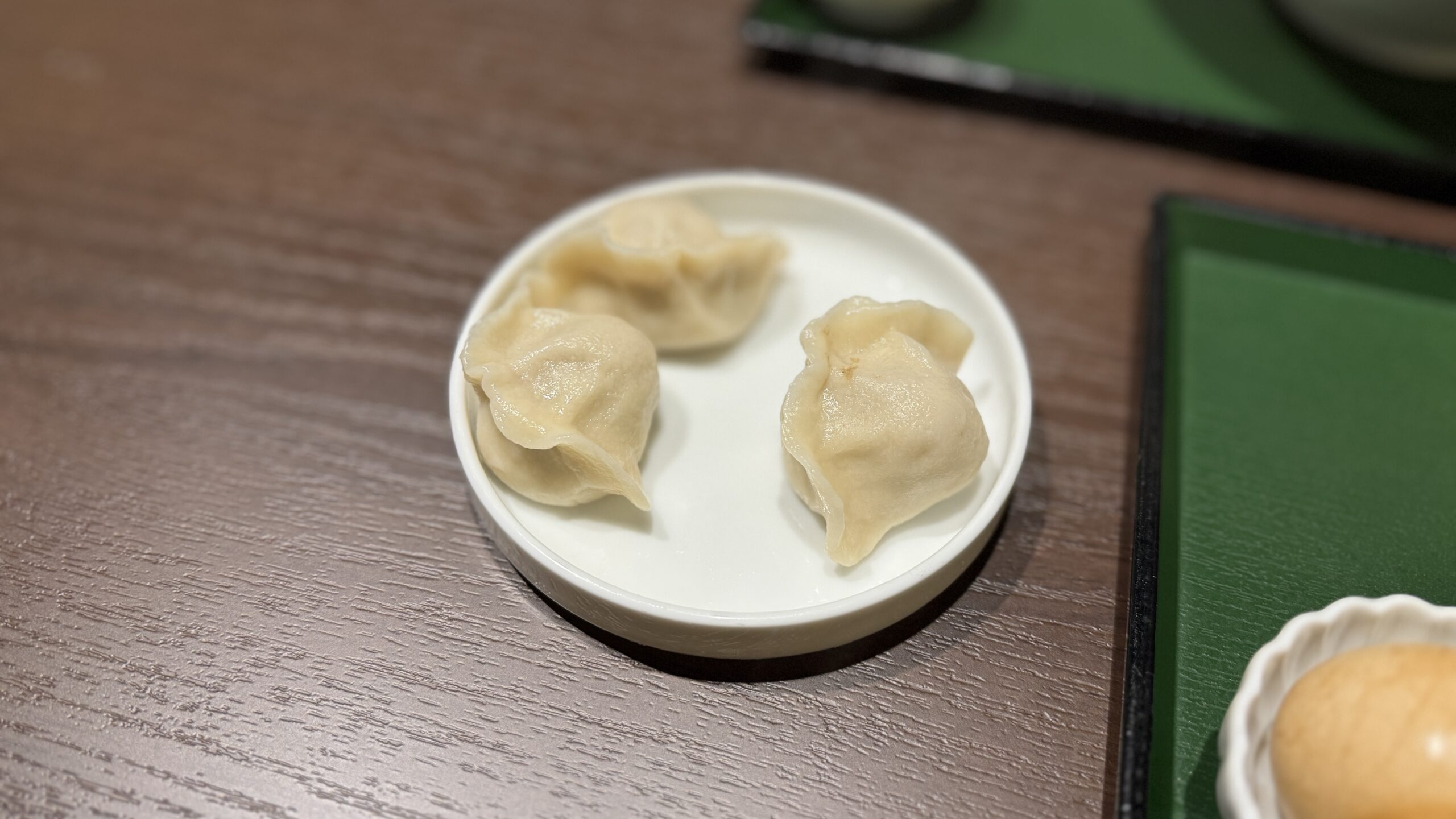
The filling has a Japanese feel to it, but the skin is thin and chewy, giving the overall impression of Chinese boiled dumplings.
In Japan, fried dumplings are the most common type of gyoza, but in China, boiled dumplings are more common.
Overseas, California rolls are common, or to Japanese people, it may be more like sushi that is trending and makes you wonder, "Is that sushi?"
Of course, Japanese fried dumplings are delicious, but I would also like you to try the authentic boiled dumplings at least once.
The skin has a chewy texture and the balance with the filling is good.
It was also quite good as a side dish to eat with Lanzhou beef noodles.
Impressions and Rating
It was a taste of China at Jimbocho in Tokyo.
I think there should be more Lanzhou beef noodles.
The gentle beef bone-based soup is flavored with cilantro, green onions, and garlic leaves, giving it a different appeal than Japanese ramen.
Rather than ramen, I think it would be better to enjoy it as a noodle dish in a different genre.
The noodles also have a unique chewy texture that is interesting and different from udon or ramen.
This time I chose the most popular noodle number 2, but I wanted to try other noodles as well.
The soup has a fairly mild taste and seems good after drinking or when you have a hangover.
Personally, I preferred it without chili oil.
Chadama has a unique flavor that is different from Japanese flavored balls, but the fact that it is half-cooked gives the impression that it is tailored for Japanese customers.
And the soup dumplings were also good.
You can enjoy the chewy skin texture typical of Chinese boiled dumplings, which is different from Japanese fried dumplings.
The customer base was about 50/50 Japanese and Chinese, so it was a restaurant where you could feel a little overseas while staying in Jimbocho.
Taste: ★★★★★★★☆☆☆ (7)
Cost performance: ★★★★★★★☆☆☆ (7)
Revisit: ★★★★★★★★☆☆ (8)
Summary
- A restaurant where you can enjoy authentic Lanzhou beef noodles at Jimbocho
- You can choose the thickness and shape of the noodles, and the most popular one, No. 2, has a unique chewy texture.
- The soup has a gentle beef bone base, and the coriander and garlic leaves are a nice accent.
- The tea balls have a unique flavor and give the impression of being half-cooked for Japan.
- The boiled dumplings have a nice chewy skin and you should try them at least once.